
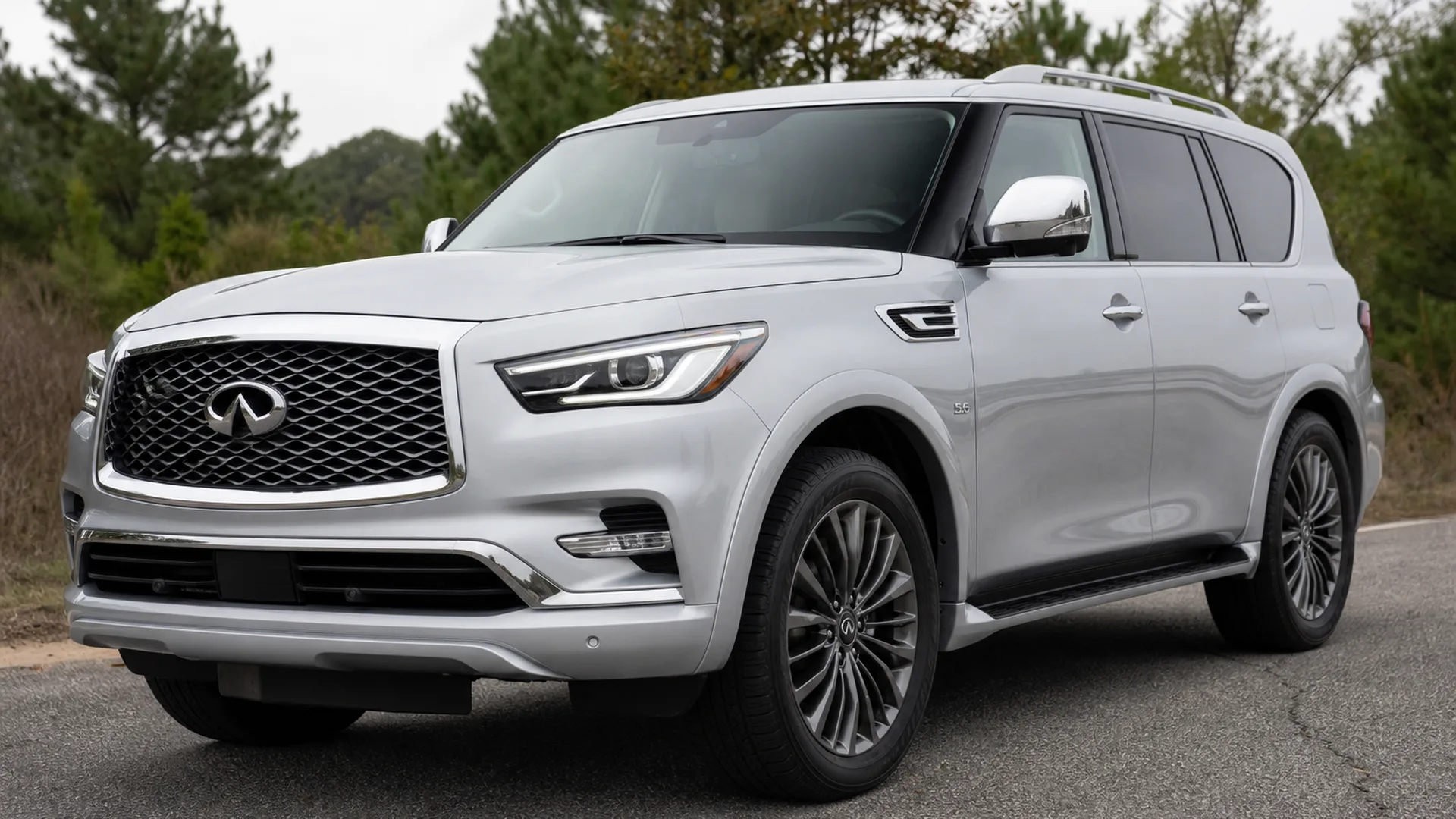
Shopping for a used Infiniti QX80? Some model years deliver the smooth, reliable luxury experience you expect, but others come with costly engine, electrical, and brake problems. If you’re searching for the Infiniti QX80 years to avoid, here’s the quick answer: avoid the 2014 and 2019 QX80, as they have the highest repair bills and the most serious complaints. The best years to buy are 2015, 2017–2018, and 2020–2022, which offer better reliability and fewer known issues
This updated breakdown is based on real owner complaints, NHTSA recall data, mechanic reports, and long-term reliability studies. If you’re comparing luxury SUVs, we also recommend checking our guides on Best and Worst Porsche Macan Years and Chrysler Pacifica Years to Avoid for similar insights.
How we rated the best and Infiniti QX80 Passat years
We analyzed thousands of owner complaints, NHTSA recall data, and service bulletins to identify the most problematic QX80 model years. Our team cross-referenced official Infiniti recalls with real-world repair costs from certified mechanics, owner forums like InfinitiScene and Reddit’s r/infiniti, and long-term reliability studies from Consumer Reports and J.D. Power. We also interviewed ASE-certified technicians who specialize in QX80 repairs to understand which failures are most common and expensive. The result? A clear picture of which years will likely cause headaches and which ones actually deliver the reliable luxury experience you’re paying for.
Most Common Infiniti QX80 Problems
Before we look at specific model years, it’s important to understand the issues that show up across the Infiniti QX80 lineup. These are the patterns that come up again and again in owner reports, recall summaries, and mechanic repair logs. Knowing these weaknesses ahead of time helps you spot red flags while shopping and gives context to why certain years are more troublesome than others. The QX80 is a capable luxury SUV, but like any large three-row vehicle with heavy electronics and a powerful V8, it has a few key systems that tend to cause the most frustration — and the highest repair bills — when they fail.
1. Engine Troubles That Cost Thousands
The QX80’s 5.6L V8 is generally strong, but early models have a serious weakness: timing chain stretch. This problem hit 2011–2013 QX56 models hard and carried over to some 2014 QX80s. When the timing chain stretches, you’ll hear a loud whining or rattling noise from the engine. Ignore it, and you’re looking at major engine damage.
Here’s the expensive reality: timing chain replacement runs $4,000–$5,000 if you’re out of warranty. One 2014 QX80 owner described the noise as “like a diesel truck” and was quoted $4,200 for the repair. Infiniti did issue a service campaign for QX56 timing chains, but many early QX80s weren’t covered, leaving owners to pay out of pocket.
The fuel system also had issues on 2012–2015 models. A recall addressed fuel pressure sensors that weren’t properly tightened at the factory. These could loosen over time and cause fuel leaks – obviously a fire hazard. The good news? This recall was handled free by dealers.
2. Electrical issues that can leave you stranded
Modern QX80s pack tons of electronics, and that complexity creates problems. The most frustrating issue is premature battery drain, especially on 2018–2019 models. Owners report batteries dying without warning, sometimes multiple times in the first year of ownership.
One 2019 owner had their battery die three times in 13 months. Another 2018 owner went through three batteries in just 13,000 miles. The dealer’s explanation? You need to rev the engine above 2,500 RPM regularly to keep the battery charged. That’s not exactly luxury SUV behavior.
This points to a quirk in Infiniti’s “smart charging” alternator system. It doesn’t fully charge the battery during typical city driving at low RPMs. The result? You come out to a dead QX80 when you least expect it.
3. Brake System Malfunctions
The QX80’s Forward Emergency Braking system sounds great in theory – until it starts braking for no reason. Multiple owners reported the system engaging unexpectedly, often near railroad crossings or at green lights.
One frustrated owner described it this way: “The FEB continuously engages the brakes without warning… always while a railroad crossing is in sight.” This phantom braking creates a real rear-end collision risk when the SUV suddenly slams on the brakes.
Regular brake wear is also accelerated on the heavy QX80. Rotors can warp early, causing steering wheel vibration when braking. Factor in $800+ for brake rotor replacement on a luxury SUV.
4. Air suspension problems
QX80s with the optional rear air suspension look impressive, but they’re trouble-prone. The most common complaint is rear sagging – you’ll come out in the morning to find the back end sitting low. Sometimes it’s the opposite problem: the suspension over-inflates and rides too stiff.
The culprits are usually leaky air springs or a failing compressor. Air suspension compressor replacement alone can cost $800+ for parts, plus several hundred in labor. Many owners eventually retrofit standard coil springs to avoid repeat failures.
Worst Infiniti QX80 Years to Avoid
2014 QX80: The Launch Year Disaster
The 2014 model year stands out as the absolute worst QX80 to buy. This was the first year Infiniti used the QX80 name (previously it was the QX56), and it shows all the classic signs of a rushed launch.
The timing chain problem was at its worst in 2014. Since Infiniti’s timing chain recall covered 2011–2013 QX56 models but not 2014 QX80s, many owners got stuck with the full repair bill. At $4,000–$5,000, that’s a major financial hit.
Electrical problems were equally bad. One owner found their 2014’s battery died after just 10 minutes of using accessories with the engine off. The dealer blamed it on too many electronic features draining power – not exactly a confidence-inspiring answer for a $60,000+ SUV.
Safety concerns appeared too. Some 2014 owners reported the passenger airbag warning light staying on, indicating the airbag might not deploy in a crash. This was difficult to fix and created real safety risks.
Bottom Line: Unless you can verify the timing chain and major electrical issues have been addressed, skip 2014 QX80s entirely.
2019 QX80: Modern Problems, Ancient Frustrations
You’d expect a 2019 model to be reliable, but the QX80’s refresh year brought new headaches. The 2019 QX80 actually received more consumer complaints than any other model year.
The battery drain issue peaked in 2019. Owners described batteries dying three times in 13 months, leaving them stranded with no warning. The intermittent nature made diagnosis difficult – the SUV would run fine, then simply refuse to start hours later.
The Forward Emergency Braking malfunction was also worst in 2019 models. Multiple owners reported sudden, unexpected braking that occurred “always while a railroad crossing is in sight, sometimes when approaching a green light.” This phantom braking creates serious rear-end collision risks.
A backup camera recall affected 2019s too, though this was quickly fixed with a software update. The bigger concern is that electrical gremlins appeared in relatively new vehicles – not what you expect from a luxury brand.
Bottom Line: The 2019 QX80 combines the worst electrical and brake problems in one troublesome package. Choose a 2020 or later model instead.
Other Years to Approach with Caution
The 2011–2013 QX56 models (technically not QX80s yet) had timing chain issues and paint problems. Infiniti’s Moonlight White paint was notorious for flaking off these years.
Some owners flag 2018 as having minor teething problems with the facelift, including glitchy infotainment. However, official complaint data doesn’t support this – 2018 actually shows very few reports.
Best Infiniti QX80 Years to Buy
2015: The Sweet Spot for Value
If you want an older, more affordable QX80, 2015 is your best bet. By this year, Infiniti had fixed the timing chain design and resolved most of 2014’s electrical problems. The 2015 QX80 earned high marks from automotive reviewers and shows strong owner satisfaction.
Infiniti made subtle but important improvements for 2015. Build quality was better, and the electrical system was more stable. Only two recalls affected 2015 models (fuel sensor and a minor airbag sensor issue), compared to multiple problems in 2014.
Typical repair costs on 2015s involve routine maintenance – brake pads, suspension components as they wear, but not the big-ticket failures seen in problematic years. You can find 2015 QX80s at reasonable used prices now, making them smart value picks.
2017–2018: Refined and Reliable
For buyers wanting later second-generation models, 2017 and 2018 are excellent choices. By 2017, Infiniti had years of real-world feedback to refine the QX80. No major common problems appeared in 2017 – it was essentially the most debugged version of the original design.
The 2018 refresh brought updated styling, better interior materials, and additional sound deadening. More importantly, these cosmetic changes didn’t introduce reliability problems. The 2018s have very few complaints on file and represent solid, mature engineering.
Both years use the proven 5.6L V8 and 7-speed automatic that had been refined over several years. Build quality peaked during this period, giving you modern features with established reliability.
2020–2022: The Modern Choice
For those wanting newer QX80s, the 2020–2022 models are the most reliable recent years. Infiniti learned from the 2018–2019 hiccups and delivered genuinely solid vehicles.
Since 2020, the QX80 has had only three minor recalls and very few owner complaints. The 2022 model brought a much-needed infotainment upgrade – a new 12.3-inch touchscreen with wireless Apple CarPlay that eliminated quirks from the old dual-screen setup.
The mechanical components are bulletproof by this point. The VK56 V8 and 7-speed transmission are nearly trouble-free with regular maintenance. Many owners report these late-model QX80s need only routine service – oil changes, brakes, and occasional battery replacement.
A 2022 QX80 represents the best of the second generation: all the final refinements, modern tech, and minimal known issues.
Superior Alternatives Worth Considering
Lexus LX 570: The Reliability Champion
If long-term dependability matters most, the Lexus LX 570 beats the QX80 hands down. Built by Toyota, it shares the Land Cruiser’s legendary durability. Owners routinely see 200,000+ miles with minimal problems beyond routine maintenance.
The LX 570’s 5.7L V8 and 8-speed transmission are understressed and extremely robust. Unlike the QX80’s timing chain issues, the Lexus engine is essentially bulletproof. Parts cost more and resale values stay high, but you’ll spend far less on repairs.
Best years: 2016–2021 models offer the latest safety tech while keeping the proven powertrain.
Toyota Sequoia: Bulletproof at a Better Price
The Sequoia isn’t luxury-badged, but it’s incredibly reliable. Recent studies show a Sequoia has a 39% chance of reaching 250,000 miles – the highest of any vehicle surveyed. That’s exceptional durability.
Maintenance costs are much lower than luxury SUVs. Parts are cheaper, and problems are rare. The major components (engine, transmission, 4WD) are extremely reliable. Most owners only do brakes, batteries, and wear items over the years.
Best years: 2017–2020 models before the recent redesign offer proven reliability with modern features.
Cadillac Escalade: American Luxury Done Right
The fourth-generation Escalade (2015–2020) improved significantly over earlier models. GM’s 6.2L V8 is simpler than Infiniti’s complex engine, and the 8-speed (later 10-speed) transmission has been reliable.
Dealer networks are widespread, and independent shops can service GM trucks easily. This keeps maintenance costs reasonable compared to other luxury SUVs.
Best years: 2017–2020 models had the bugs worked out and offer strong reliability.
Final Verdict: Choose Wisely
The Infiniti QX80 can be a great luxury SUV – if you pick the right year. Avoid 2014 and 2019 models completely. These years have the worst combination of expensive problems and safety concerns.
Your best bets are 2015 for value, 2017–2018 for refined reliability, or 2020–2022 for modern features with proven dependability. Always verify completed recalls and service history before buying.
If maximum reliability is your priority, consider the Lexus LX 570 or Toyota Sequoia instead. They’ll cost less to maintain long-term and are less likely to strand you with expensive failures.
Remember: avoiding a problematic QX80 year can save you $5,000–$8,000 in repairs. Choose wisely, and you’ll get the luxury SUV experience without the luxury headaches.