
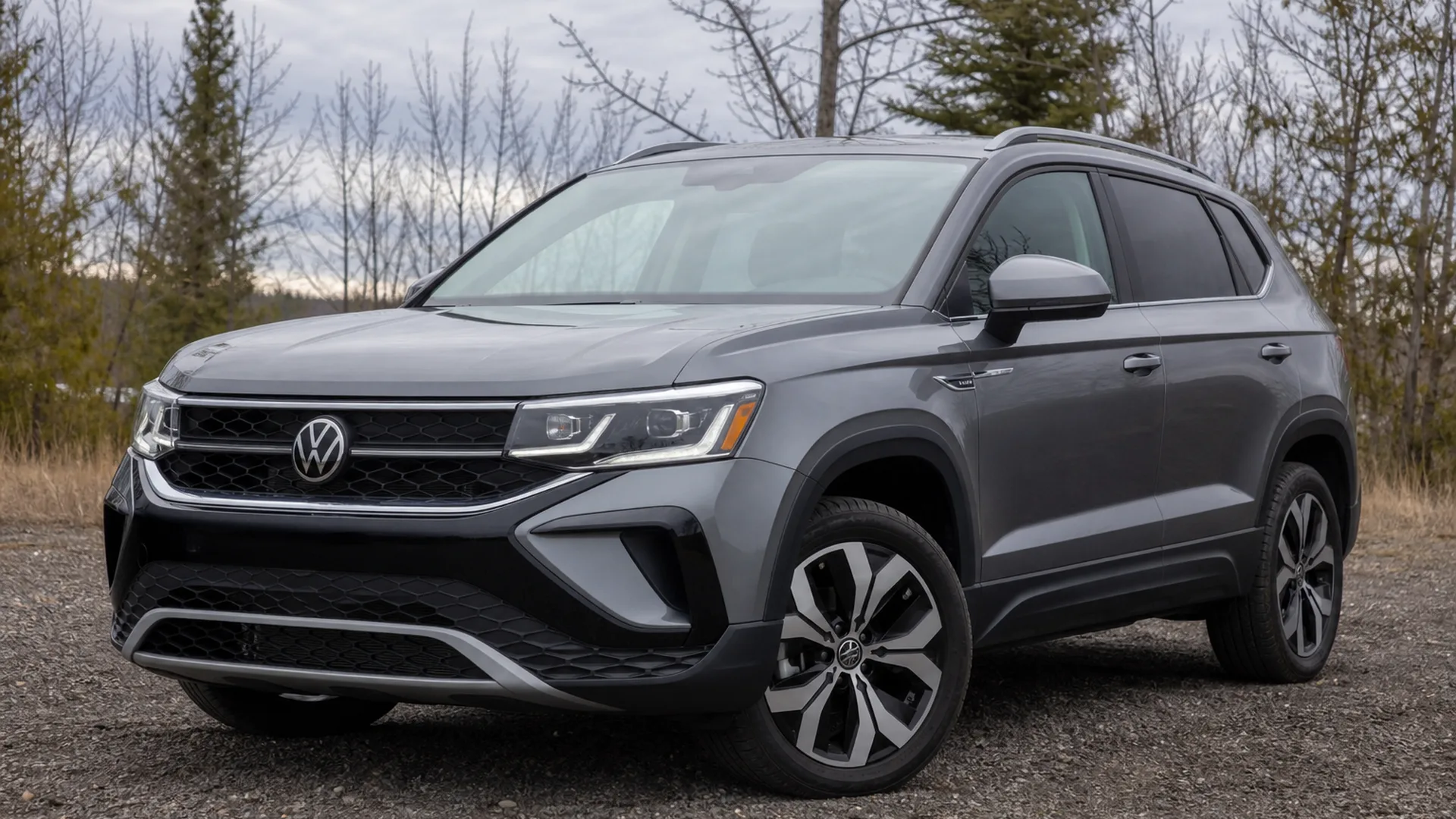
How we rated the best and worst VW Taos years
We didn’t just skim a few reviews and call it a day. Our team dug into NHTSA recall databases, combed through Technical Service Bulletins (like TSB 15-23-01 on the head gasket redesign), and analyzed complaint trends on CarComplaints.com. We cross-checked owner stories from Reddit, VWVortex forums, and real-world case studies from Lemon Law specialists. We also pulled data from Consumer Reports, Car and Driver road tests, and RepairPal’s repair-cost estimates. The goal was simple: separate early-adopter headaches from genuinely reliable years, so you can shop with confidence.
Shopping for a used Volkswagen?
 Ask a Mechanic about your Volkswagen →
REREV may earn a commission if you sign up through this link. Learn more.
Most Common VW Taos Problems
Let’s get into what actually goes wrong with the Taos. These aren’t one-off flukes—they’re patterns that show up again and again in 2022 and 2023 models.
1. Engine trouble you can’t ignore. The 1.5-liter turbo four-cylinder is punchy on paper, but early versions had a nasty habit of losing coolant. Owners would see the low-coolant warning light, top it off, and watch it vanish again within a few hundred miles. The culprit? A poorly designed head gasket that let coolant seep into the combustion chamber. VW acknowledged the flaw in a mid-2023 service bulletin and rolled out an improved gasket design in July 2023 production.
If you’re stuck with the old gasket, you’re looking at a repair that can run into four figures—and that’s if you catch it before the engine overheats and warps something more expensive. On top of the coolant leak, early AWD models had an ECU software glitch that caused the engine to stall when coming to a stop (NHTSA recall 21V-615). Another recall (21V-651) tackled fuel lines that could disconnect or leak, risking fire or sudden stalling. Those aren’t minor annoyances—they’re safety issues that left owners stranded or worse.
2. Transmission and throttle response that feel… off. Press the gas pedal in a 2022 or early-2023 Taos, and you might get a pause, then a lurch. It’s unsettling when you’re trying to merge or turn across traffic. The AWD versions used a seven-speed dual-clutch transmission (DSG) that could be jerky at low speeds, especially combined with turbo lag. Front-wheel-drive models got an eight-speed conventional automatic, which was smoother but still had moments of hesitation. VW clearly heard the feedback—starting with the 2025 model, every Taos gets the eight-speed auto, no more DSG. That change alone tells you how real the problem was.
3. Electrical quirks that shake your trust. Modern cars are full of computers, and when those systems hiccup, it’s confusing and frustrating. Taos owners reported instrument clusters freezing, false tire-pressure warnings, and infotainment screens that wouldn’t turn on. One particularly serious glitch involved the backup camera refusing to display—traced to a defective memory chip in the infotainment unit (recall 22V-514).
Since federal law requires a working rearview camera, VW had to replace those chips. Beyond recalls, some 2022 models threw random errors like “key fob not detected” or start-stop system faults that turned out to be software bugs rather than actual hardware failures. Dealers could often fix these with an update, but it’s one more trip to the service bay.
4. Brakes and suspension that didn’t hold up. A few owners needed brake pads and rotors replaced well before 10,000 miles—far sooner than normal. Others heard clunking noises over bumps or felt vibrations when braking. The most serious issue was a recall (22V-176) for a rear suspension knuckle that could fracture and destabilize the vehicle. That’s not a wear item—that’s a factory defect that put handling and safety at risk. VW inspected and replaced faulty knuckles, but it’s a reminder that early Taos production had quality-control gaps.
5. Air conditioning that quits on hot days. Nothing’s worse than the AC blowing warm air in summer traffic. Several Taos owners experienced exactly that, often traced to a faulty AC pressure sensor or relay. The sensor would send a false reading, telling the compressor to shut down as a safety measure. Replacing the sensor or relay usually fixed it, but some dealers initially misdiagnosed the problem as a failed compressor, which would’ve been a much pricier repair. A handful of 2022 models also had refrigerant leaks at seals, requiring hose or seal replacement and a recharge. The fixes are straightforward if the tech knows where to look, but it’s another area where early Taos fell short.
The Years You Should Skip
If you’re browsing used Taos listings, here’s where to hit the brakes.
2022: The rough debut. First model years are always a gamble, and the 2022 Taos lost that bet. NHTSA issued at least six recalls for this year alone—covering engine stalling, fuel leaks, suspension fractures, and the backup-camera memory chip. Owners who bought one new likely spent the first year shuttling back to the dealer for recall repairs. Beyond the recalls, the head-gasket coolant leak hit hard once cars passed 15,000 to 30,000 miles—often just after the basic warranty expired.
Replacement parts were backordered for weeks or months, leaving some owners stuck with rental cars while they waited. The 2022 Taos is over-represented in lemon-law cases and owner-complaint databases. Unless you find one with every recall completed, the updated head gasket confirmed, and a solid extended warranty, it’s a year to avoid. The combination of first-year bugs, safety defects, and expensive engine repairs makes 2022 the worst year for the Taos, hands down.
2023: Still not fixed. You’d think the second model year would be better, but the 2023 Taos carried over many of the same problems. The fuel-line and ECU issues were resolved by then, so there were fewer recalls. But the head-gasket defect persisted on models built before mid-2023. Dealers reported a wave of blown head gaskets in late 2024 as 2023 Taos crossed 50,000 miles—many of them just out of warranty. One owner’s NHTSA complaint noted the dealer confirmed it was “a known issue in the 2022–23 models” and warned that even after replacement, the old gasket design might fail again.
CarComplaints.com actually rated the 2023 Taos as the worst model year based on owner feedback, citing engine trouble and persistent squeaking noises during acceleration (likely drivetrain or suspension related). By late 2023, the ’23 had logged more total complaints than the ’22. If you’re eyeing a 2023, you need to verify the engine was built after July 27, 2023 (when the improved gasket went into production) and confirm all recalls are done. Otherwise, you’re walking into the same minefield as the 2022.
A global heads-up. The Taos is sold in other markets as the Tharu (launched around 2018–2020 in China and South America). While detailed reliability data from those regions is harder to find, the same 1.5 TSI engine and DSG gearbox issues appear to have crossed borders. If you’re shopping for a Taos or Tharu outside North America, treat the early production years (2019–2021) with the same caution—VW’s fixes rolled out globally around 2023, but first-year hiccups are a recurring theme.
Checking a used Volkswagen?
Scan for hidden fault codes from your phone in minutes — before you buy.
Diagnose your Volkswagen with OBDeleven →REREV may earn a commission if you sign up through this link. Learn more.
The Years That Finally Work
Now for the good news: Volkswagen learned from those early mistakes, and the newer Taos models are genuinely better.
2024: The turnaround year. By 2024, VW had addressed the major flaws. Engines built from mid-2023 onward came with the redesigned head gasket, so 2024 Taos don’t have the coolant-leak problem that haunted earlier years. All the big recalls—fuel lines, ECU software, backup-camera memory, suspension knuckles—were already fixed in production by 2024.
Early owner reports show far fewer complaints, and there haven’t been any widespread new issues. The driving experience is smoother (though AWD models still had the DSG until the 2025 refresh). If you want a used Taos, a 2024 or a late-build 2023 (with a VIN that confirms post-July-2023 engine production) is your safest bet. Think of 2024 as the first year the Taos lives up to its original promise—reliable enough to recommend without major caveats.
2025: The best version yet. For 2025, Volkswagen gave the Taos a mid-cycle refresh that goes beyond cosmetic tweaks. The 1.5-liter turbo got a bump to 174 horsepower (up from 158), which gives it a bit more zip. More importantly, VW dropped the DSG and standardized the eight-speed automatic across all models—FWD and AWD. That change directly addresses the jerky, hesitant throttle response owners complained about. The interior got quieter too, with added sound insulation and upgraded trim.
Car and Driver named the 2025 Taos an Editors’ Choice in the subcompact SUV category, praising its balance of space, value, and refinement. Early test drives show no new reliability red flags, though it’s still a refreshed model—give it a bit more time for real-world data to pile up. If you can swing a new or nearly-new Taos, the 2025 (or upcoming 2026) is the one to get. It benefits from all prior fixes plus performance and comfort upgrades. It’s the Taos VW should’ve launched in 2022.
Bottom line on years: Later is better. A 2024 is solid, a 2025 is excellent, and future model years should keep improving. Unless you find an incredible deal on a fully repaired 2022 or 2023 with a bulletproof extended warranty, spend a little more for the peace of mind that comes with a newer model.
Alternatives That Won’t Let You Down
If you’re still hesitant about the Taos—and honestly, we wouldn’t blame you—here are a few subcompact SUVs with stronger track records, plus the model years we’d recommend.
Toyota Corolla Cross (2022–2024): The reliability champ. Toyota’s compact crossover slots between the quirky C-HR and the larger RAV4, and it nailed reliability right out of the gate. Consumer Reports gave the 2022 Corolla Cross a 5/5 predicted reliability score in its debut year—something almost unheard of for a first-year vehicle. NHTSA complaint data shows only a handful of minor issues across tens of thousands sold.
The Corolla Cross shares proven components with the Corolla sedan, so Toyota had a head start on durability. We’d recommend any 2022 or 2023 model without hesitation. If you want a hybrid, the 2023 Corolla Cross Hybrid uses Toyota’s well-tested hybrid system and delivers excellent fuel economy. It’s not the quickest or flashiest in this class, but it’s a safe bet with strong resale value and minimal drama.
Honda HR-V (2017–2023): The no-fuss workhorse. The Honda HR-VBest and worst Honda HR-V years (which to avoid) has built a reputation as one of the most reliable subcompact SUVs you can buy. RepairPal gives it a perfect 5.0/5.0 reliability score, and owners routinely praise it as a “set it and forget it” vehicle. The first-generation HR-V (2016–2022) had very few issues—skip the 2016 if you want to avoid early infotainment and CVT bugs, but by 2017–2018 those quirks were ironed out.
The 2019–2022 HR-V is especially solid, with consistently high marks from Consumer Reports. The 2023 HR-V is a new generation—larger, more refined, and built on the Civic platform with a simple 2.0-liter engine. It’s still early for long-term data, but initial quality is strong, and Honda’s track record gives us confidence. Any 2017+ HR-V is a smart alternative if reliability is your top priority. You’ll sacrifice some turbo punch (the HR-V is modestly powered) and a few tech features, but you gain the peace of mind that comes with Honda’s reputation.
Mazda CX-30 (2020–2023): The fun, reliable choice. Mazda’s CX-30 launched in 2020 and quickly became a Consumer Reports favorite, earning “best subcompact SUV” honors in 2021 with much-better-than-average predicted reliability. Mazda as a brand has been climbing reliability rankings, often landing near the top. The CX-30 uses a proven 2.5-liter engine (with an optional turbo for more power) and a conventional six-speed automatic—both are known quantities with few problems.
The 2020, 2021, and 2022 CX-30 models have minimal reported issues—no widespread engine or transmission trouble, just the occasional infotainment software update. If you enjoy driving, the CX-30 offers sharper handling and a more premium feel than the Taos. We’d recommend any 2020–2023 CX-30 as a great alternative. The only trade-off is a slightly smaller backseat, but otherwise it’s highly competitive in this class.
A few other options worth considering. The Subaru Crosstrek (2019–2023) is another reliable pick with standard AWD—just skip the 2018 if you want to avoid first-year-of-generation hiccups. The Kia Seltos and Hyundai Kona offer turbo power and plenty of tech, and they’ve improved (especially 2022+ models after early recalls were addressed), though they’re not quite at Toyota or Honda reliability levels. If you’re open to something slightly larger, the Toyota RAV4 (2019–2023) and Honda CR-V (2017–2022) are outstanding for long-term dependability and won’t cost much more on the used market.
The Taos has its charms—sharp styling, decent driving dynamics, a roomy cabin—but if reliability is high on your list, vehicles like the Corolla Cross, HR-V, or CX-30 will likely give you fewer headaches in those proven model years. Always check for open recalls on any vehicle you’re considering, and keep up with maintenance. But starting with a solidly reliable model stacks the odds in your favor.
What You Should Do Next
Here’s the short version: avoid the 2022 and early-2023 Taos unless you can confirm all recalls are completed, the engine has the updated head gasket (post–July 2023 build date), and you’re covered by a strong extended warranty. Those years are just too risky for the average buyer.
If you want a Taos, go for a 2024 or 2025. The 2024 is the first truly reliable year—most of the big problems are fixed, and owner feedback is far more positive. The 2025 is even better, with more power, a smoother transmission across the board, and a quieter, more refined interior. It’s the Taos VW should’ve launched from the start.
If reliability matters more than brand loyalty, look at the alternatives. The Toyota Corolla Cross, Honda HR-V, and Mazda CX-30 offer similar size, features, and price—but with track records you can trust from day one. They might not have the VW badge or Euro styling, but they’ll likely save you time, money, and frustration over the long haul.
Before you sign anything, check the VIN to confirm the engine build date (for late-2023 or 2024 models), verify all recalls have been addressed, and consider an independent pre-purchase inspection if you’re buying used. And no matter which vehicle you choose, budget for an extended warranty or set aside a repair fund—it’s smart protection in a market full of complicated, tech-heavy vehicles.
Armed with this breakdown of VW Taos trouble years, common problems, and better alternatives, you can shop with confidence and skip the costly surprises many early owners faced. Whether you go with a late-model Taos or one of the rock-solid alternatives, you’ll drive away with a compact SUV