
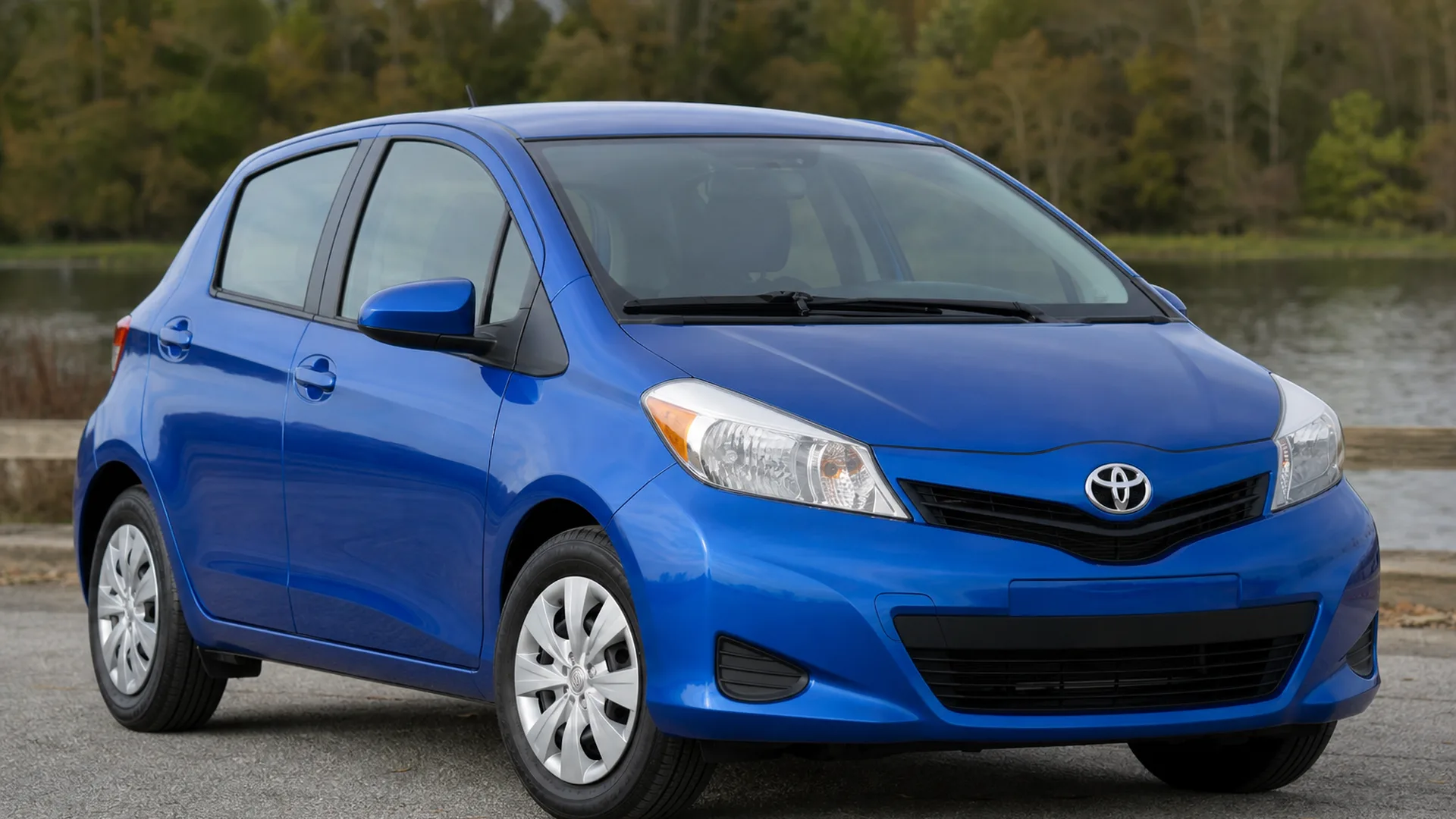
The Toyota Yaris built a solid reputation as an affordable, fuel-efficient subcompact that won’t drain your wallet at the pump or the repair shop. RepairPal gives it a 4.5 out of 5.0 reliability score—the best in its class—and many owners rack up well over 150,000 miles without major headaches. But here’s the catch: not every Yaris year lives up to that promise.
Some model years came with serious airbag defects, transmission hiccups, steering malfunctions, and paint that peeled off like sunburned skin. If you’re shopping for a used Yaris, knowing which years to skip can save you thousands in repair bills and genuine safety scares. This guide walks you through the problem years, the standout models worth buying, and a few smarter alternatives if you decide the Yaris isn’t quite right for you.
How we rated the best and worst Toyota Yaris years
We pulled data from NHTSA‘s complaint and recall databases, focusing on model years with the highest concentration of owner reports—particularly 2007 through 2010, which logged hundreds of complaints and multiple recalls. We cross-referenced Takata airbag recall documentation (the Yaris was hit hard by that scandal), combed through CarComplaints and RepairPal user reviews, and checked global recall records for markets outside the U.S. where the Yaris continued selling after 2020.
We also separated feedback for Toyota-engineered models from the Mazda-based Yaris iA and 2019–2020 sedan, since they share almost nothing under the skin. Finally, we weighted safety-critical issues—airbags that didn’t deploy, steering that jerked unexpectedly, brakes that locked up, more heavily than cosmetic annoyances like rattles or scratchy plastics.
Most Common Toyota Yaris Problems
1. Engine and Transmission Quirks
Automatic Yaris models from 2008 and 2009 often shifted roughly; owners reported grinding sounds, a burnt-fluid smell, or long pauses before the car would grab the next gear. Toyota’s “MMT” automated manual (sold in some international markets) was worse: it hunted for gears unpredictably and sometimes refused to shift at all, earning a universal “avoid” recommendation from mechanics. Manual-transmission cars fared better overall, but clutches wore faster than expected when driven in stop-and-go traffic. A 2010-specific glitch lit up the check-engine light with code P0713, pointing to a bad transaxle fluid temperature sensor; dealers fixed that by replacing the transmission wire harness.
2. Vibration You Can Feel in the Steering Wheel
Between 2007 and 2010—and again in scattered 2012 and 2014 units—manual Yaris owners complained of harsh engine vibration at idle and during acceleration. The root cause was usually a cracked or collapsed engine mount. Replacing the faulty mount stopped the shaking, but until you did, the vibration could make highway driving feel uncomfortably buzzy and even affect how the steering responded.
3. Steering That Misbehaves
Power-steering modules in early third-generation models (2012–2014) could short-circuit, killing assist and forcing you to muscle the wheel. Toyota recalled those cars to swap the relay. The 2007 Yaris had a scarier problem: some owners reported the steering wheel jerking sideways at highway speed or the car pulling hard to one side, sometimes with the brakes engaging on their own. That led to a handful of loss-of-control incidents and prompted several stability-control and braking recalls. Later, a defective front-strut mount bearing in certain 2015–2017 models could crack after hitting a big pothole, hurting your ability to steer straight. Toyota issued a recall and installed stronger bearings.
4. Airbags That Exploded or Didn’t Deploy
The Takata airbag disaster swept up 2007 through 2009 Yaris models: faulty inflators could rupture and spray metal fragments into the cabin. Toyota recalled those cars multiple times between 2015 and 2019 to replace the inflators. On the flip side, 2008–2012 Yaris had airbags that sometimes didn’t fire in crashes. The 2012 year was especially bad—enough owners reported non-deployment that Toyota issued a 2013 recall to fix the sensor logic. If you’re looking at any late-2000s Yaris, confirm that all airbag recalls have been completed; otherwise you’re gambling with your safety.
5. Brakes That Could Lock or Feel Spongy
First-generation Yaris (1999–2005 outside the U.S.) had a known rear-brake lockup issue during hard stops, fixed by replacing the brake proportioning valve. Some later owners noticed a spongy pedal or grinding noises; usually that traced back to worn pads and rotors or rusty ABS wheel-speed sensors. A 2013 recall addressed a brake vacuum pipe that could leak and reduce stopping power. The 2004 model (sold as Echo in some markets) saw unusually fast brake wear. Overall, brake failures are rare on the Yaris, but stay on top of pad replacements and get any ABS warning lights diagnosed right away.
6. Paint That Peels Off in Sheets
This is the complaint you’ll see over and over for 2007–2010 models: clear coat that bubbles, flakes, and eventually exposes bare metal on the roof and hood. Owners washed and waxed regularly but still ended up with patches the size of dinner plates peeling away. The 2008 Yaris was the worst—some needed full repaints by 60,000 miles. Toyota never issued a recall, so repairs came out of owners’ pockets. If you’re considering one of these years, budget for a respray or walk away if you see active peeling; rust will follow once the metal is exposed.
7. Electrical Gremlins and Infotainment Freezes
The 2018–2020 Mazda-built Yaris sometimes had the touchscreen lock up or reboot mid-drive. The brand-new 2020 fourth-generation Yaris (sold outside the U.S.) introduced a digital instrument cluster that froze or went dark in about 10 percent of early cars. Older models are simpler, so electrical headaches are less common—maybe a weak alternator or a dead battery—but one 2013 recall fixed a power-window master switch that could short and smoke. A 2015 technical bulletin addressed throttle or cruise-control issues that made the car slow to decelerate, which was both annoying and potentially dangerous.
8. Air-Conditioning That Quits (Rarely)
A/C failures are unusual on the Yaris—fewer than one percent of owners report them—but when they happen, it’s usually a refrigerant leak at a service valve or a worn compressor. Repairs run about what you’d pay for any subcompact. Run the A/C regularly, even in winter, to keep seals lubricated and catch leaks early.
Most of these issues were concentrated in specific years or addressed by recalls. A well-maintained Yaris with recall work done should give you years of reliable, affordable transportation. The trick is knowing which model years had the fewest problems—and which ones you should avoid entirely.
The Yaris Years You Should Skip
2004 (First Generation)
In markets where this generation was sold as the Yaris or Echo, 2004 stands out as weak. Owners reported burning through oil between changes and replacing brake pads far sooner than normal. Fit and finish weren’t great either. If you’re shopping first-gen, look for a 2001–2003 or 2005 instead; those years are praised for durability.
2007
The Yaris landed in U.S. showrooms for the first time in 2007, and it shows. This year logged 399 owner complaints—more than any other—and ten separate recalls. Paint peeled, the engine sometimes lost power on the highway (owners described the accelerator going dead and the check-engine light flashing), and early airbag and steering issues surfaced. It’s a long list of headaches for what’s supposed to be a no-drama commuter car.
2008
Fewer total complaints than 2007, but the ones that did happen were worse. Paint failures hit hard—some cars needed complete resprays by 60,000 miles. Takata airbag inflators, seatbelt pretensioner defects, and seat-track bolts that could come loose all landed on the recall list. Seats got dinged for being unusually uncomfortable, causing back pain on longer drives. Multiple reliability aggregators name 2008 the single worst Yaris year you can buy.
2009
Toyota fixed many of the earlier bugs, so 2009 is more reliable than 2007 or 2008. But it’s still recall-heavy (Takata airbags again) and some owners dealt with automatic-transmission shuddering or hesitation. Paint peeling eased up but didn’t disappear. A 2009 Yaris with all recall work done can be okay, but why settle for “okay” when later years are rock-solid?
2010
By 2010 the Yaris was mostly dependable, but nine recalls and 139 complaints keep it on the caution list. The oddest issue: an electronic power-steering warning light that popped on randomly, even at low mileage. Sometimes it meant nothing; sometimes dealers had to recalibrate or replace components. The tail end of the paint-peeling epidemic touched 2010, and these cars were part of the sticky-accelerator-pedal recall. It’s not a terrible year, but 2013 and later are better bets for the same money.
2012
The third-generation redesign brought fresh styling and better features, but 2012 had one serious flaw: airbags that didn’t deploy in crashes. Enough owners reported it that Toyota issued a 2013 recall to fix the sensor system. The front seats also drew complaints for poor lumbar support, which left taller drivers achy after an hour behind the wheel. A few recalls hit wiring and suspension. If you find a 2012 Yaris, confirm the airbag recall was completed; otherwise, move on to a 2013 or newer.
2019
The U.S.-market 2019 Yaris is actually a rebadged Mazda2, and while it doesn’t have the paint or airbag drama of earlier years, it suffers from sluggish acceleration and a transmission that hesitates or shifts rough. The 1.5-liter engine feels overwhelmed on highway on-ramps, and that constant straining might shorten drivetrain life. Owner-satisfaction scores are lower than for the 2018 Toyota-engineered model. If you want a late-model Yaris, grab a 2017 or 2018 instead.
2020
The last Yaris sold in the U.S. and the first year of the fourth generation elsewhere, 2020 had first-year teething problems: rattles, misaligned interior panels, suspension noise, and infotainment glitches. Toyota pulled the Yaris from the U.S. market after 2020 because sales had tanked. In markets where it continued, reviewers praised the new platform but noted software bugs and tight cargo space. Unless you’re specifically after the newest design—and even then, a 2021 ironed out most of the kinks—a well-sorted 2018 offers better value.
If you’re shopping used, 2007 and 2008 are the years to avoid most aggressively. Add 2009–2010 if you’re being cautious, and skip 2019–2020 if you want a refined, peppy drive. Globally, steer clear of the 2004 first-gen and double-check recall status on any 2012. These aren’t impossible to own—plenty of people drive them daily—but they require extra scrutiny and may cost you more in repairs or lost resale value down the road.
Checking a used Toyota?
Scan for hidden fault codes from your phone in minutes — before you buy.
REREV may earn a commission if you sign up through this link. Learn more.
The Yaris Years Worth Buying
2013 (Late Second Generation)
By 2013 Toyota had standard stability control, side-curtain airbags, and most of the early bugs squashed. The 2013 Yaris delivers excellent fuel economy, a simple but tough interior, and one of the highest reliability scores in the subcompact class. Maintenance costs are low, reported problems are minimal, and it’s old enough to be affordable but new enough to have modern safety tech. If you can find a clean 2013, it’s a top pick.
2015, 2017, and 2018 (Third-Generation Facelift)
The 2015 facelift brought updated styling and more features; by 2017 and 2018 the third-gen Yaris hit peak refinement. Reliability is outstanding—very few recalls, almost no pattern complaints. The 2018 model is especially recommended: it was the final year of Toyota’s traditional Yaris hatch in the U.S., so the company had years to perfect it. You get dependability, high MPG, and surprisingly modern tech for a subcompact. Strong used-market value makes 2017–2018 the sweet spot; 2015 is also solid if you want the refresh at a lower price.
2016–2018 Yaris iA and 2019 Yaris Sedan (Mazda-Built)
From 2016 onward, the Yaris sedan was actually a Mazda2 under the skin (first sold as the Scion iA, then Toyota Yaris iA). These cars bring Mazda’s fun-to-drive handling and strong build quality. Reliability has been excellent, and they dodged the paint and airbag issues that plagued earlier Yaris models. If you don’t need a hatchback, a 2017–2018 Yaris iA or 2019 Yaris Sedan is one of the best subcompact sedans you can buy used.
2021 and Newer (Fourth Generation, Global Markets)
Toyota launched the all-new fourth-gen Yaris in 2020, but 2021 is the better buy. Early production bugs and software quirks were ironed out, handling and ride comfort improved, and hybrid powertrains became available. Advanced safety tech is standard. If you’re in a market where the new Yaris is sold, a 2021 or newer model is an excellent choice.
Focus your search on 2012 through 2018, with standouts at 2013, 2015, 2017, and 2018. These years combine the fewest recalls, the lowest complaint counts, and the most up-to-date features. Stick to this range and you’ll get a dependable car that delivers on the Yaris promise: low cost, high efficiency, and worry-free driving.
Better Alternatives If the Yaris Isn’t Quite Right
Honda Fit (2012–2019)
The Fit is the Yaris’s top rival and beats it in practicality. Honda’s “Magic Seat” design gives you remarkable cargo flexibility, and the engineering is rock-solid—iSeeCars named it the most reliable used car for the money, with many owners surpassing 200,000 miles. For reliability, grab a 2012–2013 (second gen) or 2015–2019 (third gen). The 2017 model is a peak year: mid-cycle refresh, all bugs worked out, 35-plus MPG, and more power than a Yaris. The Fit was discontinued in the U.S. after 2020, but used examples are plentiful. It’s more fun to drive, more versatile inside, and just as reliable—arguably more so—than any Yaris.
Hyundai Accent and Kia Rio (2018 and Newer)
The Accent and Rio are corporate twins that deliver great value. The 2018 redesigns brought refined powertrains, touchscreen infotainment, and modern safety tech. Reliability now matches Japanese brands, and you’ll often pay less on the used market. Look for 2018–2020 models; many still have factory warranty left thanks to Hyundai and Kia’s long coverage. Note that U.S. versions are sedan-only, so you lose hatchback cargo flexibility, but you gain a newer car for less money.
Toyota Prius C (2012–2019)
If fuel economy tops your list, the Prius C (called Aqua in some markets) is a subcompact hybrid that shares lineage with the Yaris. It delivers around 50 MPG combined and carries Toyota’s proven hybrid reliability. All years from 2012 through 2019 are solid; later models have updated styling and tech. Owners routinely pass 150,000 miles with minimal issues, and the hybrid battery typically lasts beyond ten years. The trade-off: slower acceleration, a firmer ride, and more road noise than a Yaris. But if you want incredible fuel savings wrapped in Toyota dependability, a 2016–2019 Prius C is worth a look.
Mazda2 and Mazda3
The 2011–2014 Mazda2 hatchback is essentially what the Yaris could have been with sportier tuning—fun to drive, fairly reliable, but less common. The Mazda3 is one class up (compact) but often priced close to used Yaris and Fit models. A 2014–2018 Mazda3 offers more power, better handling, and a nicer interior while staying reliable and efficient. Mazda doesn’t quite hit Toyota or Honda in reliability studies, but it’s above average. If you value a more refined or engaging driving experience, a mid-2010s Mazda3 is a smart alternative—just confirm maintenance was done on time.
Toyota Corolla (2014–2019) and Honda Civic (2013–2017)
If your budget and parking situation can handle a compact car, the Corolla and Civic are legends. A 2014–2019 Corolla or 2013–2017 Civic gives you more space, more power, around 30-plus MPG, and bulletproof reliability. Both run hundreds of thousands of miles with basic care. They’re larger and less nimble in tight spots, but they don’t cost much more used and deliver far more comfort and safety tech. In reliability rankings, they sit at the top alongside the Yaris and Fit, so you’re not sacrificing dependability—you’re gaining capability.
The Yaris is a dependable small car when you pick the right years and avoid the trouble spots. But the Honda Fit often outshines it in practicality and longevity. The Hyundai Accent and Kia Rio offer great value with long warranties. The Prius C delivers unbeatable fuel economy with Toyota’s hybrid reliability.
And if you want a bit more car, stepping up to a Corolla or Civic gets you a more well-rounded vehicle without giving up dependability. Each alternative has standout years (noted above), so a little research will help you find the best used car for your needs. Whether you choose a Yaris or one of these alternatives, focusing on the right model years will ensure you get a vehicle that serves you faithfully—and inexpensively—for years to come.