
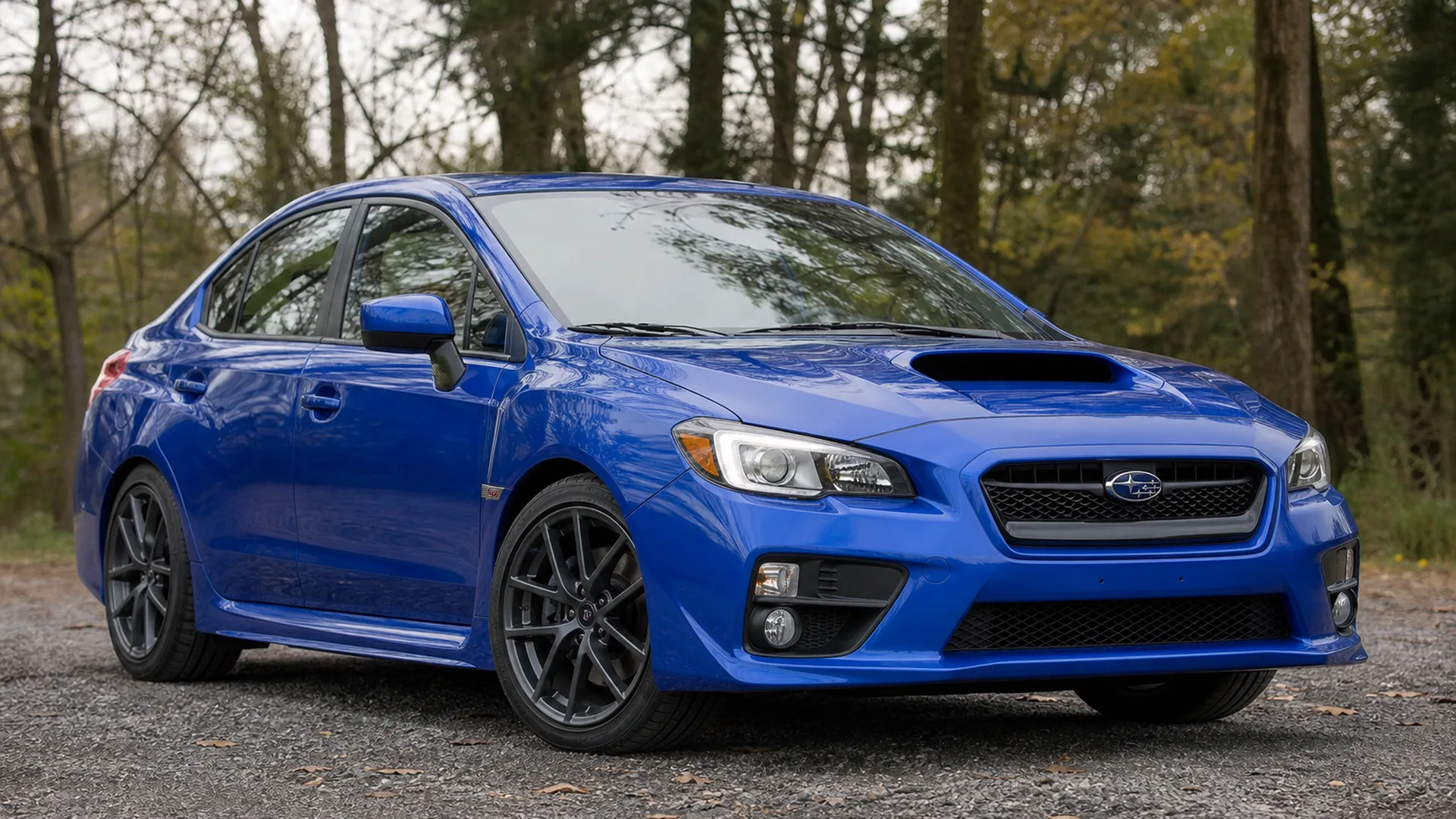
The Subaru WRX has earned its reputation as an affordable rally icon—turbocharged power, all-wheel-drive grip, and a manual gearbox that makes every commute feel like a backroad blast. It’s the kind of car that lets you pretend you’re a stage rally driver without selling a kidney. But here’s the catch: not every WRX model year deserves your trust or your money. Some years came with fragile clutches that barely survived break-in, engines that grenaded before hitting 40,000 miles, and structural welds that literally cracked apart under normal use.
This guide cuts through the hype to show you exactly which Subaru WRX years to avoid, which ones you can buy with confidence, and what alternatives might save you from expensive repair bills. Whether you’re shopping used or just curious about WRX reliability, you’ll walk away knowing how to dodge the lemons.
How we rated the best and worst Subaru WRX years
We didn’t pull this information out of thin air. Our research draws from:
- NHTSA complaint databases to track patterns by model year
- CarComplaints.com data showing which years rack up the most owner grievances
- Subaru enthusiast forums like NASIOC, ClubWRX, and r/WRX for real-world failure reports
- Technical service bulletins and recall records to identify factory-acknowledged defects
- Consumer Reports and Edmunds ownership cost and reliability ratings
We tracked failures by system—engine internals, clutch and transmission, electrical quirks, suspension, and AC—then cross-referenced everything against actual repair costs reported by owners. What emerged is a clear picture: some WRX years have chronic, expensive problems, while others run strong past 150,000 miles.
Most Common Subaru WRX Problems
Before we call out specific years, let’s talk about the WRX’s most common weak spots. Knowing these patterns helps you understand why certain years are trouble.
1. Engine Troubles That Empty Your Wallet
WRX engines make serious power from a turbo flat-four, but that performance comes with stress. Owners have reported internal failures involving piston ringlands (the thin metal between piston ring grooves), connecting rod bearings, and crankshaft journals. The 2009–2014 models with the EJ25 engine are especially vulnerable—cracked pistons or spun bearings can show up around 30,000 miles, particularly in cars that see aggressive driving or poor-quality fuel.
Oil consumption is another red flag. A leaking oil pump seal can drain oil fast, and if you don’t catch it, you’re looking at seized bearings and a dead engine. The 2015 WRX introduced a new 2.0L FA20 turbo, which solved some EJ25 problems but brought its own quirk: a cracked turbo inlet duct that caused misfires and power loss. Subaru issued a recall, but if the previous owner skipped it, you might inherit the headache.
Bottom line: WRX engines need quality oil, regular changes, and drivers who don’t thrash a cold motor. Neglect any of those, and you’ll meet your local engine builder sooner than expected.
2. Clutch and Transmission Nightmares
If there’s one complaint that defines problem WRX years, it’s premature clutch failure. The 2015 and 2016 models are notorious—many owners reported slipping clutches or total failures between 6,000 and 10,000 miles. CarComplaints ranks the 2015 WRX as the single worst year across all WRX generations, with clutch plate and flywheel issues topping the list at an average of 9,000 miles.
Subaru never issued a recall, so repairs came out of owners’ pockets. Expect to spend around $1,500 for a new clutch assembly. The root cause? Early production runs used under-spec’d pressure plates and throwout bearings that couldn’t handle the FA20’s torque delivery.
Earlier WRXs (2002–2014) ran a 5-speed manual that enthusiasts nicknamed the “glass transmission.” It worked fine for normal driving, but hard launches or big power mods could shear gears. Many owners either babied their 5-speeds or swapped in the stronger STI 6-speed. The 2015+ models got an upgraded 6-speed, which is sturdier—once Subaru fixed the clutch components after 2016.
WRXs with the CVT automatic (introduced in 2015) dodge clutch problems but bring their own issues: hesitation, occasional stalling, and a driving experience that feels disconnected. If you’re buying a WRX, you probably want the manual anyway.
3. Electrical Gremlins and Tech Headaches
The 2015 WRX had a recall for an electrical short in the optional subwoofer amp—serious enough to pose a fire risk. Beyond that, 2015–2016 owners reported random battery drain. The factory battery struggled with the car’s electrical draw, leaving some cars dead after sitting a few days.
Infotainment glitches popped up in 2018+ models: frozen head units, nav system failures, and unresponsive touchscreens. On CVT-equipped WRXs with EyeSight driver assist, the system occasionally malfunctioned or failed to engage adaptive cruise and emergency braking.
One oddball problem: rodents chewing wiring. Subaru uses soy-based insulation, which attracts mice and squirrels. Not unique to the WRX, but worth mentioning if you park outside.
Most electrical issues aren’t catastrophic, but check that recalls (especially the subwoofer fix) were completed, and consider upgrading to a higher-capacity battery if you buy a 2015–2016.
4. Firewall Welds That Literally Break Apart
Here’s a problem that sounds bizarre until you hear the cracking noise yourself. The 2008–2014 WRX and WRX STI had a structural defect: spot welds securing the clutch and brake pedal bracket to the firewall could crack and fail. Symptoms start with creaking or popping when you press the pedals, then escalate to lateral pedal movement. If the welds fully fail, the clutch won’t disengage properly—a legitimate safety hazard.
Subaru extended the warranty on affected models for one year, but many owners paid out-of-pocket to have the welds reinforced. Listen carefully during test drives. Any odd noises from the pedal area should trigger an inspection.
5. AC Issues (Minor, But Annoying)
Air conditioning failures aren’t widespread, but refrigerant leaks from compressor o-ring seals are common enough to mention. A slow leak reduces cooling over time. Many WRX owners replace o-rings or recharge refrigerant around the 5–10 year mark—relatively cheap and easy.
On higher-mileage cars, the compressor clutch can fail, killing cold air completely. Not a design flaw, just normal wear. Check that the condenser isn’t clogged with debris and that radiator fans work properly, especially on modified or track-driven cars.
The Subaru WRX Years You Should Absolutely Avoid
Now that you know the common problems, let’s talk specifics. These are the model years with the highest failure rates and owner complaints.
2009: The Year Everything Broke
The 2009 WRX sits at the top of most “avoid” lists. Subaru bumped engine output to 265 hp but didn’t upgrade the 5-speed gearbox to handle the extra torque. Clutch and transmission complaints spiked. Worse, the firewall weld issue showed up in force—owners reported popping noises, difficult shifts, and pedal bracket failures.
If you’re considering a 2009, assume the firewall needs reinforcement and the transmission has been stressed. The 2008 and 2010 models share similar weaknesses, so treat that entire 2008–2010 window with caution.
2014: Engine Failures at Low Mileage
CarComplaints labels the 2014 WRX as the worst model year for catastrophic engine failures. Multiple owners reported piston or cylinder failures requiring complete engine replacements—one case involved a $7,200 repair. Failures often appeared as sudden stalling or loss of compression.
The 2014 WRX used the EJ255 2.5L turbo, which by that point was being pushed hard (the STI’s 305 hp engine appeared in special editions). Some engines had latent defects like cracked ringlands or bearing issues. Most 2014s run fine, but the few that didn’t have given this year a bad reputation.
If you’re eyeing a 2014, get a compression test and oil consumption check before buying.
2015–2016: The Clutch Disaster
The 2015 WRX introduced a new generation—new chassis, new FA20 2.0L turbo, new 6-speed manual—and the first two years were plagued by clutch failures. The 2015 model has more owner complaints than any other WRX year, with clutches slipping or failing completely in the first 5,000–15,000 miles.
The 2016 model was slightly better but still suffered premature clutch wear. Subaru didn’t issue a recall, so early owners paid for replacements themselves. By 2017, Subaru revised clutch components and the problem largely disappeared.
Avoid 2015 and 2016 unless you have documented proof the clutch was replaced with updated parts—and even then, factor in that the car’s first owner dealt with a lemon.
Quick Reference: Years to Skip
- 2008–2010: Firewall welds, weak gearbox, underpowered feel
- 2009: Highest complaints for clutch and pedal bracket failures
- 2014: Random engine failures at low mileage
- 2015–2016: Widespread clutch problems, some electrical gremlins
The Best Subaru WRX Years to Buy
Not every WRX is a ticking time bomb. Some years are genuinely reliable and offer great performance per dollar.
2017–2021: The Sweet Spot for Modern WRXs
By 2017, Subaru had sorted out the clutch issues that killed the 2015–16 models. The 2017 WRX shows minimal complaints—just a few isolated clutch or throwout bearing noises, nothing systemic.
The 2018 model received a mid-cycle refresh with revised synchros, tweaked suspension, and improved shifter feel. Owner complaints are almost nonexistent. The 2019–2021 models continued the trend, with CarComplaints showing zero complaints for the 2021 WRX.
These years retain the proven 268 hp FA20 engine, offer modern tech, and have all the incremental fixes Subaru applied after launch. If you want a used WRX with current features and minimal risk, aim for 2018 or newer.
2011–2013: Solid Third-Gen Choices
The 2011 WRX got a major refresh—wide-body design, upgraded suspension, and most early bugs worked out. The 2012 model shows zero complaints on CarComplaints. The 2013 WRX is frequently recommended by enthusiasts for its aggressive looks, robust EJ255 engine, and STI parts sharing.
These years still use the 5-speed manual, but if you’re not launching hard or adding big power, it holds up fine. Check for firewall weld fixes, but many later GR-generation WRXs escaped that problem.
The 2011–2013 range offers classic WRX performance without the issues that plague 2008–2010 or 2014.
2004–2007: Classic Reliability
The mid-2000s “blobeye” and “hawkeye” WRXs have earned a reputation for durability. Subaru bumped the engine to 2.5L in 2006, added larger brakes, and dialed in the suspension. Many owners have pushed these cars past 100,000 miles without major failures.
The 5-speed manual is simpler and less stressed than later versions. Electronics are basic, which means fewer things to break. Watch for typical old Subaru issues like head gasket seepage and worn suspension bushings, but overall these are solid, affordable performance cars.
The 2002 WRX (the first U.S. model) also deserves mention—it had a smaller 2.0L engine (227 hp) that’s highly reliable, with Edmunds users giving it a 4.6/5 reliability rating.
2022–2024: Too New to Judge, But Promising
The newest VB-generation WRX uses a 2.4L FA24 turbo and a strengthened 6-speed manual. So far, no widespread issues have emerged. The first recall was a typo in the owner’s manual—hardly a mechanical crisis.
Early owners report satisfaction, and the car hasn’t shown the kind of launch-year problems that plagued the 2015. If you want a new WRX, there’s no reliability reason to avoid it, though long-term durability won’t be clear for a few more years.
Alternatives That Might Save You Money and Stress
The WRX is a unique package, but it’s not the only sporty sedan or hatch worth considering. Here are some alternatives that offer similar (or better) performance with fewer headaches.
Honda Civic Si and Type R: Reliable and Fast
The Civic Si delivers 205 hp (in 2017–2020 models) with Honda’s legendary reliability. The 10th-gen Si (2017–2020) has modern tech, a smooth 6-speed manual, and strong durability. Maintenance costs are lower than a turbo AWD WRX, and the driving dynamics are excellent even without all-wheel drive.
The Civic Type R (2017–2021) is even more impressive—306 hp from a 2.0L turbo, sophisticated suspension, and 0-60 in around 4.9 seconds. It’s FWD only, but it’s faster than most stock WRXs and holds value well. Early Type Rs had A/C condenser and gear grind issues, but Honda fixed most under warranty.
If reliability is your top priority, the Si and Type R are hard to beat.
Volkswagen Golf GTI and Golf R: Premium Performance
The Golf GTI (especially 2015–2019 Mk7 models) offers a refined interior, agile handling, and a punchy 2.0T engine (220–241 hp). It’s FWD, but the driving experience is polished and the car is generally reliable. Watch for water pump issues on early 2.0Ts, but most were fixed under warranty.
The Golf R adds AWD and more power (292 hp in 2015–2019 models, 315 hp in 2022+). A 2018–2019 Golf R rivals the WRX in performance but offers a nicer interior and quicker-shifting DSG (manual also available). Reliability is decent, though German parts cost more.
The Golf R never had the widespread clutch or engine issues that hurt the WRX.
Ford Focus ST and RS: Budget Power and AWD Thrills
The Focus ST (2013–2018) is a FWD hot hatch with 252 hp and a 6-speed manual. It’s rowdier than a WRX but often cheaper on the used market. Reliability is okay if left stock—just check for sensor failures and worn motor mounts.
The Focus RS (2016–2018) is the true WRX rival—350 hp, AWD, and torque vectoring. It’s a blast to drive but had a known issue: head gasket failures on early 2016 models. Ford issued a recall and replaced engines on affected cars. Make sure any 2016–2017 RS you consider has the updated head gasket or was built after July 2017.
Both offer hatchback versatility and strong performance per dollar.
Toyota GR Corolla: The New Rally King
The GR Corolla (2023+) is Toyota’s answer to the WRX—a turbo AWD hatchback with 300 hp from a 1.6L 3-cylinder, a 6-speed manual, and adjustable torque split. It’s smaller than a WRX but more agile and rally-focused.
Toyota’s reliability track record suggests it should hold up well (the drivetrain is based on the proven GR Yaris). The downside? High demand, limited production, and prices often above MSRP. If you can snag one, you get factory AWD turbo performance with Toyota dependability.
Mazda3 2.5 Turbo: Refined and Quick
The Mazda3 2.5 Turbo (2021–2023) offers 250 hp, AWD, and a premium interior—all with an automatic transmission only. It’s not a boy-racer like the WRX, but it’s quick (0-60 in ~5.6 seconds), comfortable, and reliable.
Think of it as a mature alternative—less raw performance, more polish, and no known trouble spots. Great for someone who wants turbo AWD without the WRX’s stiff ride and clutch replacements.