
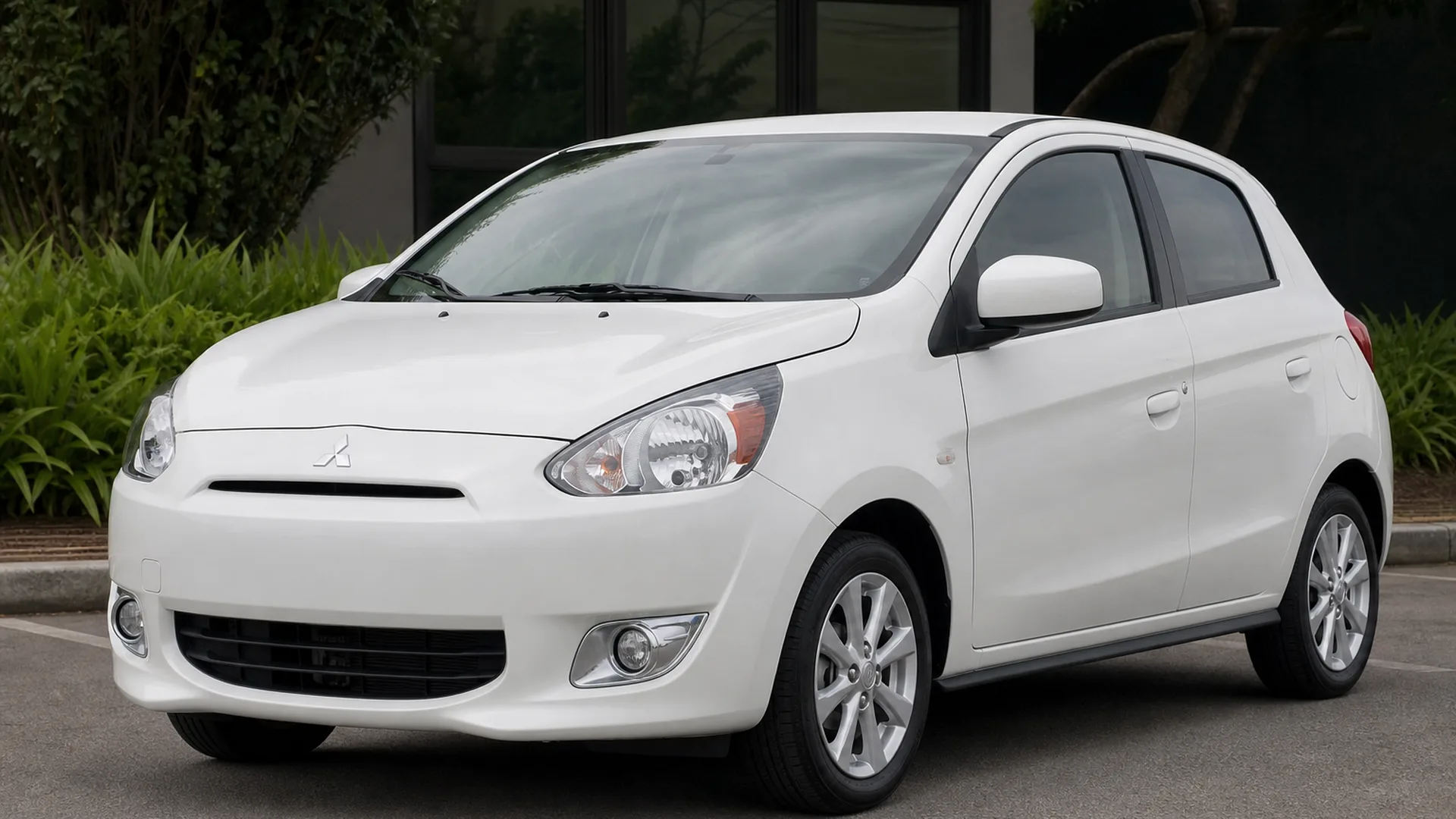
Shopping for a Mitsubishi Mirage? Smart move if you need cheap wheels and stellar fuel economy—this tiny hatchback can hit 43 mpg highway and starts at one of the lowest MSRPs in America. But here’s the catch: certain model years are riddled with brake failures, door hinge collapses, and airbag faults that can turn your budget buy into a money pit. This guide breaks down exactly which Mitsubishi Mirage years to avoid, which ones are safe bets, and whether you’d be better off with a Honda Fit or Toyota Yaris instead.
How We Figured Out Which Mirages Are Trouble
We didn’t just guess which years are duds. Our team pulled data from NHTSA complaint databases, analyzed thousands of owner reports on CarComplaints.com and Mitsubishi forums, and cross-checked recall records spanning both the 1990s–2002 generation and the modern 2012+ models. We also reviewed reliability scores from RepairPal and iSeeCars, plus long-term ownership studies to see which Mirages rack up repair bills versus which ones just keep running. The result? A clear picture of where Mitsubishi nailed it—and where they seriously dropped the ball.
How we rated the best and worst Mitsubishi Mirage years
Before we call out the worst years, let’s talk about what actually breaks on these cars. The Mirage isn’t a total lemon, but it does have weak spots you need to watch for:
1. Brakes Wearing Out Way Too Fast
If you’re looking at a 2014 or 2015 Mirage, brace yourself for brake drama. Owners reported needing new pads and rotors at 15,000 miles—sometimes even earlier. That’s absurd for any car, let alone one designed to be cheap to run. The 2015 model had it worst, with complaints about rotors warping and stopping power dropping off suddenly. Tires wore out quickly too, often because alignment was off from the factory or dealers didn’t set tire pressure correctly. By 2018, Mitsubishi had mostly fixed this (though some owners still heard screeching from debris between the pad and rotor—annoying but not dangerous). If you test-drive any mid-2010s Mirage, check the brake pedal feel carefully and peek at the rotor condition.
2. Engine Cranks But Won’t Start
Here’s a weird one: both ancient Mirages (1990s) and brand-new ones (2014) had no-start issues, but for totally different reasons. On 1993–1999 models, the distributor would fail and leave you stranded. On 2014s, faulty sensors or ECU glitches caused crank-no-start conditions. The modern Mirage’s 3-cylinder engine also buzzes loudly on the highway—that’s not a defect, just a quirk of a tiny motor working hard. It won’t strand you, but it might drive you nuts on long trips.
3. Transmission Quirks (Manual and CVT)
Got a manual? Watch out if it’s a 1996–1998, some had trouble getting into first or second gear because the synchronizer would bind. Adding a special friction modifier to the gear oil helped, but it’s a hassle. As for the CVT automatic in 2014+ cars, it’s fine if you baby it and change the fluid on schedule (every 30k–40k miles). Skip that, or drive aggressively, and you risk delayed shifts, weird noises, or outright failure. CVT replacements aren’t cheap on any car, and the Mirage’s budget drivetrain doesn’t leave much margin for abuse.
4. Airbag System Failures (Old and New)
This one’s scary. On 1995–2002 Mirages, a wiring harness short could stop airbags from deploying in a crash. On the modern generation, Mitsubishi recalled 2014–2018 models because the airbag sensor would misread normal bumps (potholes, flat tires) and disable the system—meaning if you did crash, the bags might not fire. That recall was fixed with a software update, but make sure any used Mirage you buy had the recall done. Check the VIN on NHTSA‘s site before handing over cash.
5. Doors That Sag or Fall Off (Yes, Really)
The 2000 Mirage is infamous for this. Badly welded door hinges caused doors to droop, become hard to close, or in extreme cases, detach from the car entirely. Mitsubishi fixed it by 2001, but 2000 models are basically unsellable because of this issue. Some 2015 Mirages also had door alignment problems (not as severe, but still frustrating). Bottom line: if a door feels heavy or misaligned during a test drive, walk away.
6. A/C That Blows Warm Air
A bunch of 2017 Mirage owners complained their A/C quit working or never blew cold. Usually it was low refrigerant from the factory or a small leak. Sometimes the compressor failed outright. The good news? Fixing it is cheaper on a Mirage than most cars because everything’s small and simple. Still, test the A/C on full blast before you buy, especially if you live somewhere hot.
7. Interior Rattles and Cheap Trim
Let’s be real: the Mirage is built to a price. Expect wind noise, rattling panels, and seat fabric that wears thin. The 2014–2015 models had almost no sound insulation, so highway driving felt louder than it should. None of this will stop the car, but it reminds you daily that you bought the cheapest new car in America. A few zip ties and some adhesive foam can quiet things down if you’re handy.
The Absolute Worst Mitsubishi Mirage Years (Do Not Buy)
If we had to pick three years to blacklist, these are it:
2000 Mitsubishi Mirage – Door Hinges From Hell
The 2000 model is the poster child for shoddy build quality. Those door hinge failures weren’t rare—they were widespread enough that people joke about Mirage doors “falling off.” Even if the hinges hold, you’re buying a car at the tail end of a 1990s design that was already outdated. There’s no reason to risk a 2000 when a 2001 or 2002 is way safer. Skip this year entirely.
2014 Mitsubishi Mirage – First-Year Blues
When Mitsubishi brought the Mirage back to the U.S. in 2014, they rushed it. Being the first model year of a reintroduced nameplate (built in Thailand for global export), it had teething problems everywhere: electrical gremlins, early brake wear, no-start conditions. Some of this got ironed out in 2015, but…
2015 Mitsubishi Mirage – The Absolute Worst Modern Year
If 2014 had problems, 2015 doubled down. CarComplaints.com ranks 2015 as having the highest volume of complaints of any recent Mirage. Brakes wore out insanely fast, doors didn’t close right, electrical faults popped up randomly, and two major airbag recalls hit this year. MotorBiscuit called it the worst Mirage year, period. Spending a few hundred bucks more on a 2016 or 2018 will save you thousands in repairs and stress.
Other Years to Approach with Caution:
- 1993–1999: These older models can be reliable if well-maintained, but distributor failures and ignition cylinder issues are common. Parts are getting harder to find.
- 2016–2017: The airbag recall affects these too. Also, early CVTs in 2016 had some noise complaints. Not terrible, but check the service records closely.
The Best Mitsubishi Mirage Years (If You’re Set on One)
Not every Mirage is a disaster. If you stick to these years, you’ll probably have a decent experience:
2002 Mitsubishi Mirage – End of an Era, Done Right
By 2002, Mitsubishi had worked out the kinks from the 1990s generation. Door hinges were solid, the engine and transmission were mature, and owner complaints dropped way off. It’s now a 20+ year-old car, so condition matters more than anything—but at least there’s no infamous defect lurking. If you want a cheap old Mirage coupe or sedan, this is the safest pick.
2018 Mitsubishi Mirage – The Sweet Spot
After a mid-cycle refresh, the 2018 Mirage got upgraded brakes, better headlights, and a nicer infotainment system—all without introducing new problems. Complaint volumes dropped sharply compared to 2014–2015. Reliability rankings shot up. This is the year Mitsubishi finally figured out how to build a cheap car that doesn’t constantly break. If you’re shopping for a used modern Mirage, start here.
2019 Mitsubishi Mirage – More of the Same (in a Good Way)
The 2019 carried over the 2018 improvements and kept the momentum going. NHTSA gave it a 4-star safety rating (better than early models), and RepairPal still scores the Mirage 4.5/5 overall. Few serious issues reported—no engine drama, no transmission failures, no brake disasters. It starts when you turn the key and stops when you hit the pedal. For a subcompact economy car, that’s mission accomplished.
Honorable Mentions:
2020–2021 and newer are fine too. They’re basically the same car, so as long as you avoid the bad early years, later Mirages are dependable enough. You’ll also get whatever’s left of the factory warranty, which is a nice safety net.
Better Alternatives That Won’t Let You Down
Look, the Mirage works if you need the absolute cheapest car and can live with its quirks. But spending just a little more often gets you a much better vehicle. Here are some subcompact hatchbacks that outperform the Mirage in reliability, comfort, and resale value:
Toyota Yaris (2010–2018): The Gold Standard
RepairPal crowns the Yaris the most reliable subcompact car, with annual repair costs around $333—lowest in the class. A used 2012–2018 Yaris hatchback will just run and run. It’s not exciting, but neither is the Mirage. The difference? The Yaris won’t strand you or nickel-and-dime you with random repairs. If you can stretch your budget $1,000–$2,000 more, this is the move.
Honda Fit (2009–2013, 2015–2020): Space, Quality, and Fun
The Fit’s Magic Seat gives you way more cargo versatility than a Mirage, and Honda’s build quality is miles ahead. A 2017 Fit scored 8.2/10 for reliability under $15k in one study. The 2009–2013 second-gen and 2015–2020 third-gen Fits are both rock-solid. You’ll pay more upfront, but you’ll get a car that’s nicer to drive, holds its value better, and won’t leave you hunting for parts. The manual transmission is actually enjoyable, and the conventional automatic (2015+) avoids CVT headaches entirely.
Chevrolet Spark (2017–2022): Budget-Friendly and Better Built
Like the Mirage, the Spark is tiny and cheap—but it feels more solid and has a bit more power (84 hp vs. the Mirage’s 78 hp). The 2022 Spark scored 7.7/10 for reliability, and owners report that 2017+ models are pretty trouble-free. GM discontinued it in 2022, so you can snag a nearly-new used one with Apple CarPlay and modern safety tech that early Mirages lack. If you love the Mirage’s low price but want fewer issues, test-drive a Spark.
Kia Rio / Hyundai Accent (2012+): More Car for Not Much More Money
These Korean twins are slightly bigger than a Mirage and way more refined. A 2021 Kia Rio 5-door scored 7.5/10 for reliability. Both use conventional automatics (no CVT drama) and 4-cylinder engines that feel peppier on the highway. The 2016+ models also pack better safety features. If you want a small car but don’t want to feel like you’re driving a penalty box, a Rio or Accent is a smart compromise.
Mazda2 / Yaris iA (2011–2019): Fun to Drive, Built to Last
The Mazda2 (2011–2014 hatchback) and its rebadged sibling, the Scion/Toyota Yaris iA sedan (2016–2019), combine Mazda’s fun handling with solid reliability. They’re rarer than a Yaris or Fit, but if you find one, jump on it. The Yaris iA is basically a Mazda with Toyota’s warranty backing—best of both worlds.
Final Verdict: Should You Buy a Mitsubishi Mirage?
Here’s the honest truth: the Mirage can be a reliable, money-saving car—but only if you pick the right year. Avoid 2000, 2014, and 2015 like the plague. If you find a clean 2018 or 2019 with full service records and the airbag recall completed, go for it. You’ll get dirt-cheap transportation that sips gas and keeps running.
That said, if you can swing $1,000–$2,000 more, a Toyota Yaris or Honda Fit will give you a better ownership experience and hold its value longer. The Mirage depreciates fast—so do the math on whether you’re really saving money, or just deferring costs to future repair bills.
Money-Saving Pro Tip:
Spending an extra grand upfront on a better year (or a more reliable competitor) can easily save you $2,000+ in brake jobs, transmission repairs, and aggravation over five years. Don’t be penny-wise and pound-foolish.
Before You Buy Any Mirage:
- Run the VIN through NHTSA‘s recall database and confirm all recalls are fixed
- Check for CVT fluid service records (should be changed every 30k–40k miles)
- Test the brakes, A/C, and door alignment on your test drive
- Budget $500–$1,200/year for maintenance (RepairPal average)
Choose wisely, and you’ll get a no-frills commuter that does the job. Choose poorly, and you’ll be on a first-name basis with your mechanic. Now you know which years to avoid—and which ones might actually surprise you in a good way.