
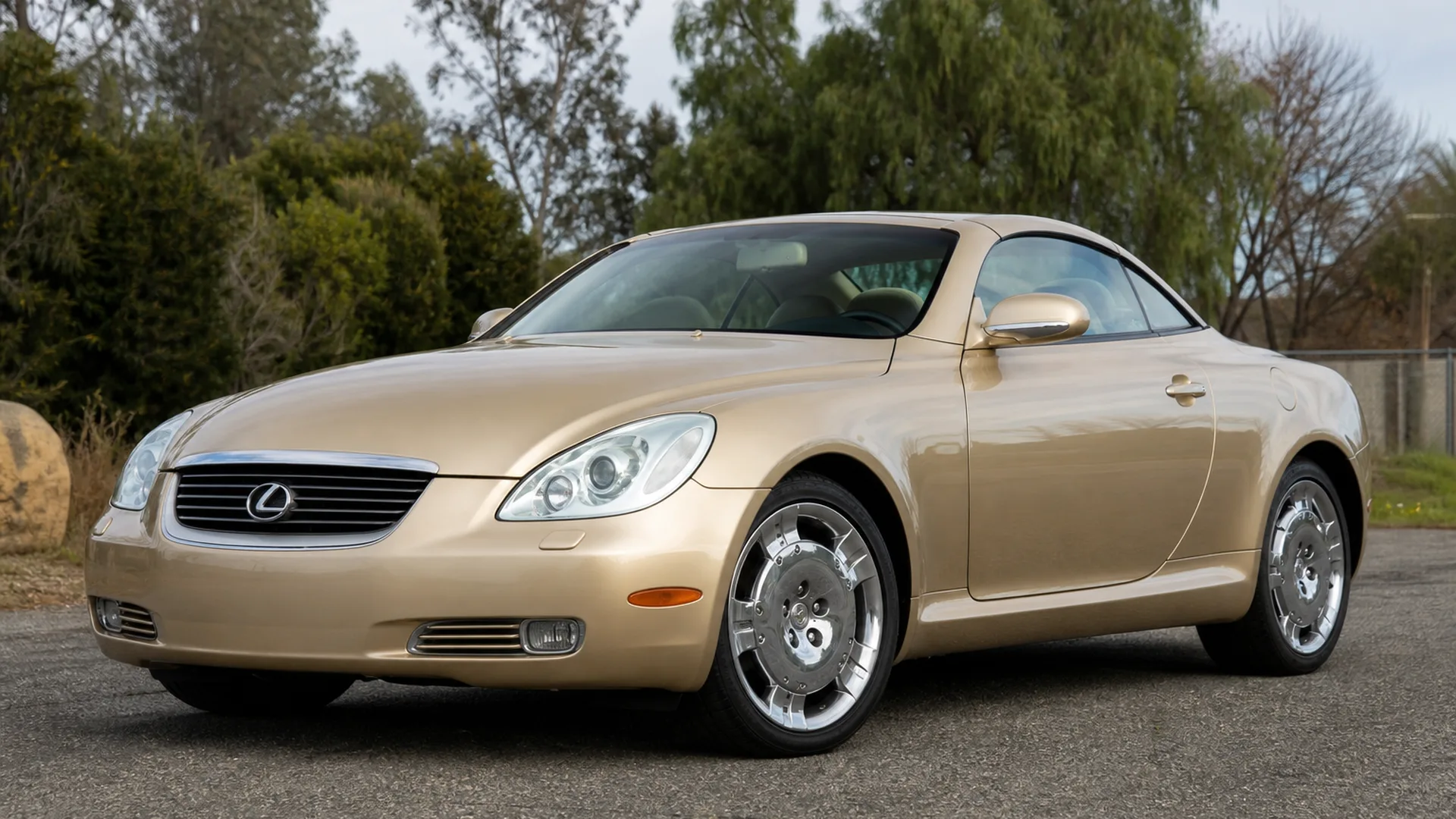
The Lexus SC430 never quite fit neatly into any category. When it debuted in 2002, critics called it too soft for a sports car and too flashy for a luxury cruiser. Fast-forward two decades, and this retractable-hardtop V8 convertible has quietly become a cult favorite among people who appreciate rock-solid reliability wrapped in a distinctive design. If you’re shopping for a used SC430, you need to know which years deliver that legendary Lexus dependability—and which ones bring headaches you can avoid. This guide breaks down the model years to skip, the ones worth buying, and what else you might consider if the SC430 isn’t quite your speed.
How We Gathered This Data
We didn’t just skim a few reviews and call it a day. This analysis pulls from owner forums like ClubLexus and Lexus Owners Club, where people share real-world ownership experiences spanning years and hundreds of thousands of miles. We cross-checked those stories against NHTSA complaint records and recall databases to spot patterns. Consumer feedback from Edmunds, KBB, and independent review sites helped us understand which model years had recurring issues versus one-off problems. We also paid attention to mechanics who’ve worked on these cars professionally—including former Lexus technicians who now own SC430s themselves and have insights you won’t find in any press release. Finally, we looked at how the SC430 evolved mechanically from 2002 through 2010, tracking when Lexus made suspension updates, swapped transmissions, and addressed early complaints.
Common Issues Across the SC430 Range
Before we get into specific years, let’s talk about what tends to go wrong on these cars. The SC430 shares its bulletproof 4.3L V8 (3UZ-FE) with the LS430 sedan, so the engine itself rarely causes trouble. But cooling system maintenance matters—a lot. Radiators can develop leaks at the lower tank, and if coolant mixes with transmission fluid through the built-in cooler, you’ll end up with contaminated ATF and rough shifting. Water pumps are another weak spot. Lexus recommends timing belt and water pump replacement around 90,000–100,000 miles, and skipping that service can lead to overheating and expensive head gasket repairs. Oxygen sensors fail as these cars age, triggering check-engine lights that might make you think something serious is wrong when it’s often just a sensor.
The transmission itself is durable if you keep up with fluid changes. Lexus marketed the ATF as “lifetime,” but owners who change it every 45,000 miles report smoother shifts and longer gearbox life. If you feel juddering or hard shifts, suspect coolant contamination and flush the system immediately. Early models used a 5-speed automatic (2002–2005) before Lexus upgraded to a 6-speed in 2006. Both hold up well with proper care, though some owners have reported a “thud” on downshift in earlier transmissions—usually not a catastrophic problem, but annoying.
Suspension wear happens faster than you’d expect for a Lexus. Control arm bushings—especially at the front and rear upper arms—wear out prematurely, causing clunks and vague steering feel. Worn bushings also make it harder to hold alignment, which leads to rapid tire wear. Early SC430s came with run-flat tires and stiff suspension tuning, which gave them a harsh, “crashy” ride over rough pavement. Lexus softened the suspension in late 2002 and again in late 2004, but if you test-drive an early car that feels punishing over bumps, those bushings are probably shot. Replacing them restores the tight, composed feel the car should have. Sway bar bushings can squeak or creak when worn—an easy fix. Wheel bearings can also wear, causing vibration or drifting. If the steering wheel makes noise when you turn, the spiral cable (clock spring) in the column might be failing, which is pricey to replace.
The brakes work fine for cruising but were never this car’s strong suit. They provide adequate stopping power, but some owners consider them a weak point compared to sportier rivals. Upgrading to better pads or stainless brake lines can improve feel. On older cars, check the metal brake pipes for corrosion, especially if the car spent time in snowy climates.
Electronics and tech are where age shows most. A weak battery will cause all sorts of strange behavior—warning lights, a malfunctioning convertible top, random errors on the dash. Keep the battery healthy or use a trickle charger if the car sits for weeks. The Tire Pressure Monitoring System is notoriously fragile; valve stems corrode or leak, and some owners just disable the system rather than deal with it. The starter motor wears out after high mileage, and because it’s buried under the intake manifold, replacement takes about two hours of labor. The EVAP vapor canister (also under the intake) can fail and costs a lot to replace, though failures aren’t super common.
Inside, the Mark Levinson audio system sounds great when it works, but subwoofers and door speakers can blow over time. The factory navigation uses ancient DVD maps and feels painfully outdated by modern standards. Some owners swap in aftermarket head units that integrate with the ML amp. Bluetooth phone pairing didn’t arrive until 2005, and Bluetooth audio streaming not until the late 2000s. By 2010, the SC430 had iPod connectivity and XM traffic, but early models feel more like time capsules.
The climate control system adjusts airflow based on roof position and vehicle speed, which is clever for its era. Most SC430s still blow cold air two decades later, but refrigerant leaks from the condenser or evaporator happen as cars age. The evaporator sits behind the dash, so replacing it is a big job. If the AC isn’t cold, get it leak-tested. A musty smell usually means the evaporator needs cleaning—common in older convertibles.
The retractable hardtop is mechanically complex but generally reliable if you use it regularly. If the roof moves slowly (more than 25–30 seconds to open or close), the hydraulic motor might be weakening. Position sensors can fail if the roof sits unused for months, so cycle it occasionally even in winter. Some cars have an inoperative trunk release, usually caused by a broken ground wire in the harness. Water leaks are rare but check the weatherstripping around the roof for cracks. Inspect the underbody for rust, especially on 2002–2004 models in salty climates—look at the rear subframe and suspension mounts.
Bottom line: these aren’t problems that affect every SC430, but they’re the issues to watch for. A former Lexus technician who owns multiple SC430s said his cars gave “no trouble” and are “hard to beat” for worry-free cruising. Regular maintenance—fluids, bushings, timing belt—keeps these cars running smoothly for years.
Lexus SC430 Years You Should Probably Skip
If you’re shopping used, steer clear of the earliest models. The 2002–2004 range represents the SC430 at its roughest, before Lexus smoothed out the ride and added meaningful tech updates. In the U.S., the SC430 launched as a 2002 model (it debuted a year earlier in Japan as the Toyota Soarer, so 2001–2004 cars are essentially the same).
2002 takes the crown as the worst year. CarComplaints.com ranks 2002 as the most problematic SC430 based on the volume and severity of owner reports. The biggest complaint? Premature tire wear. Factory run-flat tires wore out shockingly fast—often by 20,000 miles—because the car struggled to hold alignment and the suspension setup was brutal on tires. Many 2002 owners also dealt with the harsh, jittery ride quality that made long trips uncomfortable. As a first-year model, 2002 SC430s also had typical early-production quirks. If any year deserves the “avoid” label, it’s a neglected 2002.
2003 is largely a repeat of 2002. Lexus may have tweaked the suspension during production, but 2003 cars still lack the later improvements—no 6-speed transmission, no Bluetooth, no facelift styling. They’re not inherently terrible, but you’ll want proof of updated tires (most owners ditched the run-flats), cooling system maintenance, and fresh suspension bushings. Since these cars are now 20+ years old, expect more wear items than later models.
2004 is a mixed bag. Early 2004 builds are basically 2003s, but Lexus made a significant suspension update in late 2004. The company added new dampers and retuned the chassis to deliver a more absorbent ride and sharper handling. Autocar noted these mid-2004 changes “cured the model’s questionable ride and handling.” So early 2004 cars might still have the old, stiff setup, while late 2004 (“2004.5”) models ride much better. Unless you can confirm a 2004 has the revised suspension, treat it like a 2002–03. It didn’t get the facelift or 6-speed, so it’s transitional—not as problematic as the earliest years, but not as polished as 2005 and beyond.
One source bluntly warns to “avoid the 2001–2004 model years due to their significant engine cooling issues and premature suspension wear.” If you do consider an early SC430, look for service records showing timing belt and water pump replacement, along with suspension work. You might need to budget for new shocks and bushings to restore the ride quality. But honestly, most buyers will have a better experience skipping 2002–04 and targeting the later years we’ll cover next.
Keep in mind the SC430 never had major powertrain recalls or catastrophic defects in any year. Even the “worst” years aren’t disastrous by used-car standards. The caution here is more about avoiding extra hassles and enjoying the refinements Lexus made as the car matured.
The Best Lexus SC430 Years to Buy
Lexus kept improving the SC430 throughout its production run, and later models are noticeably better. The 2005 update and especially the 2006 facelift addressed most early complaints and brought modern amenities. By the end of production, the SC430 had evolved into a truly polished luxury cruiser.
2006–2010 (Facelift Models) represent the sweet spot. For 2006, Lexus gave the SC a mid-life refresh with meaningful upgrades. A 6-speed automatic replaced the 5-speed, improving acceleration and fuel economy. The suspension got another round of tuning. Lexus introduced the Adaptive Front-lighting System (AFS), where the headlamps swivel in corners for better night visibility. The exterior received a revised grille, updated bumpers, new headlight and foglight designs, and LED taillights for a fresher look. New 18-inch wheel designs completed the visual update.
Inside, 2006+ models got an upgraded navigation system with voice recognition and standard Bluetooth hands-free phone integration—features earlier cars lacked. By 2007–2010, the SC430 added an auxiliary input and iPod connectivity, and by 2010 it included XM real-time traffic and Bluetooth audio streaming. These conveniences make later models feel much less dated.
Reliability-wise, 2006–2010 SC430s benefit from all the fixes Lexus made in earlier years. Owners report very few problems beyond routine maintenance. One forum member put it simply: “If I were looking again, I’d certainly look for nothing older than an ’06. The advances made on the ’06+ models make them more desirable.” These later cars offer the full luxury package with the least hassle—they’re absolutely the recommended buy.
2010 (Final Model Year) sometimes gets singled out as the ultimate SC430. By 2010, Lexus had layered on every possible update. It’s mechanically similar to 2008–2009 but has the lowest age-related wear and likely fewer miles than older examples. Features like USB/iPod ports, Bluetooth audio, and updated navigation are all present. Some reviewers crown 2010 as the peak: “If you’re looking to cruise quietly in style, the best year for the Lexus SC 430 is the 2010—that’s the used car to pick.” Being the last year produced, 2010 models are also the rarest and can command a premium. If you can find a low-mile 2010, it’s worth considering—just expect to pay more for the privilege.
2005 (Honorable Mention) came just before the facelift, but don’t overlook it. Mid-2004 and all 2005 models came with the improved suspension setup, so they ride much better than 2002–03. The 2005 was also the first year to add Bluetooth phone capability and voice navigation, which meaningfully updates the cabin experience. It still has the 5-speed automatic and pre-facelift styling, but it’s a value sweet spot: you get most of the later tech and comfort improvements without the higher price of a 2006+. Many enthusiasts consider a late 2004 or 2005 with full service history a smart buy, since it has most of the kinks worked out. If your budget doesn’t stretch to a facelift model, a well-kept 2005 is the next best thing.
Bottom line: Target a 2006 or newer SC430 for the best experience. These later models have the 6-speed transmission, all the suspension fixes, and more modern tech, while keeping the SC430’s core strengths of reliability and luxury. A 2007–2009 with moderate mileage can often be found at a reasonable price and will be an excellent top-down cruiser needing little beyond standard maintenance. If you find a 2010 Pebble Beach Edition (a special final-year trim) or any 2010, you’ll have the best of the breed. Late-model SC430 owners consistently report high satisfaction—the car “does everything asked of it” and is an effortless, low-stress luxury convertible. As one former Lexus tech turned owner said: “If you like wafting about in something powerful and different that isn’t going to give you sleepless nights worrying about repair bills, it’s hard to beat.” That’s especially true for the later years.
Other Luxury Convertibles Worth Considering
The SC430 occupies a unique spot in the market: a two-seat (plus two token rear seats) hardtop convertible with a V8, blending luxury with a touch of sport. But if you’re not completely sold on the SC430, here are some alternatives—and the model years to target or avoid for each.
Mercedes-Benz SL-Class (R230, 2003–2012) was the SC430’s most direct competitor when new. It offers a more performance-oriented drive, especially in AMG form, and carries the prestige of the three-pointed star. But early R230 SLs (2003–2006) should be approached carefully. These first retractable-hardtop SLs suffered from hydraulic roof problems and a parade of electronic gremlins. The 2003–04 models have a reputation for expensive problems—one owner reported a 2003 SL500 “cost me £18k in repairs over 3 years.” Steer clear of 2003–2005, and even 2006 (the first facelift) still had issues like ABC suspension leaks.
The smart buy is a 2007–2008 SL. Mercedes gave the SL a substantial update for 2007, improving reliability with updated electronics and a more sorted Active Body Control suspension. The 2009–2011 final years got another facelift and are even better, though more complex (direct injection engines by 2011). An SL can deliver more power and sportiness than an SC430—think SL500/550 or the V12 SL600—but maintenance costs are dramatically higher. If you consider an R230, stick to post-2006 (ideally 2007+) and make sure the ABC hydraulic suspension and power top are working properly. Those are the big-ticket repairs on these cars.
BMW 6 Series Convertible (E64, 2004–2010) brings sharper handling and a sportier image than the SC430. The trade-off is higher complexity and lower reliability. Common E64 6-Series issues include a V8 engine that “loves to leak and burn oil”—valve cover gaskets, vacuum pumps, and other seals often drip. The N62 4.4L/4.8L V8 can suffer water pump and coolant expansion tank failures that cause overheating. Early models (2004–2005 645Ci) had a 4.4L V8 known for valve stem seal wear, leading to oil smoke as it ages. The 2006 650i (4.8L V8) is a bit more refined.
Electrical issues are another concern. The first-generation iDrive (2004–08) was notoriously buggy and can be frustrating or prone to glitches. Convertible-specific problems include top mechanism faults and roof sensor issues. The best E64 years are 2008–2010. By 2008, BMW updated the iDrive and ironed out some bugs, and you avoid the earliest engine issues. If you’re looking at a 2004–2005, confirm all seals and gaskets have been replaced and that iDrive software updates were done.
Final
The Lexus SC430, with its combination of luxury, reliability, and unique design, remains a standout choice in the luxury convertible market. While the earlier years (2002–2004) come with more frequent issues, particularly with suspension wear, cooling system problems, and outdated tech, later models from 2006 to 2010 offer a refined, smooth driving experience with modern amenities and improved reliability. If you’re looking for the best balance of comfort, performance, and low maintenance, a 2006 or newer SC430 is the ideal choice. With regular maintenance and attention to common issues, this car can continue to deliver enjoyable top-down cruising for years to come. If you find a well-maintained 2010 model, you’ll be driving one of the last great luxury convertibles, combining everything Lexus perfected over the years.