
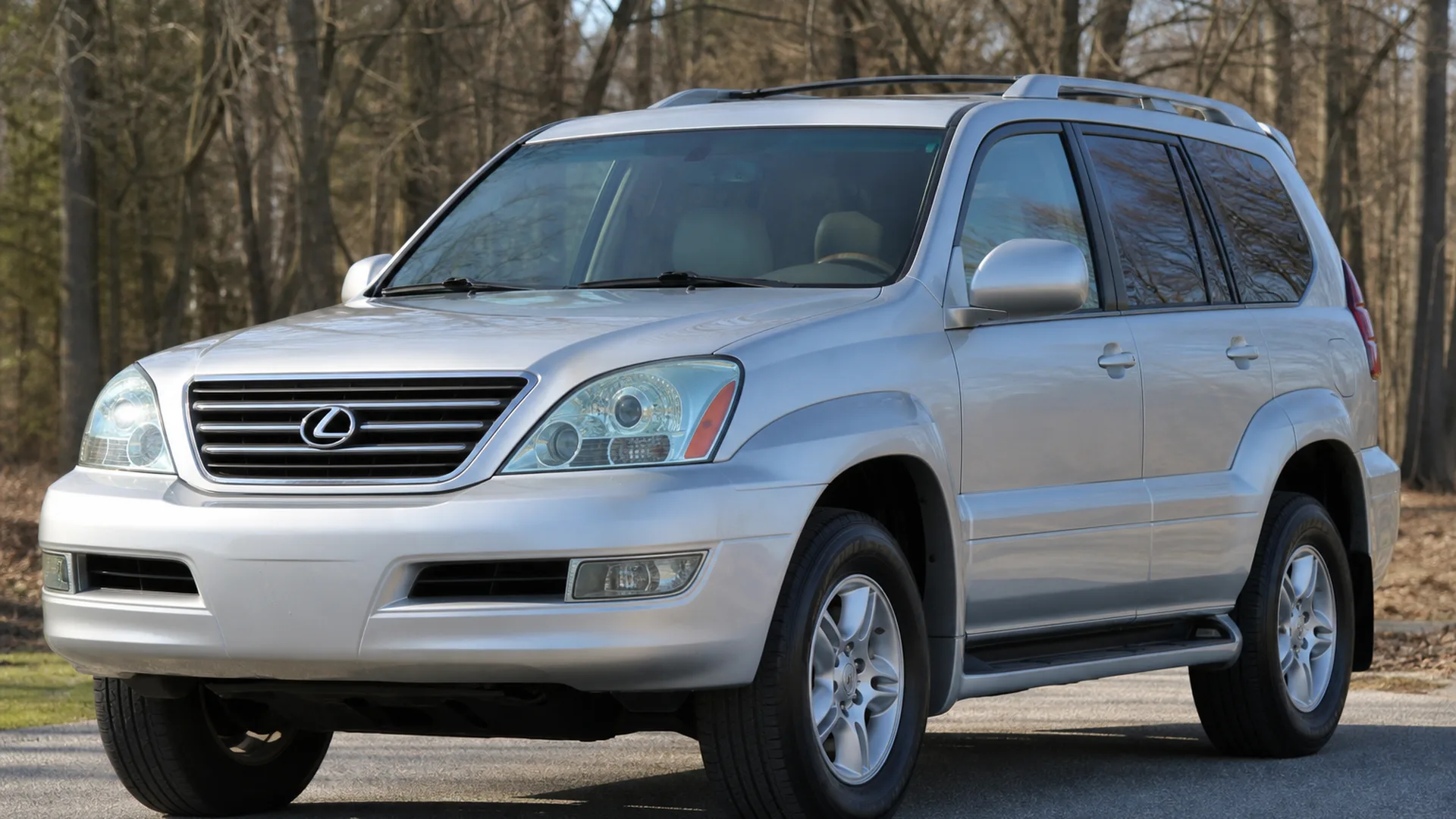
The Lexus GX470 built quite a reputation between 2003 and 2009. Sitting on the same rugged platform as the legendary Land Cruiser Prado, this mid-size luxury SUV paired a proven 4.7-liter V8 with full-time four-wheel drive and a tech-heavy suspension setup. Many owners report 300,000+ miles on the original engine, and the GX470 became a favorite among overland adventurers and families alike.
But here’s the catch: not every model year lived up to that “bulletproof Toyota” reputation. Some GX470s came with frustrating drivetrain clunks, expensive air-suspension failures, and brake problems that caught owners off guard. If you’re shopping for a used GX470, knowing which years to skip—and which ones deliver real reliability—can save you thousands of dollars and a whole lot of headaches.
How we rated the best and worst Lexus GX470 years
We pulled data from NHTSA complaint records, official Lexus recalls, and Technical Service Bulletins published between 2003 and 2010. We cross-referenced owner reports on dedicated GX470 forums and scanned reliability summaries from platforms like CarComplaints and CarParts. We also interviewed mechanics who specialize in Lexus and Toyota SUVs to understand which repairs show up most often and which model years see the fewest comebacks. Our goal was simple: figure out which GX470s are worth your money and which ones are rolling dice.
Most Common Lexus GX470 Problems
Even the best GX470s share a few quirks that come with age and the platform’s complexity. Here’s what you need to watch for, no matter which year you’re considering.
1. That Notorious Drivetrain Clunk
Early GX470s—especially the 2003 model—earned a bad reputation for a harsh “clunk” or “thump” from the rear end when you brake or start moving from a stop. Some owners describe it as feeling like the truck lurches forward even when your foot is planted on the brake. The problem traces back to the slip-yoke and driveshaft spline design.
Dealers issued multiple fixes over the years, but none of them completely eliminated the issue for every truck. If you’re test-driving an older GX470 and you hear or feel that thump, you’re dealing with a known flaw that may require parts replacement or a custom driveshaft mod. High-mileage models from 2006 and later sometimes develop differential bearing wear or propeller-shaft failures on top of the original clunk issue.
2. Secondary Air Injection Pump Failures
The 4.7-liter V8 is famously durable, but mid-2000s GX470s (particularly 2005–2007) have a weak point in the secondary air-injection system. Plastic vanes inside the air pump can break apart, sending debris into the intake and triggering limp mode or a check-engine light. Replacing the pump and any contaminated sensors usually fixes it, but Lexus originally sold replacement pumps with the same flawed design. By 2009 most trucks had moved past this issue, seeing only routine oxygen sensor or catalyst wear. Budget around $800–$1,500 for a secondary air pump replacement if you’re buying a mid-generation GX470 with 100,000+ miles.
3. Brake System Surprises
A handful of mid-2000s GX470s—particularly 2006 models—suffered sudden brake failures, including failed master cylinders and ABS actuator problems. One documented 2006 owner reported three separate brake-fade incidents, some requiring new hydraulic components or complete fluid flushes. Even trucks without catastrophic failures tend to chew through pads and rotors faster than you’d expect for a luxury SUV. The GX470 shares the same heavy-duty brakes as the Land Cruiser Prado, but that weight puts extra stress on the system. Plan to inspect brake lines, cylinders, and the master cylinder carefully on any GX470, and budget for upgraded pads if you do a lot of mountain driving or towing.
4. Active Height Control (AHC) Suspension Drama
The GX470’s rear air suspension is clever—it automatically levels the truck when you load cargo—but it’s also expensive when it breaks. Leaking air springs, failed height sensors, and a worn compressor can cause the rear end to sag or sit too high. Lexus even issued a Technical Service Bulletin (TSB SU002-05) for 2003–04 models to address moisture contamination in the AHC pump. Listen for hissing noises or a pump that runs constantly when the truck is parked. A full AHC system repair can cost $1,500–$3,000 depending on which components fail. Some owners bypass the system entirely with a coilover conversion kit, which removes the complexity but also eliminates the self-leveling feature.
5. Electrical Gremlins and Battery Drain
Owners of 2003–04 GX470s sometimes wake up to a dead battery after the truck sits overnight. Corroded terminals and parasitic drains are the usual culprits. A few 2009 models saw premature alternator failures—some units died well before their expected lifespan. The radio, navigation screen, and HVAC controls are aging gracefully on most trucks, but you’ll occasionally find a stuck blower resistor or a dead pixel cluster on the nav display. These are mostly annoyances rather than safety issues, and they’re cheap to fix compared to the suspension or drivetrain problems.
6. Sun-Baked Dashboards
This one’s purely cosmetic, but it’s common enough to mention. GX470s from 2007 onward often develop dashboard cracks if they spent years in hot climates. The dash vinyl doesn’t hold up well under direct sun, and replacement dashboards are pricey. Door lock actuators and window switches also tend to fail as the truck ages. None of this affects how the GX470 drives, but it does hurt resale value if the interior looks rough.
7. Recall Roundup
Lexus issued very few safety recalls for the GX470. The most notable was recall 16V065 in 2016, which reprogrammed the side-curtain airbag system on 2004–2006 models to prevent unintended deployment. Another recall (09V234) in 2009 corrected incorrect vehicle load-capacity labels on 2006–2009 trucks. Neither recall points to a major engineering flaw, and both are easy fixes at the dealer. Overall, the GX470’s recall history is cleaner than most SUVs from that era.
Lexus GX470 Years to Avoid
Not every GX470 is a money pit, but two model years consistently show up with the most complaints and the highest repair costs.
2003 – The Troubled Launch Year
The 2003 GX470 had the worst drivetrain issues of any year in the lineup. That driveshaft clunk we talked about earlier? It’s most pronounced on 2003 models, and dealers struggled to find a permanent fix. Some owners report the truck lurching forward unpredictably at stoplights, which is both annoying and dangerous. Repairs tended to be expensive because the problem took a while to diagnose, and Lexus hadn’t yet refined the driveshaft design. CarComplaints calls 2003 the “worst GX470 year” based on owner feedback and repair frequency. If you’re looking at a 2003, make sure the previous owner addressed the driveshaft issue with documented repairs. Otherwise, walk away.
2006 – Peak Complaint Volume
The 2006 GX470 holds the record for the highest number of complaints across the entire model run. Beyond the drivetrain clunk, 2006 trucks saw multiple brake system failures, air suspension breakdowns, and secondary air pump problems all at once. Some owners reported premature wear on AWD components like the center differential actuator and transfer-case bearings. Dealers were swamped with service calls on 2006 models. If you’re considering a 2006, get a pre-purchase inspection that focuses on the brake hydraulics, air suspension compressor, and transfer case. Budget extra for potential repairs, or just skip 2006 entirely and look at a later year.
Proceed with Caution: 2004–2005 and 2008
These years aren’t as bad as 2003 and 2006, but they come with their own caveats. Some 2004 GX470s have the battery-drain issue, and 2005 models started seeing early air pump failures. The 2008 model year sits between the improved 2007 and the refined 2009, so it’s a decent choice if the truck has a clean service history. Just watch for HVAC quirks and dashboard cracking on 2008s that spent time in sunny climates.
Best Lexus GX470 Years to Buy
If you want a GX470 with the lowest risk and fewest headaches, aim for the tail end of the production run.
2009 – The Final Refinement
The 2009 GX470 is the most reliable year in the lineup. Lexus had seven years to work out the kinks by this point, and it shows. CarParts’ analysis found only a handful of complaints for 2009, mostly minor sensor glitches or battery issues. The drivetrain clunk was largely resolved, brake system failures were rare, and even the secondary air pump showed fewer problems. If you’re buying a GX470, start your search with 2009 models. They command a slight premium on the used market, but the peace of mind is worth it.
2007 – Solid and Affordable
The 2007 GX470 is almost as good as the 2009 but usually costs a bit less. Aside from cosmetic dashboard cracking and the carryover air pump issue, 2007 trucks have strong drivetrains and reliable braking systems. CarParts ranks 2007 nearly equal to 2009 in overall reliability. No major recalls or design changes affect this year specifically, so you’re getting a well-sorted truck without paying top dollar. If you find a low-mileage 2007 with a documented timing belt replacement, grab it.
2008 – The Middle Ground
A well-maintained 2008 GX470 splits the difference between the improved 2007 and the near-perfect 2009. Reliability is good, but some owners report HVAC blower failures and early dashboard wear. If you’re comparing a high-mileage 2008 to a clean 2007 or 2009, go with one of the other two. But if the 2008 checks all your boxes and the price is right, it’s a safe pick.
Year-by-Year Breakdown
Here’s a quick snapshot of what to expect from each GX470 model year.
2003: Highest drivetrain defect rate. Early actuator failures, expensive repairs, no factory corrections yet. Skip unless drivetrain repairs are documented.
2004: Fewer issues than 2003 but still vulnerable to driveshaft play and rear air suspension leaks. Battery drain is common. Acceptable if service history is clean.
2005: Emerging secondary air pump failures. Otherwise decent reliability. Budget for air pump replacement around 100K–150K miles.
2006: Brake system failures, suspension wear, highest complaint volume. Inspect brake hydraulics and transfer case closely. High-risk year.
2007: Recommended year. Minor dash cracking, improved suspension reliability, strong drivetrain. Great value if condition is verified.
2008: Reliable, though some units have HVAC faults and early dash deterioration. Good choice if well-maintained.
2009: Best year overall. Refined build, fewest complaints, strongest resale potential. Worth the premium price.
Smarter Alternatives to the GX470
If you’re not sold on the GX470—or if the good years are priced too high—these SUVs offer similar capability with their own reliability profiles.
Toyota 4Runner (2003–2009): Shares the GX470’s 4.7-liter V8 and platform but skips the luxury trim and air suspension. It’s cheaper to buy and easier to fix. If you care more about mechanical toughness than leather seats, the 4Runner is the smart pick.
Lexus LX470 (2003–2007): The LX470‘s bigger sibling, built on the 100-series Land Cruiser platform. It offers more interior space, simpler engineering, and legendary reliability. Expect to pay more, but you’re getting one of the toughest SUVs Toyota ever built.
Lexus GX460 (2014–2018): The direct successor to the GX470, with a 4.6-liter V8 and updated electronics. Early GX460s had throttle-body and emission recalls, but by 2014 most issues were sorted. A used GX460 gives you modern safety tech and better infotainment while keeping the Toyota toughness.
Infiniti QX56 (2005–2010): A full-size body-on-frame SUV with a powerful V8 and third-row seating. Reliability is close to Toyota levels, though battery drain is a known quirk. The QX56 offers similar off-road ability and luxury at a lower price.
Jeep Grand Cherokee (2014–2020): If on-road comfort and tech matter more than extreme off-roading, a late-model Grand Cherokee delivers a smooth ride and a loaded interior. It’s not quite Toyota-reliable, but a well-maintained WK-gen Jeep can be a capable family hauler.
Final Verdict: Should You Buy a Lexus GX470?
The GX470 can be a fantastic long-term SUV—if you pick the right year and do your homework. Avoid 2003 and 2006 models unless they come with documented repairs for the drivetrain and brakes. Target a 2007, 2008, or especially a 2009 GX470 with a clean service history and a timing belt replacement on record. Check the air suspension compressor for leaks or excessive noise, inspect the brake master cylinder and ABS unit, and make sure there’s no parasitic battery drain. If the truck passes those checks, you’re looking at a vehicle that can easily run past 200,000 miles with routine maintenance.
If you’re not mechanically inclined or you want something simpler to own, consider a 4Runner from the same era or a newer GX460. Both give you Toyota’s legendary durability without some of the GX470’s quirks. But if you find a clean 2009 GX470 at a fair price, it’s hard to beat the combination of luxury, off-road capability, and proven reliability. Just steer clear of the early problem years, and you’ll have an SUV that can handle family road trips and weekend trails for years to come.