
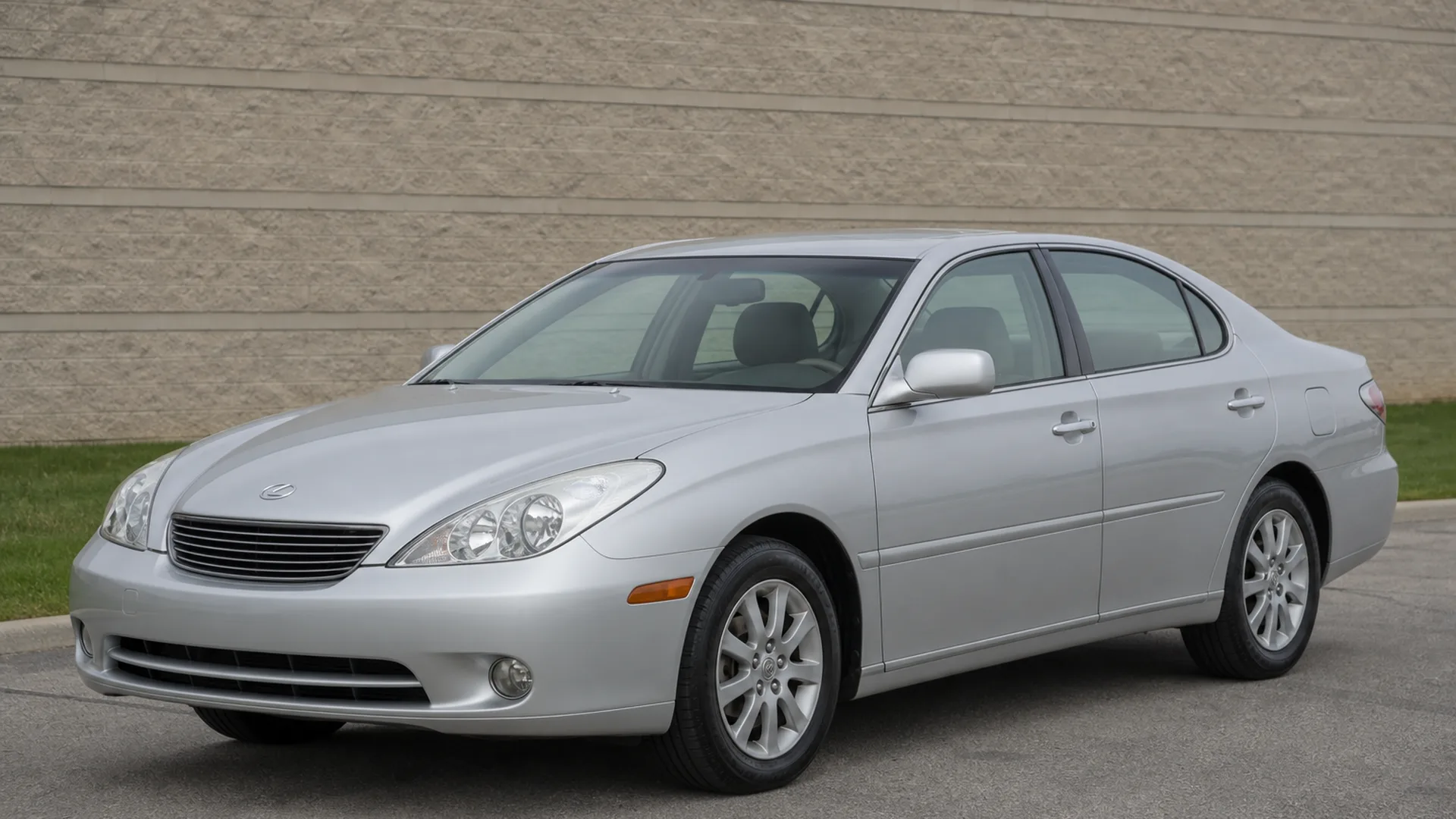
The Lexus ES 330 promised buyers everything they loved about the brand: whisper-quiet cabins, plush leather seats, and that Toyota-backed reliability everyone talks about. Built from 2004 to 2006, this mid-size luxury sedan shares its bones with the Toyota Camry and packs a 3.3L V6 making 225 horsepower. Sounds like a solid pick for a used luxury car, right? Well, here’s the catch—certain ES 330 years bring more repair bills than peace of mind. Oil-guzzling engines, jerky transmissions, and AC systems that quit when summer hits hardest have left plenty of owners wishing they’d done more homework. This guide breaks down exactly which Lexus ES 330 years to avoid, highlights the one year that’s somewhat salvageable, and points you toward better alternatives that won’t drain your wallet.
How we rated the best and worst Lexus ES 330 years
We didn’t just skim a few forum posts and call it a day. Our team pulled complaint data straight from the NHTSA database, cross-checked reliability scores from Consumer Reports, and analyzed failure patterns on CarComplaints.com. We also looked at Toyota’s recall history—especially that unintended acceleration mess that affected thousands of vehicles. On top of government records, we reviewed long-term owner surveys on Lexus forums and talked to independent mechanics who specialize in these cars. We tracked when AC compressors typically fail, how often struts need replacing past 100,000 miles, and which software updates Lexus issued to patch transmission bugs. The result? A clear picture of which model years consistently caused headaches and which ones held up better over time.
Most Common Lexus ES 330 Problems
Let’s talk about what actually goes wrong with these cars. If you’re test-driving a used ES 330 or already own one, these are the red flags to watch for.
1. Oil consumption hits hard on early models. The 2004 and 2005 ES 330s earned a bad reputation for burning through oil faster than your uncle’s old pickup truck. We’re talking about having to top off a quart every 1,000 miles—or worse. That’s not normal for a Lexus, and if you ignore it, you’re looking at serious engine damage. Some owners only discovered the problem when their low-oil light came on or their engine started knocking. The root cause? Poor piston ring sealing in early production runs. If you’re considering a 2004 or 2005, pull the dipstick and check service records to see how often the previous owner added oil.
Another engine headache is the mass airflow sensor. When this little sensor fails, your ES 330 starts acting sluggish—slow acceleration, rough idling, and that dreaded check-engine light. The MAF sensor measures how much air enters the engine, so when it’s reading wrong, your fuel mixture goes off. You’ll often see lean-running codes (like P0171 or P0174) pop up on a scanner. The good news? Replacing a MAF sensor isn’t terribly expensive, usually under $200 in parts and labor. The bad news? It’s a common issue across all three model years, so budget for it if you haven’t done it already.
2. Transmission shifting feels clunky and hesitant. This is probably the most complained-about problem in the 2004 ES 330. Owners described the 5-speed automatic as confused—it would pause for a second when you stepped on the gas, then lurch forward. That delay comes from poorly calibrated transmission control software. Lexus tried to fix it with software updates in 2005 and refined things further by 2006, but plenty of drivers still noticed occasional rough shifts or slow downshifts. If you’re test-driving an ES 330 and it feels like the transmission is thinking too hard about what gear to pick, that’s the infamous hesitation issue showing up.
3. Brakes and suspension don’t age gracefully. Even though Lexus marketed the ES 330 as a smooth, quiet cruiser, many owners reported vibrations and clunking noises. Warped brake rotors are a recurring complaint—your steering wheel shakes when you brake, or the pedal pulses under your foot. That happens when the rotors get too hot and warp slightly, which isn’t unique to Lexus but seems to happen more often on these models than you’d expect. Suspension-wise, struts and bushings wear out prematurely. You’ll hear clunks over bumps or notice the ride getting harsher. Replacing struts and bushings isn’t cheap (figure $800–$1,200 for all four corners), and it’s common enough that you should test any ES 330 on a rough road before buying.
4. Electrical gremlins pop up in the cabin. Lexus built a reputation on quality, so it’s frustrating when the touchscreen navigation freezes or the climate control starts doing its own thing. Early 2004 models had the most issues—erratic dashboard displays, unresponsive nav screens, and climate systems that would blow hot air on one side and cold on the other. By 2006, most of these bugs were worked out, but you’ll still find older units with glitchy electronics. If you’re shopping for an ES 330, spend a few minutes cycling through every screen and button to make sure everything responds.
And let’s not forget the unintended acceleration recall. Some ES 330s were caught up in Toyota’s big recall wave in the late 2000s. The problem? A sticky accelerator pedal or floor mats that could trap the pedal. Toyota issued fixes, and if they were done, the issue doesn’t come back. But if you’re buying used, verify that the VIN shows the recall work was completed. You can check that for free on the NHTSA or Lexus recall lookup sites.
5. AC systems fail when you need them most. Picture this: it’s July, you’re stuck in traffic, and your Lexus starts blowing warm air. That’s the reality for many ES 330 owners around 80,000 to 100,000 miles. The AC compressor or compressor clutch fails, and suddenly you’re looking at a repair bill between $1,500 and $2,500 if you need to replace the compressor, evaporator, and dryer. The 2004 and 2005 models saw the most AC complaints. Before you buy any ES 330, crank the AC to full blast and make sure it gets ice-cold within a minute. If it’s just cool or takes forever to chill down, walk away or negotiate a lower price to cover the upcoming repair.
Which ES 330 Years Should You Skip?
Here’s the truth: all three production years (2004, 2005, and 2006) have more issues than you’d expect from a Lexus. But some years are definitely worse than others.
2004 – The Roughest Start
If there’s one year to cross off your list entirely, it’s 2004. As the debut model, it arrived with the most unresolved problems. The transmission hesitation is at its worst here—software wasn’t dialed in yet, so you get that annoying lag every time you try to accelerate from a stop or merge onto the highway. Oil consumption is also highest in 2004, meaning you could be adding a quart every few weeks if the engine wasn’t babied. Suspension components started rattling early, and the cabin electronics had more bugs than a beta software release. Owners of 2004 ES 330s reported dashboard glitches, navigation freezes, and climate control malfunctions more often than any other year. Put it all together and you’ve got a car that tarnished Lexus’s reputation. Unless you find one with flawless service records and proof that every recall and software update was done, skip 2004.
2005 – Better, But Still Risky
The 2005 model year brought some relief. Lexus issued transmission software updates that smoothed out the worst of the shifting issues, so acceleration feels a bit more natural. Oil consumption improved slightly, though it’s still a concern—some 2005 engines burn oil faster than normal. The suspension and brake complaints carried over from 2004, meaning you’ll still hear clunks and feel vibrations if the car hasn’t had new struts or rotors. Interior trim also showed premature wear—cracked leather, peeling dashboard, and worn buttons popped up more often than they should on a luxury car. Consumer Reports did give the 2005 ES 330 a solid reliability score, which suggests many owners had good experiences, but the risk is still there. If you’re considering a 2005, get a pre-purchase inspection and budget for potential repairs to the AC, suspension, and engine.
2006 – The Least Problematic (But Not Problem-Free)
By 2006, Lexus had ironed out a lot of the early issues. Transmission software was refined again, so the hesitation is minimal—most test drives feel smooth. Electronic bugs were mostly squashed, and interior build quality improved. Suspension complaints dropped off, though some owners still reported worn struts and bushings at higher mileage. The AC compressor issue persisted, so you’re not totally safe from expensive repairs. Overall, 2006 is the best choice if you’re set on buying an ES 330. It benefits from three years of tweaks and fixes, making it the most dependable of the bunch. Just keep in mind that even the “best” ES 330 isn’t as bulletproof as a later ES 350, and by 2006 this platform was already starting to feel dated compared to newer competitors.
Best Lexus ES 330 Years To Buy
Let’s be real—if someone’s selling a clean, well-maintained ES 330 at a great price, it might be worth considering. But you need to be picky.
Go for a 2006 model. This is the safest year in the ES 330 lineup. Lexus had two full years to refine the car, and it shows. The transmission shifts more predictably, the electronics behave, and fewer owners reported major issues. You’re still dealing with an older car, so plan for maintenance like new struts, brake rotors, and possibly an AC compressor down the line. But compared to the 2004 and 2005, a 2006 ES 330 gives you the best shot at a trouble-free experience.
2005 can work if the price is right. Consumer Reports rated the 2005 ES 330 highly for reliability, and plenty of owners have driven theirs past 200,000 miles without disaster. The key is finding one with complete service records. Look for proof of regular oil changes (every 5,000 miles or less), transmission fluid changes, and any recalls or software updates. If the previous owner stayed on top of maintenance and the car passes a mechanic’s inspection, a 2005 can be a decent buy—especially if it’s priced a few thousand lower than a 2006.
Before you hand over any money, run through this checklist:
- Verify all recalls were completed. Check the VIN on the NHTSA or Lexus websites to confirm the unintended acceleration recall and any other open recalls were fixed.
- Test the AC thoroughly. Turn it to max cold and make sure it blows ice-cold air within 60 seconds. If it’s weak or takes forever to cool down, you’re looking at a big repair.
- Inspect the dashboard. In hot climates, the dashboard can crack or warp. Check the area above the instrument cluster and along the top of the dash for cracks.
- Listen for suspension noises. Drive over speed bumps and rough pavement. Clunks or rattles from the front suspension mean worn struts or bushings, which aren’t deal-breakers but will cost you $800–$1,200 to fix.
- Check for smooth transmission shifts. Accelerate from a stop, merge onto a highway, and downshift to pass someone. The transmission should respond quickly without hesitation or harsh clunks.
- Look at the oil level and condition. Pull the dipstick and make sure the oil is full and clean. Ask the owner how often they added oil between changes—if they say “all the time,” walk away.
Even if everything checks out, set aside $1,500 to $3,000 for repairs in the first year of ownership. Older luxury cars need love, and the ES 330 is no exception.
Better Alternatives That’ll Save You Headaches
If the ES 330’s issues are making you second-guess your decision, you’re not alone. Here are a few alternatives that offer similar luxury and comfort with fewer problems.
2007–2009 Lexus ES 350 – The Smarter Upgrade
The ES 350 debuted in 2007 and fixed almost everything wrong with the ES 330. It packs a 3.5L V6 (up from 3.3L) making 272 horsepower, paired with a new 6-speed automatic that shifts smoothly from the start. The interior got a refresh with better materials, more tech, and improved build quality. Reliability-wise, the early ES 350s have far fewer complaints than the ES 330. The most common issue on 2007 models is minor—some dashboards crack in hot climates—but that’s about it. If you can find a clean 2007–2009 ES 350 for just a bit more money than an ES 330, it’s absolutely worth the upgrade. You’ll get better performance, fewer headaches, and a car that feels more modern.
2009–2012 Lexus ES 350 – Top-Tier Reliability
If your budget stretches a bit further, the 2009–2012 ES 350 models are some of the most dependable luxury sedans you can buy used. By 2009, Lexus had refined the ES even more, adding features like Bluetooth and improving the overall build quality. These years have very few reported issues—mostly just minor stuff like occasional navigation glitches or worn interior trim at high mileage. Consumer data shows 2010–2012 ES 350s have top-tier reliability scores, and owners routinely drive them past 200,000 miles without major repairs. The resale value is higher because of that reputation, but you’re paying for a car that’s proven to last.
2005–2012 Toyota Avalon – Lexus Luxury Without the Price
The Toyota Avalon rides on the same platform as the ES 330, so you get a similar roomy, comfortable experience. The 2005–2007 Avalon uses the same 3.3L V6 and offers a smooth, quiet ride that can easily hit 150,000 miles with basic maintenance. It doesn’t have the Lexus badge or some of the upscale trim touches, but it’s cheaper to buy and cheaper to maintain. Newer Avalons (2008–2012) added more tech and luxury features, narrowing the gap with the Lexus. They also avoided many of the ES 330’s specific problems—no widespread oil consumption issues, no transmission hesitation, and fewer suspension complaints. If you’re looking for reliable comfort and don’t care about the Lexus nameplate, the Avalon is a smart pick.
2004–2008 Acura TL – Sportier, Still Reliable
The Acura TL from the mid-2000s offers a sportier feel than the ES 330 while still delivering good reliability. It’s got sharper handling and a more engaging drive, though the ride is firmer. The TL had a few minor issues in early years—some owners reported automatic transmission problems—but overall it maintained solid reliability. It doesn’t match the Lexus’s ultra-plush ride, but if you want something with a bit more personality and similar dependability, the TL is worth a look.
2005–2008 Infiniti G35 – Performance-Oriented Luxury
The Infiniti G35 brings more power and a rear-wheel-drive layout, making it the choice for drivers who want a sportier sedan. The V6 engine is strong, and the handling is sharper than the ES 330. Reliability is decent, though maintenance costs run a bit higher than Lexus or Toyota. Fuel economy takes a hit compared to the ES, but if you prioritize driving fun and still want a luxury badge, the G35 is a solid alternative.
Among all these options, Lexus still leads in long-term dependability and dealer support. But if the ES 330’s issues are a dealbreaker, test-driving an ES 350, Avalon, or TL will show you what’s out there.
Final Thoughts – Should You Buy an ES 330?
The Lexus ES 330 can be a satisfying used luxury car if you choose the right year and find one that’s been pampered. But let’s be honest—the 2004 and 2005 models are risky. They’ve got well-documented issues with oil consumption, transmission behavior, suspension wear, and AC failures. The 2006 model is better, but even that one isn’t bulletproof.
Here’s what it comes down to: if you’re on a tight budget and find a clean 2006 ES 330 with full service records, it might work for you. Just know you’re buying a 15-to-20-year-old car, and things will need attention. Budget for repairs and get a thorough pre-purchase inspection before signing anything.
On the other hand, if you can stretch your budget just a little, a 2007–2009 ES 350 will give you a much better experience. You’ll get a more powerful engine, smoother transmission, and far fewer potential problems.