
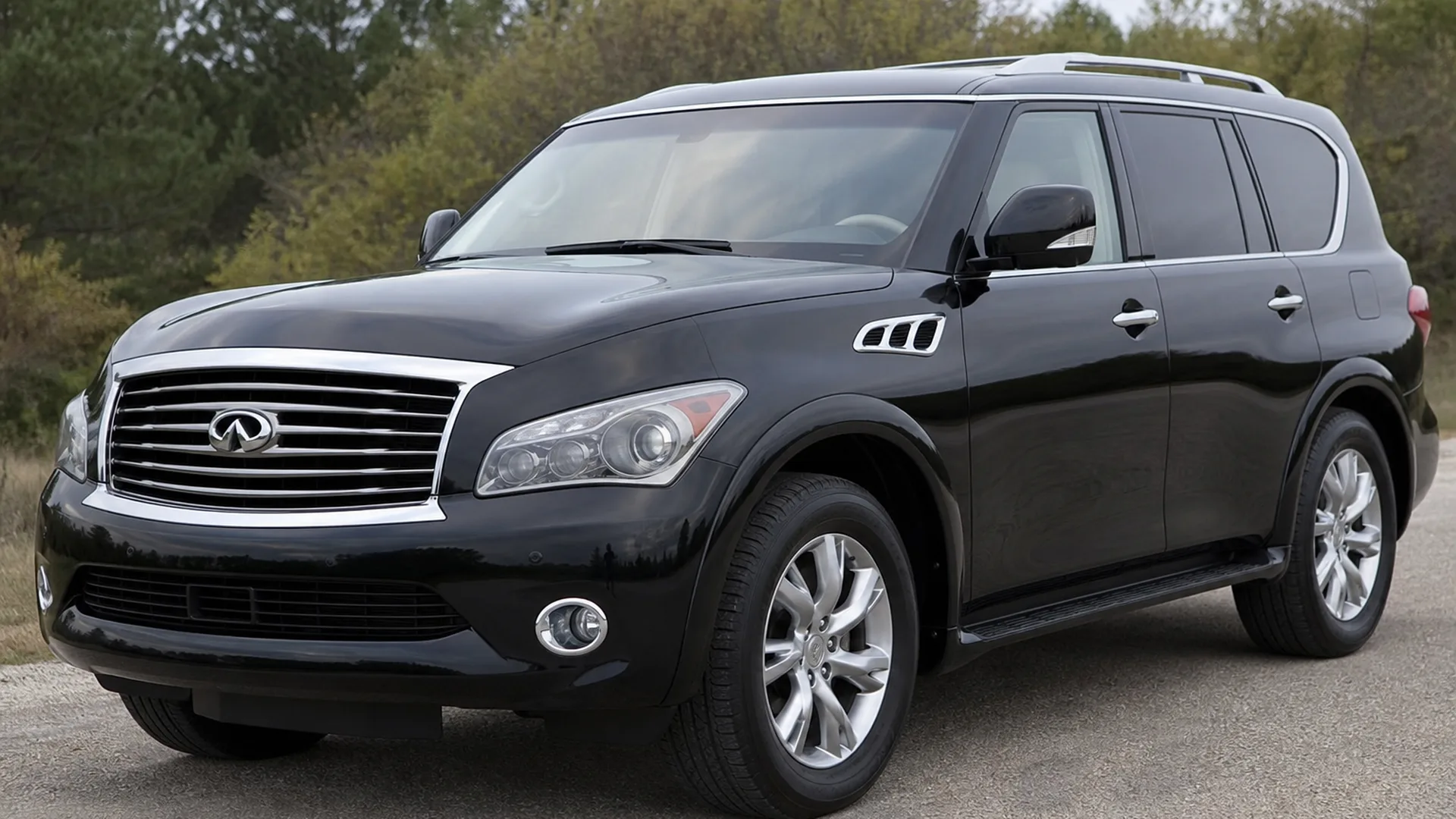
Here’s the catch: several Infiniti QX56 model years have earned terrible reputations for engine timing chain failures, transmission meltdowns, and even factory paint that peels off in sheets. If you pick the wrong year, you could be looking at $4,000+ repair bills before you hit 100,000 miles. This guide breaks down exactly which Infiniti QX56 years to avoid, highlights the safest model years if you’re set on buying one, and points you toward more reliable alternatives that won’t leave you stranded.
How We Researched This Guide
We didn’t just skim a few forums and call it a day. Our team pulled data from NHTSA complaint databases to track recall patterns and safety issues, reviewed Infiniti technical service bulletins to identify recurring factory defects, and cross-referenced findings with RepairPal and CarComplaints to spot years with unusually high repair costs. We also interviewed ASE-certified mechanics who’ve worked on dozens of QX56s and spent hours in owner forums (ClubArmada, Infiniti forums) reading firsthand accounts of timing chain nightmares, transmission failures, and paint disasters.
What makes this guide different? We compared the Infiniti QX56’s problems against its platform siblings—the Nissan Armada and Titan—to see which issues were Infiniti-specific versus shared flaws in the underlying Nissan architecture. We also tracked how the QX56 evolved from its 2004 debut through the 2011 redesign and 2013 finale, so you’ll know exactly when Infiniti fixed problems (and when they didn’t).
Most Common Infiniti QX56 Problems
Let’s talk about what actually goes wrong with these SUVs. Some issues are minor annoyances; others can total your engine or transmission. Here’s what QX56 owners deal with most.
1. Timing Chain Stretching and Noise
If you start a 2011–2013 Infiniti QX56 on a cold morning and hear a loud hissing, whining, or rattling from under the hood, congratulations—you’ve just met the timing chain problem. The chain stretches over time, allowing slack that creates noise and throws off engine timing. Left unchecked, it can jump teeth or snap, causing catastrophic engine damage.
Infiniti issued a service campaign (not a full recall) for this on some models, but many owners still got stuck with $3,000–$5,000 repair bills to replace the timing chain, guides, and sprockets. The 2014 QX80—the renamed successor—had the exact same flaw in its first year, which tells you Infiniti didn’t fully solve the problem before switching badges.
What to do: If you’re buying a 2011–2013 QX56, confirm the timing chain service was done. No records? Walk away.
2. Radiator Leaks into Transmission
This one’s nasty. On 2004–2008 Infiniti QX56s, the radiator has an internal cooler for the transmission fluid. When the radiator cracks (and it does, usually around 70,000–90,000 miles), engine coolant mixes with ATF inside the transmission. The result? A pink, frothy mess owners call the “strawberry milkshake,” and a completely destroyed transmission.
One driver reported losing all gears on the highway when this happened—imagine piloting a 5,600-pound SUV with no transmission at 65 mph. Repair costs hit $4,000 or more because you need a new radiator and a rebuilt transmission. Some owners caught it early by checking their transmission fluid color, but many didn’t discover the problem until the transmission slipped into limp mode or failed outright.
Fix: If you’re shopping for a 2004–2008 model, verify the radiator was replaced or an external transmission cooler was installed. If the seller says “original parts,” keep scrolling.
3. Factory Paint That Peels Off in Sheets
The 2011 Infiniti QX56 has a paint defect so bad, owners initially thought their SUVs had been hit by hailstorms. Large sections of paint on the hood, roof, and tailgate bubble up and flake off, exposing bare metal underneath. The cause? Infiniti’s factory didn’t properly prep the surface, leaving air pockets under the paint that caused it to lose adhesion.
This isn’t a small cosmetic flaw—it’s full-on paint failure across multiple body panels. The only fix is a professional respray, which costs $2,000–$4,000 depending on how much surface area needs work. While 2011 got the worst of it, some 2008 and 2012 models also had clearcoat durability issues.
4. Power Liftgate Failures
The QX56’s motorized rear hatch is convenient when it works, but owners across nearly all model years (2004–2013) report it jamming closed, refusing to open, or grinding without moving. Sometimes the latch won’t catch, leaving your cargo area unsecured. Other times the motor runs but the door doesn’t budge, or the auto-close chimes but stops halfway.
Fixing this usually means replacing the liftgate motor, latch assembly, or sensors—not cheap, and annoyingly common for a luxury feature that should just work.
5. Suspension Clunks and Thuds
Take a 2005–2012 QX56 over a pothole and you’ll often hear a loud clunk or thud from up front. The front coil springs or strut mounts wear out, allowing metal-to-metal contact when you hit bumps. It’s not immediately dangerous, but it’s loud, annoying, and signals that your suspension components are shot.
Replacing the springs or strut mounts runs $500–$1,000. If you’re shopping used and hear this noise during a test drive, factor that repair into your offer.
6. Cracked Exhaust Manifolds
The 5.6-liter V8 runs hot, and the exhaust manifolds on 2004–2012 models crack from heat stress. You’ll hear a ticking or tapping noise when the engine’s cold—some owners say it “sounds like a diesel” until everything warms up. The cracks leak exhaust gases (not great for emissions or your health) and get worse over time.
This problem showed up on Nissan Titans and Armadas too, since they share the same engine. Fixing it means pulling the manifolds and installing replacements, which costs $1,200–$2,000 in labor alone.
7. Fuel Gauge Lies (and You Run Out of Gas)
Owners of 2004–2009 and some 2012 QX56s report fuel gauges that stick, lag after fill-ups, or suddenly plunge from half-full to empty. A few drivers ran completely out of gas despite the gauge showing a quarter tank left. The culprit? A faulty fuel level sender in the tank—the same issue that triggered a recall on Nissan Armadas and Pathfinders.
Replacing the sensor fixes the problem, but until then, you’re flying blind. Track your trip odometer and fill up early if you own an affected model.
8. Brake Booster Failures (Mostly 2004–2006)
Some mid-2000s QX56s lost brake assist suddenly, leaving drivers with a rock-hard brake pedal and minimal stopping power. This stems from a failed brake booster or delta stroke sensor in the hydraulic system. Infiniti recalled certain 2004 models for brake pedal linkage, but not all booster defects were covered.
If your brake pedal ever feels unusually stiff or you see ABS/brake warning lights, get it inspected immediately—brakes aren’t something to mess around with.
9. Air Suspension Problems on Later Models
2011–2013 QX56s with rear auto-leveling air suspension (or the optional Hydraulic Body Motion Control) can develop leaks in the air springs or a failing compressor. You’ll notice the rear sagging or hear the compressor cycling constantly. Repairs run $1,500–$3,000 depending on which components fail, and some owners just retrofit conventional coil springs to avoid future headaches.
Infiniti QX56 Years to Avoid at All Costs
Not all QX56 model years are created equal. Some have such serious, widespread problems that you should avoid them entirely unless you enjoy writing big checks to your mechanic.
2004 and 2005 (Worst of the Worst)
The first two model years of the QX56 are reliability disasters. The 2005 in particular holds the title of worst QX56 year, with frequent, expensive failures popping up at relatively low mileage. Owners dealt with the radiator/transmission “strawberry milkshake” failure, brake booster defects, electrical gremlins, and shoddy interior trim that fell apart.
The 2004 had its own parade of recalls—engine issues, brake pedal linkage, you name it. These were first-year bugs on steroids. One expert analysis flat-out recommends avoiding all 2004–2008 QX56 models because the first-generation platform had so many unresolved issues.
Bottom line: Unless you find a 2004 or 2005 that’s had every major system rebuilt (radiator, transmission, brakes, timing chain) with receipts to prove it, pass.
2011 (Paint Disaster and First-Year Redesign Bugs)
The QX56 got a complete overhaul for 2011—new platform (based on the Nissan Patrol instead of the Titan), fresh styling, and a nicer interior. Unfortunately, Infiniti botched the launch. The 2011 logged more owner complaints than any other year, led by that infamous paint peeling defect.
Beyond the paint, 2011s suffered from early timing chain noise, software glitches in the suspension and four-wheel-drive systems, and general first-year teething problems. Later second-gen models (2012–2013) fixed most of these issues, making 2011 the year to skip unless it’s been repainted and comes dirt cheap.
Other Years to Watch Out For
- 2006–2007: Carry-over problems from the early years, including brake and body hardware issues. Not as catastrophic as 2004–2005, but still below average.
- 2008: That radiator/transmission failure lurks here too. If the original radiator hasn’t been replaced, you’re gambling with a ticking time bomb.
- 2012: A few isolated reports of fuel gauge errors and exhaust manifold cracks, but mostly better than earlier years. Still, not flawless.
Quick note on the QX80: If you’re expanding your search to the renamed QX80 (2014+), avoid the 2014 first-year model—it carried over the timing chain flaw and had its own launch bugs. The 2019 QX80 also saw a weird spike in electrical and brake complaints. Otherwise, the QX80 line is more reliable than the QX56.
Best Infiniti QX56 Years to Buy (If You’re Set on One)
Okay, so you still want a QX56. Maybe you’ve found a great deal, or you just love that big V8 and don’t mind wrenching a bit. Here are the years that won’t immediately punish you.
2008–2010 (Late First-Gen – The Safer Bets)
Infiniti gave the first-generation QX56 a mid-cycle refresh around 2008, updating the styling and likely tweaking some components. By 2009 and 2010, many of the early bugs had been squashed. Complaint volumes dropped significantly compared to 2004–2006, and these later first-gen models offer the same towing capacity and V8 punch without quite as many nasty surprises.
That said, you still need to check the radiator situation on a 2008—make sure it’s been replaced or upgraded with an external cooler. And expect typical age-related repairs like exhaust manifolds and suspension parts. A well-maintained 2009 or 2010 QX56 can deliver solid value if you go in with your eyes open.
2012–2013 (Late Second-Gen – The Sweet Spot)
These are the best QX56 years, period. By 2012, Infiniti had ironed out the second-generation’s launch problems. The paint issues from 2011 were fixed, the powertrain got refinements, and electronics became more stable. The 2012 had a few isolated issues (fuel gauge quirks, exhaust manifold noise), but nothing systemic.
The 2013 QX56—the final year before the QX80 rebrand—benefited from all the incremental updates and logged very few complaints. It’s arguably the most reliable QX56 you can buy. One important caveat: make sure the timing chain service campaign was completed. If that’s documented, a 2012 or 2013 can easily cross 100,000 miles with just routine maintenance and the occasional suspension repair.
Pro tip: If your budget stretches slightly higher, a 2015–2018 Infiniti QX80 is essentially a 2013 QX56 with further improvements and a higher reliability rating. You get the same driving experience with fewer gremlins. Prices on used 2015s often aren’t that much higher than 2013s, depending on mileage.
Better Alternatives – SUVs That Won’t Break Your Heart (or Your Wallet)
Love the idea of a full-size luxury SUV but don’t love the QX56’s track record? Here are five alternatives that offer similar space and capability with fewer horror stories.
Lexus LX 570 (2008–2013): The Gold Standard
If reliability is your top priority, the Lexus LX 570 is the SUV you want. It’s basically a Toyota Land Cruiser wearing a tuxedo—truck-tough underpinnings wrapped in genuine luxury. The Land Cruiser/LX platform is legendary; these things routinely sail past 250,000 miles with only routine maintenance.
A 2008–2011 LX 570 is the same age as an early QX56 but will give you far fewer problems. Yes, maintenance costs run high (it’s still a Lexus), but major failures are rare. If budget allows, a 2013 LX 570 is an excellent alternative to a 2013 QX56—it’ll hold value better and run trouble-free for years.
The downside? LXs are pricey on the used market because everyone knows they last forever. But if you can swing it, you’re buying peace of mind.
Toyota Sequoia (2008–2015): The Value Play
The Sequoia is the Land Cruiser’s non-luxury cousin, sharing the bulletproof 5.7-liter V8 and truck-based durability. You lose the fancy badge and some interior opulence (though the Platinum trim is still pretty nice), but you gain Toyota-level reliability at a lower price point.
Look for 2008–2015 second-generation Sequoias. These have proven incredibly durable, with only minor issues like the occasional air suspension pump or interior trim piece. A Sequoia will almost certainly cost you less over the long haul than a QX56, and you’re trading minimal luxury for maximum reliability. If you’ve got a family and just need a rock-solid hauler, this is your SUV.
Cadillac Escalade (2009–2014): American Luxury with Mixed Reliability
Still want that premium nameplate? A late-2000s or early-2010s Cadillac Escalade brings style, power (6.2-liter V8), and serious presence. Reliability is a mixed bag—the GM drivetrain is solid, but air suspension, electronics, and interior bits can act up.
It’s not Toyota-level bulletproof, but parts are cheap and widely available since the Escalade shares components with the Chevy Tahoe and Suburban. Stick with 2010–2013 model years (the 2007–2009 had new-body-style teething troubles). Make sure any used Escalade has documented service records, especially for the magnetic shocks and air ride.
On balance, an Escalade is roughly on par with a QX56 for maintenance, but if you prefer American luxury or want easier parts access, it’s worth considering.
Lincoln Navigator or Ford Expedition (2009–2013): Budget-Friendly Big Rigs
These Ford truck-based SUVs are direct QX56 competitors. The Lincoln Navigator offers a spacious interior and decent reliability in later years. The 2007+ generation had some early 5.4-liter Triton V8 issues (spark plugs, cam phasers), but by 2009–2010 most were sorted out.