
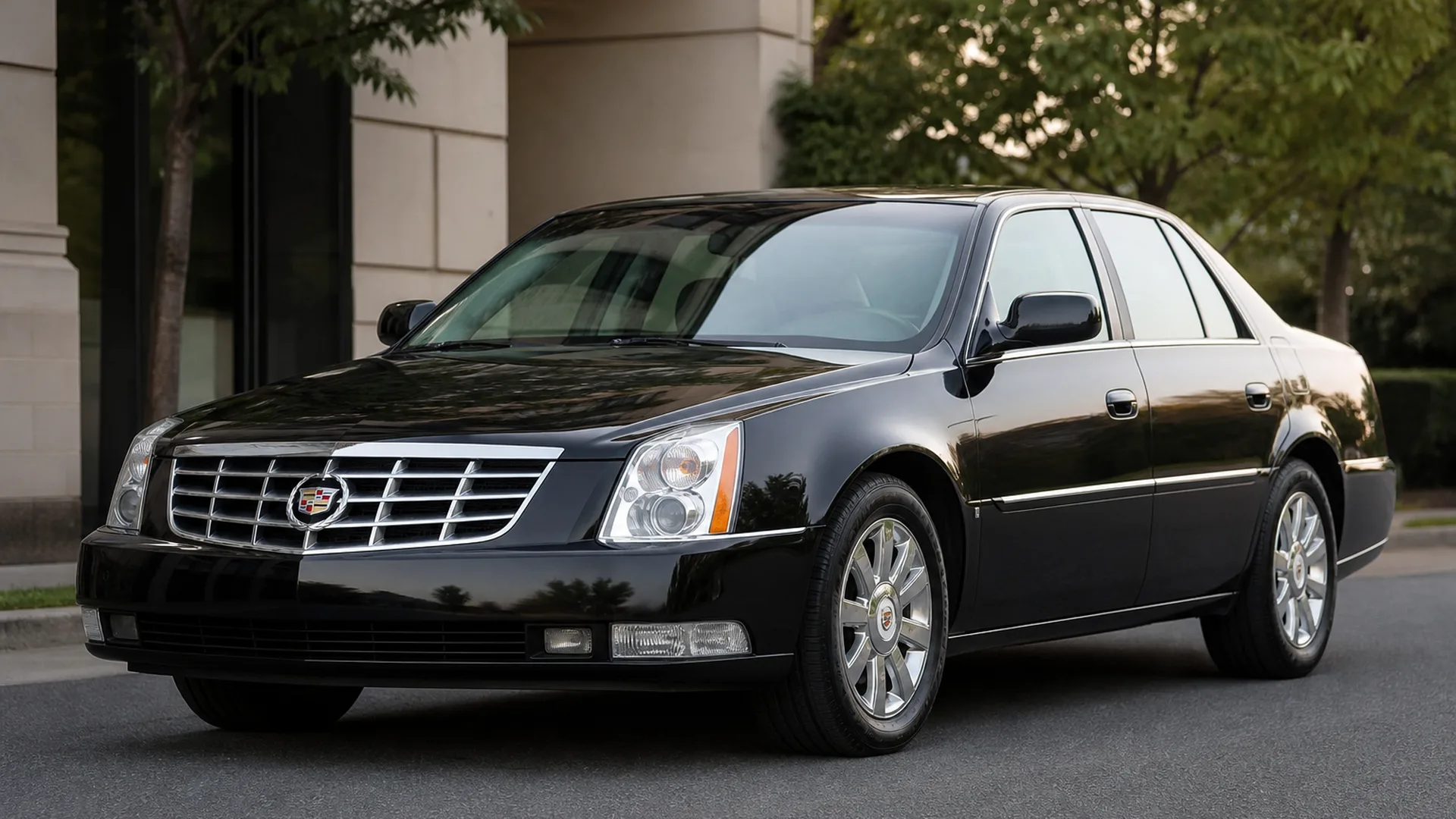
The Cadillac DTS represented the brand’s final front-wheel-drive flagship—a full-size luxury sedan built from 2006 to 2011 that succeeded the long-running DeVille. Under the hood sat the 4.6L Northstar V8, delivering between 275 and 292 horsepower through a four-speed automatic. With spacious interiors, available Magnetic Ride Control, and peak MSRPs around $50,000 for the Platinum trim, the DTS offered traditional American luxury at a time when the market was shifting toward sportier, tech-heavy rivals.
But beneath that plush ride and chrome grille lies a set of reliability challenges that can turn a bargain purchase into a costly project. Some model years earned reputations for expensive oil leaks, finicky electrical systems, and recall-prone components. If you’re shopping for a used Cadillac DTS, knowing which years to skip—and which to seriously consider—can save you thousands in unexpected repairs.
How we rated the best and worst Cadillac DTS years
We pulled data from multiple authoritative sources to give you the clearest picture of DTS reliability:
- NHTSA complaint records for all model years, tracking problem frequency and severity
- Official GM technical service bulletins and recall notices, cross-referenced by year
- CarComplaints analysis, which aggregates owner reports and repair costs
- CadillacForums and automotive subreddits, where real owners share long-term ownership experiences
- Independent mechanic feedback on common Northstar V8 and 4T80-E transmission failures
- Repair cost databases to estimate what high-mileage fixes actually run
We also compared the DTS against platform-sharing cousins like the Buick Lucerne and direct competitors such as the Lincoln Town Car and Lexus LS series. The result is a year-by-year breakdown that highlights where problems cluster—and where you can find a DTS that might actually last.
Most Common Cadillac DTS Problems
Before you look at specific model years, you need to understand the problem patterns that show up across the entire 2006–2011 run. Here’s what owners and mechanics report most often:
1. The Northstar V8’s Achilles’ Heel
That smooth, powerful engine comes with a notorious weak spot: oil leaks from the lower engine. The block’s lower crankcase half-seal and oil pan gasket both fail over time, and fixing them isn’t a quick weekend job. You often have to pull the engine or at least drop the subframe, which pushes labor costs into the $2,500–$4,000 range.
The water pump sits at the back of the engine, driven by its own belt. When it fails, you lose coolant circulation and cabin heat fast. One owner reported an eight-hour replacement job that cost around $1,500 at the dealer. Timing cover leaks also pop up, especially on 2007–2008 models around 68,000 miles.
Head gasket failures—the Northstar’s infamous 1990s issue—were largely fixed by the time the DTS arrived, so outright blown gaskets are rare. But the engine still demands attention, and when major repairs are needed (timing chains, for example), expect both difficulty and expense. Cadillac’s own data shows engine complaints top the list for the DTS.
2. Transmission Leaks (But Not Failures)
The four-speed 4T80-E automatic is generally robust. You won’t find many reports of catastrophic gearbox failures, but transmission cooler line leaks are common. The rubber lines at the radiator develop leaks at their crimped fittings. If you see reddish fluid dripping from the front of the car, that’s probably the culprit.
Fixing it means replacing the lines or fittings—not a huge job, but one you need to catch early. Low fluid from a leak can cause erratic or delayed shifts, so keep an eye on the level. Some high-mileage cars show harsh shifting, but that’s usually tied to fluid condition or electronic controls rather than internal wear.
3. Electrical Gremlins Throughout
Luxury sedans from this era packed in electronics, and the DTS is no exception. Here are the most frequent electrical issues:
- Steering position sensor failure: Triggers a “Service Stability System” warning and shuts down traction control. The sensor lives at the base of the steering column; replacing it clears the fault.
- HID headlight flickering: Especially common on 2006 models. The HID ballasts or ground wiring fail, causing intermittent light failures. GM issued service bulletins for this.
- Door lock actuators: Locks that stop working are usually due to failed actuators inside the door latches—a known problem across all DTS years.
- Battery drain: A module that won’t go to sleep (trunk pull-down, stuck relay) can kill the battery overnight.
- Power window regulators: Fail over time, leaving windows stuck.
CarComplaints data shows electrical issues typically appear around 88,000 miles, with average repair costs near $1,000. Beyond convenience items, the Northstar’s own sensors and ignition components can act up, adding another layer of potential trouble.
4. Brakes That Pulsate, Shocks That Leak
The Cadillac DTS’s soft, floaty ride comes at a cost. Owners frequently complain about brake pedal pulsation when stopping—that’s usually warped rotors, common on a heavy car. Replacing or resurfacing rotors and pads solves it, though it’s an annoyance that can return if you’re hard on the brakes.
On the suspension side, models with Magnetic Ride Control (Performance and Platinum trims) have expensive shocks that can leak over time. Standard models often feature rear air leveling shocks, which can fail in two ways: the air compressor itself dies, or the air bladders leak. Either way, you end up with a sagging rear end or a compressor that runs constantly. Some owners convert to conventional shocks just to avoid the hassle.
Front suspension components—bushings, tie rods—wear as expected for a full-size sedan. No single chronic front-end problem exists, but maintenance adds up.
5. Climate Control Acting Up
Dual-zone automatic climate control sounds great until the blend door actuators fail. A very common complaint: one side blows hot air while the other side stays cold (or vice versa). The small electric motor that moves the blend door either burns out or its plastic gear cracks. Replacing it means working under the dashboard.
Beyond that, the A/C system is typical for its era. Refrigerant line leaks and compressor failures happen in high-mileage cars, but there’s no widespread defect. One quirk: the HVAC control module sometimes needs a battery-disconnect reset if the A/C clutch stops engaging. The passenger side dash houses a sunlight sensor and cabin temp sensor—if those malfunction, the climate control can behave unpredictably.
6. Tech Features That Age Poorly
The DTS offered DVD navigation, Bose audio, park assist sensors, and (on some trims) adaptive cruise control. With age, these systems can develop issues:
- Nav unit problems: DVD map discs that won’t read, or screen pixels that fade
- Park assist sensors: Individual sensors fail, triggering warning messages; replacing the bad sensor in the bumper fixes it
- Heated seat elements: Burn out over time, a common issue on 2000s GM vehicles
- Bluetooth limitations: 2006–2011 Cadillac Bluetooth only handles phone calls, no audio streaming
- OnStar obsolescence: Early analog OnStar became useless after the 2G network shutdown
Late-model options like lane departure warning and blind spot monitoring were generally reliable, though radar sensor damage can be expensive to repair. Overall, electronic sensors (wheel speed, ride height, etc.) are the small, nagging issues that crop up as the car ages.
Safety Recalls You Must Verify
The DTS was involved in several recalls that directly affect safety or fire risk. Before you buy any used DTS, run the VIN to confirm these were completed:
- Ignition Switch Recall (2014): All 2006–2011 DTS models were part of GM’s massive ignition recall. The switch could move out of “Run” due to heavy keychains or jarring, shutting off the engine and disabling airbags. The fix modified the key with inserts and smaller rings. If this wasn’t done, you risk losing power steering, brakes, and airbag protection.
- Battery Cable/Power Steering Fluid Recall (2010–2011): On V8-equipped cars, the starter/alternator positive cable could rub against the power steering return hose, wear it through, and cause fluid to leak onto hot engine parts—a fire hazard. The fix re-routed or secured the lines.
- Heated Windshield Washer Recall (2008 & 2010): The Hot Washer Fluid System turned out to be a fire risk. GM first added a fuse in 2008, then permanently disabled the feature in 2010 for 2006–2009 models. If a DTS claims to have heated washers, they probably don’t work anymore.
- Power Steering Hose Recall (2006): Early 2006 builds had a hose that could separate and leak, causing loss of assist and potential fire. The fix replaced the steering gear inlet hose.
These aren’t minor issues—each one poses a real safety or fire risk. Always verify completion before finalizing any purchase.
The Worst Cadillac DTS Model Years to Avoid
Now that you know what can go wrong, let’s identify which years had the highest concentration of problems. Based on owner complaints and repair data, three model years stand out as particularly risky:
2006 – First-Year Struggles
As the inaugural DTS, the 2006 model year introduced several issues that later years corrected. The most common complaint: flickering or failing HID headlights. Many owners replaced ballasts or dealt with wiring fixes. Water pump failures also appeared more often on 2006s, though that’s partly due to age at this point.
CarComplaints logged 15 problem reports for 2006, with “headlight shorts out intermittently” topping the list. That might not sound like a lot, but given the DTS’s low sales volume, it’s significant. The 2006 also missed out on minor improvements made in subsequent years.
If you’re considering a 2006, make sure it has full service records showing that headlight issues were addressed and the power steering hose recall was completed. Otherwise, you’re walking into known trouble spots without a safety net.
2007 – The Complaint Leader
The 2007 DTS holds the unfortunate record for most overall complaints on CarComplaints—17 total. The top problem: oil pan and half-case leaks that cost around $3,500 to fix. Many 2007 Northstars hit the 70,000+ mile mark where leaks typically start, and the statistics reflect that.
Timing cover leaks also showed up around 68,000 miles on 2007 models. CarComplaints flags 2007 as one of the worst years for both engine and steering problems (the latter due to steering position sensor failures).
If you find a 2007 for sale, ask whether the engine has been resealed. If not, budget $3,000–$6,000 for potential powertrain leak repairs. Unless you get a steep discount, a 2007 DTS isn’t worth the risk.
2011 – Low Volume, High Cost
The final model year gets the “Worst Model Year” label from CarComplaints not because of complaint volume (it’s actually low), but because of problem severity and cost. A 2011 oil leak repair averaged $4,000 at around 70,000 miles—a massive expense on a car that’s now 13+ years old.
The 2011 also carries the battery cable/power steering recall (fire risk), which you must verify was completed. With only about 11,000 units produced, data is thinner, but the 2011’s Northstar is just as prone to leaks as any other year. Some parts, like the starter/alternator wiring, were positioned in ways that created problems (hence the recall).
If you’re risk-averse, approach 2011s carefully. Make sure any big-ticket leak repairs have already been done, or be prepared to budget for them soon after purchase.
Honorable Mentions
- 2008: More electrical complaints than other years—door lock actuators and the first heated washer recall were common issues.
- 2009: A few electrical and interior accessory problems (door handles, dash cracks), but mid-cycle and generally less problematic than the years listed above.
The Best Cadillac DTS Years to Consider
If you’re set on buying a DTS, choosing the right model year makes a huge difference. Based on complaint data and reliability trends, two years stand out:
2009 – The Sweet Spot
By 2009, Cadillac had addressed most early-year gremlins. The trim lineup was refreshed (Standard, Luxury, Premium, Platinum), and various features received updates. Most importantly, complaint data for 2009 is low—only five total complaints on CarComplaints, with very few engine or major issues.
One owner summed it up: “At 30,000 miles, I have had zero, zilch, nada problems with this car.” That aligns perfectly with the lack of widespread complaints. Any improvements to headlight grounding, door lock actuators, or other known weak points would have been in place by 2009.
The 2009s still have Northstar leak potential—no DTS escapes that—but if you find one that hasn’t leaked yet or has already been resealed, you’re in better shape than with earlier years.
2010 – Lowest Complaint Count
The 2010 model year had the fewest complaints on CarComplaints: only two total. That’s essentially noise-level data, indicating almost no common failures unique to that year. By 2010, Cadillac was winding down DTS production with minimal changes, which actually helped reliability—everything had been in production long enough to get the bugs out.
The only caveat: verify the battery cable/power steering recall was completed. Otherwise, a 2010 DTS offers the newest possible example of the model, with slightly fresher components and possibly lower miles. It’s also likely to include all the late updates, like standard Bluetooth.
Consumer reliability data would likely show the 2010 as having above-average reliability for the DTS. If you can find one with complete maintenance records, it’s your best bet.
A Word About 2011
We listed 2011 as a year to avoid, but not every 2011 is bad. If you find a low-mileage 2011 Platinum that’s been well-maintained—and any oil leaks have already been addressed—it could be as solid as a 2010. The “worst model year” label was due to a couple of known expensive fixes, not inherent design flaws.
Just be prepared: if those repairs haven’t been done yet, they’re coming. Get a thorough pre-purchase inspection, and budget accordingly.
Better Alternatives to the Cadillac DTS
If the DTS’s reliability issues give you pause, several alternatives deliver similar luxury with fewer headaches. Here are the top choices, matched to the DTS’s era:
Lincoln Town Car (2003–2011)
If you want a big V8 sedan with rock-solid dependability, the Town Car is hard to beat. The 2003–2011 generation featured body-on-frame construction, rear-wheel drive, and a simple 4.6L SOHC V8 that routinely lasts 200,000+ miles with minimal issues.
One experienced owner put it bluntly: a 2007 Town Car would be “10x more reliable” than a same-year DTS, even with twice the mileage. The trade-offs: the Town Car’s design is older, it lacks high-tech features (no navigation on most), and its ride—while soft—isn’t as refined as the Cadillac’s.
But for sheer durability, the Town Car wins. These were popular as livery and limo vehicles because they just run. Look for 2004+ models (when steering and suspension were updated) and ideally 2008–2011 for the newest examples.
Lexus LS 430 / LS 460 (2004–2012)
For those open to a foreign luxury sedan, the Lexus LS series is a top-tier alternative. The 2004–2006 LS 430 and 2007–2012 LS 460 offer similarly plush rides, V8 power, and high-tech features—but with legendary Lexus reliability.
Even Cadillac fans admit: “I’m a Cadillac guy, but in this case it’s definitely Lexus. Built extremely well, and insanely durable/reliable.” The LS 430 is often cited as one of the most reliable luxury cars ever made, and the LS 460, while introducing more tech, still outshines the DTS in build quality.
The downside: used Lexus LS models cost more than same-year DTS examples—the market knows they last longer. The LS’s styling and driving feel are also more subdued compared to Cadillac’s character.
Is the Cadillac DTS worth buying?
In conclusion, while the Cadillac DTS offers a smooth, luxurious ride, it’s crucial to be aware of the potential reliability issues across certain model years. If you’re in the market for a used DTS, consider opting for the 2009 or 2010 models, which have fewer reported problems and tend to offer better long-term reliability. On the other hand, the 2006, 2007, and 2011 years should be approached with caution due to their higher risk of expensive repairs. If you’re open to alternatives, both the Lincoln Town Car and Lexus LS series provide similar luxury with a reputation for greater dependability. Ultimately, a thorough inspection and service history review will help ensure you find a DTS that delivers the luxury you’re after without the unexpected repair costs