
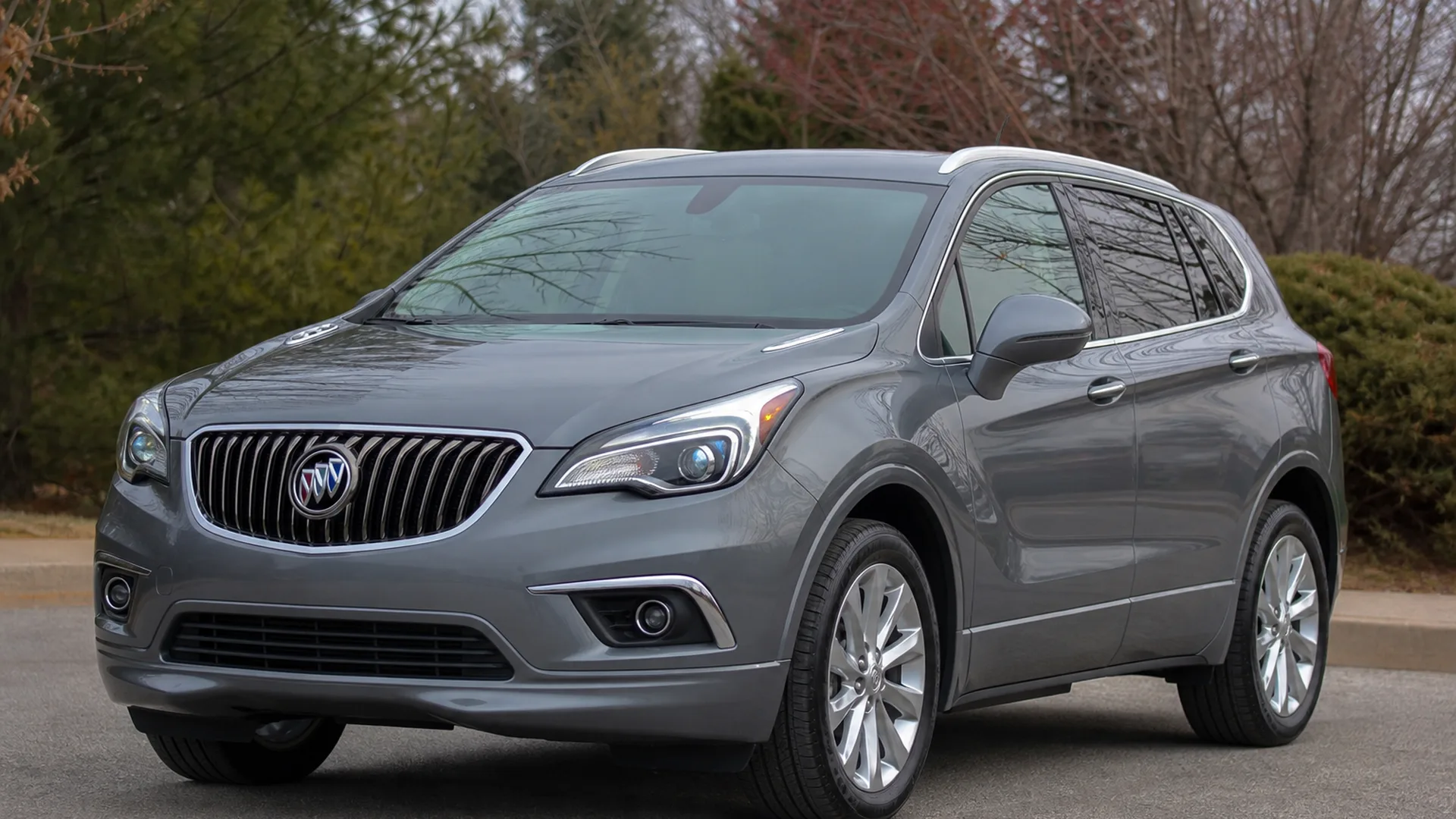
When Buick brought the Envision to U.S. showrooms in 2016, it looked promising on paper. You got a premium compact SUV with a quiet cabin, soft-touch materials, and enough tech to keep up with the Joneses. Built in China and imported stateside, the Envision was GM’s bet on attracting buyers who wanted something upscale without stretching into full luxury territory. But those early years? They didn’t exactly live up to the hype. Electrical bugs, brake recalls, and transmission shudders turned what should’ve been a smooth ride into a frustrating ownership experience for too many people. This guide breaks down exactly which Buick Envision years you should skip and which ones actually deliver on that premium promise.
How we rated the best and worst Buick Envision years
Our team pulled data from NHTSA’s complaint database to spot patterns in reported problems across model years. We cross-referenced those findings with GM’s official recall notices and technical service bulletins, then layered in owner feedback from forums and verified dealer reports. Consumer Reports, J.D. Power dependability scores, and CarComplaints.com gave us additional context on long-term reliability trends. We also looked at alternatives—vehicles like the Lexus NX and Acura RDX—to see how the Envision stacks up when you compare real-world ownership experiences. The result? A clear picture of which years bring headaches and which ones bring peace of mind.
Most Common Buick Envision Problems
1. Engine and Transmission Troubles
Early Buick Envisions—especially 2016 and 2017—had a nasty habit of shuddering when you’d roll through a turn from a full stop. That weird vibration? Blame the torque converter in the 6-speed automatic. Some owners even reported the engine stalling mid-drive or losing power without warning, which is never something you want happening in traffic. The good news is Buick swapped in a 9-speed transmission starting in 2019, and most of those powertrain quirks disappeared. If you’re looking at a 2016–2017, pay close attention during the test drive. Any hesitation or shaking should send you looking elsewhere.
2. Electrical Gremlins That Won’t Quit
Electrical issues top the complaint charts for the Buick Envision. Dashboard lights would flicker or dim randomly. The infotainment system might freeze or lose connection with your phone. In 2017 models, rain could trigger a cascade of false warning lights across the instrument cluster—moisture was getting where it shouldn’t. Battery drain was another problem some owners faced, leaving them with a dead SUV after a few days parked. Buick issued software updates to patch many of these bugs, and a 2021 recall addressed an airbag sensor glitch that caused warning lights to malfunction. Still, if you’re test-driving an older Envision, cycle through every screen and button. You want to catch these issues before you sign on the dotted line.
3. Brake System Failures
This one’s serious. The 2016 Envision was recalled for a faulty brake master cylinder that could reduce braking performance—meaning longer stopping distances or even partial brake failure. Some 2017 owners reported premature brake wear or warning lights that wouldn’t clear, even after replacing pads and rotors. One driver mentioned towing with their Envision and ending up with damaged brakes far sooner than expected. Before buying any used Envision, check the VIN at NHTSA’s recall lookup tool to confirm all brake-related recalls were completed. This isn’t the kind of thing you gamble on.
4. Air Conditioning Headaches
If you’re shopping for a 2017, ask about the rear A/C. Multiple owners complained that the back vents blew only hot air, no matter what setting they chose. Fixing it wasn’t cheap—some repair bills topped $1,200. Other owners needed full A/C system replacements around 70,000 miles, which is way too early for a vehicle in this price range. Make sure the climate control works properly in all zones before you commit. Run the A/C on high for a solid ten minutes during your test drive, and check both front and rear vents.
5. Tech Accessories That Just Don’t Work
Heated seats that won’t turn on via remote start. Memory seat positions that reset after every software update. An accessory tablet holder that was installed wrong and could prevent the headrest from locking—yeah, that last one was bad enough to trigger a recall in 2017. These aren’t deal-breakers on their own, but they add up to a frustrating ownership experience. Most got fixed at dealerships or through later software patches, but if you’re buying used, you’ll want to test every feature. Bring a checklist and go through it methodically.
Buick Envision Worst Years to Avoid
2016: Where It All Started (Badly)
The 2016 Envision was the first year for U.S. buyers, and it shows. GM issued a recall because the tire and loading label had incorrect weight information—owners could accidentally overload the vehicle and risk a blowout. Then there was the fuel pump weld issue shared with 2017 models. A bad weld could cause fuel leaks, which is a genuine fire hazard. On top of that, drivers reported shaking and shuddering during turns, pointing to calibration problems with the all-wheel-drive system. Electrical faults were common too. If you see a 2016 Envision listed at a tempting price, walk away. The savings aren’t worth the repair bills.
2017: The Peak of Problems
This is the year that earned the Envision its bad reputation. CarComplaints.com shows 2017 as the worst year by far, with complaints piling up across every system. Multiple recalls hit this model year: the headrest tablet holder installation, fuel line damage risk, and more. Electrical gremlins were everywhere—dash lights flashing for no reason, auto start-stop refusing to work, brake failure warnings that turned out to be sensor glitches.
The dashboard lighting would randomly brighten or dim, and radio controls would stop responding. Some owners even reported the rear A/C blowing hot air (as mentioned earlier). If you already own a 2017, make absolutely sure all recalls were completed. If you’re shopping, skip this year entirely. There are too many potential problems lurking under that sleek exterior.
2018: Better, But Still Risky
Buick started cleaning up the mess in 2018, and complaint numbers dropped compared to 2017. That said, this year was still included in the fuel pump recall, and a few owners reported lingering electrical bugs and seat adjustment issues. It’s not as bad as the first two years, but most experts recommend jumping straight to 2019 if you can. That’s when Buick really got serious about fixing the Envision’s early flaws.
2021: A Minor Hiccup in the New Generation
When Buick launched the second-gen Envision in 2021, things looked promising—until an airbag sensor software glitch started causing warning lights to fail in some vehicles. The problem affected multiple GM models (Cadillac XT4, CT5, and others), and Buick issued a recall to update the software. Aside from that, the 2021 has been pretty solid. If you’re considering this year, just verify the recall was completed. Once that’s handled, it’s a decent choice.
Which Years Actually Deliver
2019–2020: The Late First-Gen Sweet Spot
Buick gave the Envision a mid-cycle refresh in 2019, and it made a real difference. The new 9-speed transmission fixed most of the shuddering and hard-shifting complaints from earlier years. Styling got a refresh, tech features improved, and build quality tightened up. Owners of 2019 and 2020 models report far fewer problems overall—no major powertrain issues, fewer electrical bugs, and a smoother driving experience. The 2020 stands out because it had zero recalls, which tells you Buick finally worked out the kinks. If you want a first-gen Envision at its best, aim for these years.
2022–2023: The Gold Standard
The second-generation Envision hit its stride with the 2022 model. J.D. Power dependability scores hover above 85 out of 100, and NHTSA complaints for 2022 and 2023 are minimal. You get a redesigned interior, wireless Android Auto and Apple CarPlay, and a full suite of advanced safety features. The 2.0L turbo engine and 9-speed transmission feel refined, and there are no major recalls or widespread complaints to worry about. If you can swing it, these are the years to target. They deliver the premium experience Buick promised back in 2016, without the frustration.
The 2018 Wild Card
Some sources list 2018 as a “best” year because complaint numbers dropped sharply compared to 2017. It’s true that this year is better than the first two, but it’s still close enough to those troubled years that many buyers prefer to skip it. If you find a 2018 with a clean service history and all recalls completed, it might be worth considering—just don’t expect the same peace of mind you’d get from a 2019 or newer.
Better Choices if You’re Not Sold on the Envision
Lexus NX (2015–2020): Bulletproof Reliability
If dependability is your top priority, the Lexus NX is tough to beat. Built on the same platform as the Toyota RAV4, the NX shares Toyota’s legendary reliability. The 2017 and 2018 NX 200t/NX300 models are particularly strong choices—they had only minor complaints (mostly infotainment glitches), and you can get a hybrid version (NX300h) if you want better fuel economy. Resale value is excellent, and the ride is smooth and quiet. The downside? The NX leans more toward comfort than sportiness, so if you like a dynamic driving experience, you might find it a bit mellow.
Acura RDX (2016–2018): Honda Engineering at Its Finest
The second-gen RDX (2013–2018) is another reliable option. The 2016 and 2018 models stand out for their strong V6 engines and minimal complaints. Owners regularly report these SUVs running past 100,000 miles with only routine maintenance. You get a spacious interior, strong safety scores, and Honda’s reputation for longevity. The 2019+ RDX added a turbo engine and more tech, but early years of that generation had some teething problems. Stick with the 2016–2018 models for proven durability.
Toyota RAV4 or Honda CR-V (2016–2020): Practical and Proven
If you don’t need a luxury badge, high-end trims of the RAV4 or CR-V offer serious value. The 2016–2018 RAV4 is one of the most reliable SUVs out there—many owners clock over 100,000 miles with few repairs. The Honda CR-V (2017–2019) is similarly dependable, though the 2017 had an engine oil dilution issue that Honda addressed. Both give you a roomy cabin, great resale value, and lower maintenance costs than the Envision. You won’t get the same upscale interior, but you’ll likely spend less on repairs over the long haul.
Final Advice: Making the Smart Call
Here’s the bottom line: avoid the 2016, 2017, and 2018 Buick Envision unless you enjoy surprise repair bills. Those years had too many problems—brake recalls, electrical bugs, transmission shudders—to justify the risk. The 2019 and 2020 models are solid improvements, and the 2022–2023 Envisions are genuinely good vehicles. If you’re shopping used, prioritize newer years and verify all recalls were completed.
Before you buy any Envision, run the VIN through NHTSA’s recall database. Check the service history for proof of regular maintenance. Test every feature—infotainment, climate control, heated seats—during your test drive. If you spot anything off, walk away. There are plenty of alternatives like the Lexus NX and Acura RDX that offer better reliability without the headaches.
Buying a cheap 2017 Envision might look like a deal today, but when you’re facing a $1,200 A/C repair or fighting recurring dash bugs, you’ll wish you’d spent a bit more upfront for a better year or a different SUV altogether. Shop smart, do your homework, and you’ll end up with a vehicle that actually delivers on its promises.