
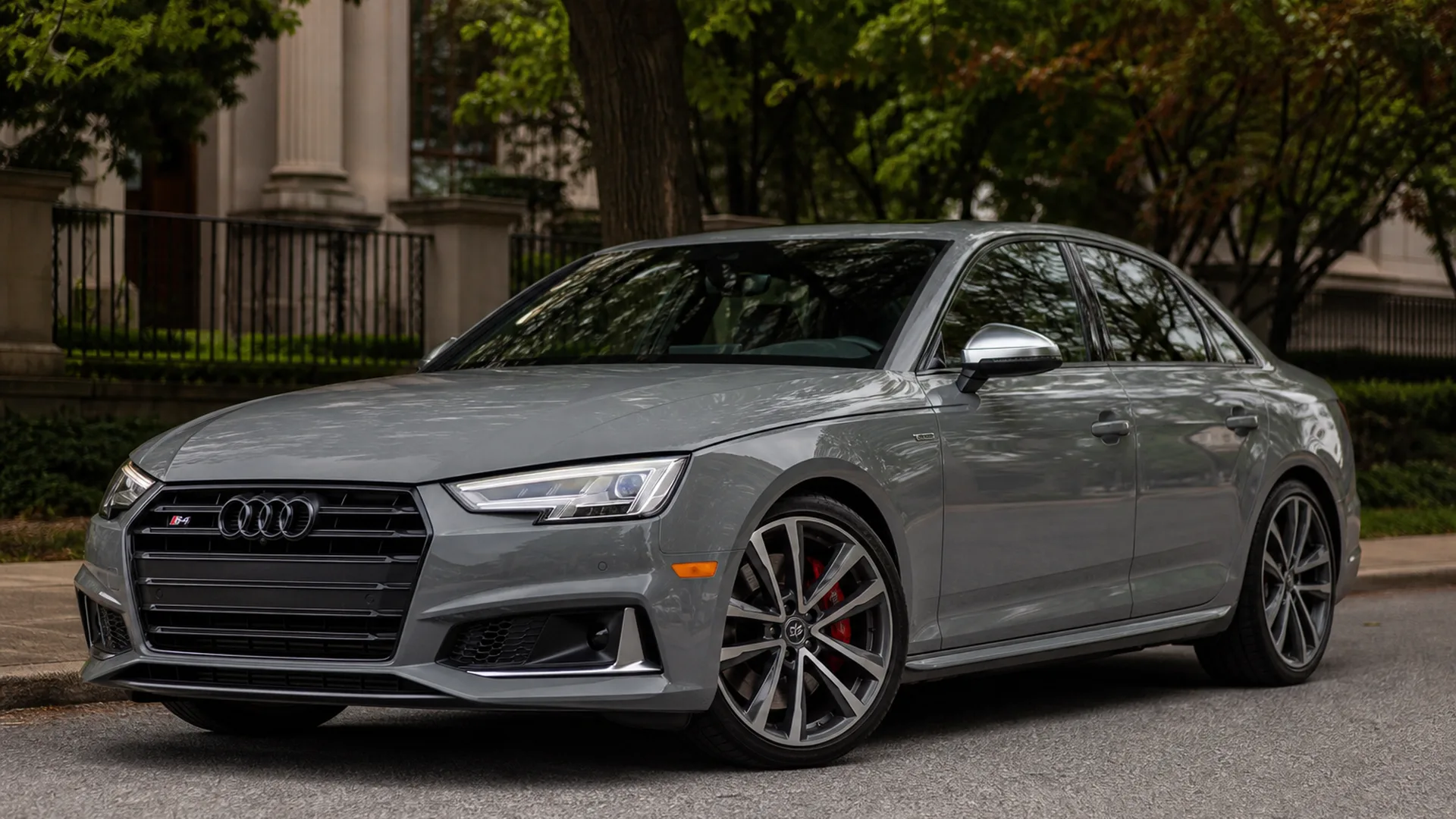
The Audi S4 has earned its stripes as one of the most thrilling sport sedans you can buy. From the twin-turbo B5 models that put Quattro AWD on the performance map to today’s turbocharged B9s with digital cockpits and adaptive suspension, it’s a car that blends daily-driver practicality with weekend backroad excitement. You get refined German luxury, punchy acceleration, and that signature all-wheel grip that makes winter driving feel less like survival mode and more like a rally stage.
But here’s the catch: not every S4 year delivers the same experience once the warranty expires. Some model years came with fragile transmissions, others with timing chains that rattle like marbles in a coffee can, and a few even had engine defects that could total the car at highway mileage. If you’re shopping used and don’t know which years to skip, you could end up with a fast car that spends more time at the shop than on the road.
This guide breaks down the Audi S4 years to avoid, highlights the safest bets if you’re committed to the platform, and suggests better alternatives if reliability matters as much as 0-60 times.
How We Researched This Guide
We pulled data from multiple angles to build a complete reliability picture:
Primary sources included CarComplaints.com (for year-by-year owner complaint volume and severity), the NHTSA recall database (for safety campaigns and technical service bulletins), and RepairPal’s cost-of-ownership data. We also referenced iSeeCars analysis, which track depreciation and long-term dependability across thousands of vehicles.
Secondary verification came from enthusiast forums like AudiWorld and Audizine, where owners document real-world repair histories, plus Reddit threads in r/Audi and r/WhatCarShouldIBuy. We cross-checked claims with sources like MotorBiscuit, EnginePatrol, and Consumer Reports to separate one-off horror stories from widespread patterns.
What makes this different: We tracked generation-specific failure rates (B5 through B9), mapped part-number revisions (like the 2018 rocker arm fix and DSG mechatronic updates), and calculated repair costs from actual invoices shared by owners. If a problem shows up in official recalls, forum threads, and complaint databases all at once, we flag it.
Most Common Audi S4 Problems Across All Years
Before we get into specific years, let’s talk about what tends to break on these cars. Knowing the weak points helps you spot red flags during a test drive or pre-purchase inspection.
1. Engine Troubles
S4 engines span four very different powertrains, and each generation brought its own headaches. The early B5 models (2000–2002) used twin Garrett turbochargers that wore out prematurely, causing whistling noises and sudden power drops. Replacement isn’t cheap.
The B6 and B7 generations (2004–2008) switched to a naturally aspirated 4.2L V8, which sounds glorious but suffers from a notorious weak spot: timing chain tensioners. When these fail, you get a grinding rattle at cold start that sounds expensive—because it is. Fixing it means pulling the engine, replacing guides and tensioners, and reassembling everything. Expect a $6,000+ bill at minimum, and that’s if nothing else breaks during disassembly.
B8 models (2010–2016) moved to a 3.0L supercharged V6, which is generally tougher than the V8 but still has quirks. Early cars had thermostat failures that caused overheating—sometimes severe enough to warp heads or blow gaskets. Direct injection also means carbon buildup on intake valves over time, which robs power and requires walnut-blasting to clean (a $500–$800 service).
Then there’s the 2018 B9, which launched with a critical defect: faulty rocker arms in the turbocharged 3.0L V6. Owners started noticing misfires, ticking sounds, and metal shavings in the oil around 70,000 miles. Some engines failed completely, requiring full replacements that cost upwards of $20,000 out of pocket. Audi quietly updated the part for 2019 but never issued a formal recall, leaving 2018 owners stuck with repair bills.
2. Transmission Woes
The 2010 S4 holds the title for worst transmission year. Audi introduced a 7-speed dual-clutch (DSG) S-tronic gearbox that turned out to be half-baked. Owners reported “Gearbox Malfunction” warnings, harsh shifts, and cars that refused to come out of Park. The culprit was often the mechatronics unit—the brain of the transmission—which failed at surprisingly low mileage. Rebuilding or replacing the DSG could run $5,000 or more.
The 2011 S4 inherited many of the same issues before Audi refined the software and hardware. Older B6/B7 models with the 6-speed automatic had occasional torque converter failures, though they were less dramatic than the DSG disasters. Manual transmissions are the exception—they hold up well if you don’t abuse the clutch.
Electrical Gremlins
Water intrusion is a recurring theme. Clogged sunroof drains or cowl drains let rainwater seep into the car, soaking comfort control modules or corroding wiring. You’ll know it happened when the battery drains overnight or random systems stop working.
Ignition coils are another repeat offender. Audi’s coil packs wear out faster than they should, triggering misfires and check-engine lights. Replacing all six coils plus spark plugs is a routine maintenance item, not a one-time fix.
Newer B9 models introduced MMI touch infotainment and Virtual Cockpit, which brought software bugs. Some 2019–2020 owners dealt with infotainment reboots mid-drive, and Audi issued a recall to fix backup cameras that would go blank at random. These aren’t catastrophic, but they’re annoying when you’re paying luxury-car money.
Brakes and Suspension
Performance brakes wear faster than commuter-car pads, but some S4 years take it to an extreme. The 2012 and 2014 models saw premature rotor warping and pad wear—one owner needed full brake service at 16,000 miles, with dealers blaming “aggressive driving” to dodge warranty coverage.
Suspension bushings and control arms also wear quicker than you’d expect. The S4’s heavy front end and spirited handling put extra stress on front control arm bushings, motor mounts, and CV joint boots. If you’re looking at a high-mileage example, budget for fresh bushings and an alignment.
Air Conditioning and HVAC
The 2014 S4 had higher-than-average AC complaints, including compressor failures and weak cooling. B8 chassis cars can also develop heater core blockages—sediment builds up and blocks flow, leaving one side of the cabin cold even with the heat on full blast. Fixing it means pulling the dashboard, which is labor-intensive and expensive.
The Bottom Line on Common Problems
According to RepairPal, the S4 scores just 2.0 out of 5.0 for reliability and ranks 27th out of 31 luxury midsize cars. Average annual repair costs hover around $1,171—nearly double the average for all vehicles. Small stuff like thermostats and sensors won’t break the bank, but when a timing chain or DSG goes south, you’re looking at four-figure bills. As one mechanic put it, “The S4 constantly needs care and regular check-ups—it isn’t a car that can be neglected.”
Audi S4 Years to Avoid (and Why)
If you’re shopping used, these six model years have the highest failure rates and worst owner satisfaction scores. Skipping them can save you thousands in repairs.
2005 Audi S4
The 2005 model sits at the tail end of the B6 generation and came with all the V8’s weaknesses fully matured. Timing chain tensioner failures are almost guaranteed at this point—most 2005 S4s either had the repair done already or are living on borrowed time. Oil consumption spikes as the engine ages, and electrical quirks like failing window regulators add to the frustration. Unless you find one with fresh engine work and service records proving the timing chains were replaced, steer clear.
2010 Audi S4
This is the single worst S4 year you can buy. As the first model year of the B8 generation, the 2010 introduced both a new supercharged V6 and a new dual-clutch transmission—and both had serious teething problems. The DSG gearbox dominates the complaint list: “TPMS + Gearbox Malfunction” errors, rough shifts, and cars stuck in Park were shockingly common. CarComplaints ranks 2010 as the worst S4 model year overall, with issues popping up at low mileage and high repair costs.
Add in early-build 3.0T engine problems like thermostat failures and excessive oil consumption, and you’ve got a perfect storm. Avoid 2010 unless you have documented proof that every known update (mechatronics, thermostat, water pump) has been completed—even then, think twice.
2011 Audi S4
The 2011 improved slightly from 2010, but it’s still risky. Audi updated the thermostat and water pump, but the DSG transmission remained problematic. Full transmission failure just outside warranty was the most-reported issue, often traced to the mechatronics unit. Early B8 S4s also dealt with carbon buildup and random electrical faults. The 2011 isn’t as disastrous as the 2010, but its repair record is poor enough to stay on the “avoid” list—especially if the transmission service history is missing.
2014 Audi S4
Despite being a refreshed B8.5 model, the 2014 stands out for all the wrong reasons. Owners reported premature brake and rotor wear (warped rotors at 16,000 miles in one case) and AC failures more often than surrounding years. These aren’t engine-destroying failures, but they’re expensive annoyances that often fell outside warranty coverage. CarComplaints shows a spike in 2014 complaints compared to 2013 or 2015, suggesting a supplier issue with brake components or HVAC parts. It earned a spot on the avoid list because of the sheer volume of early-life problems.
2018 Audi S4
The 2018 launched the B9 generation in North America—and brought a major engine defect with it. Rocker arm failures in the 3.0L turbo V6 caused misfires, ticking noises, and metal shavings in the oil around 70,000 miles. Some owners faced catastrophic engine failure requiring full replacement at their own expense (~$20,000+). Audi quietly updated the part for 2019 but never issued a recall, leaving 2018 buyers exposed to massive repair bills.
On top of that, the 2018 had software bugs in the new infotainment system, including a rearview camera recall. Unless the vehicle is still under warranty or has documentation proving updated rocker arms were installed, avoid 2018 entirely.
2019 Audi S4
You’d think 2019 would be trouble-free after the rocker arm fix, but it still logs higher-than-expected complaints. Fuel system issues (leaky injectors, fuel pump failures) and electrical glitches (malfunctioning windows and sensors) were more common than they should be on a nearly-new car. As an early “B9.5” facelift build, it likely carried some first-year bugs of its own. The problems aren’t as severe as 2018’s engine failures, but they’re common enough to land 2019 on the cautious-buyer list. If you’re considering one, confirm all recall campaigns (especially infotainment/camera software updates) are done and get a thorough inspection.
Why These Six Years?
These models—2005, 2010, 2011, 2014, 2018, 2019—share a pattern: they’re either first-year launches with unresolved bugs (2010, 2018), last-year models with aging design flaws (2005), or mid-cycle updates with specific supplier problems (2014, 2019). The 2010 is often called the absolute worst due to transmission failures alone. If you’re dead-set on one of these years, budget an extra $2,000–$5,000 for repairs and confirm every known issue has been addressed. Otherwise, save yourself the stress and pick a better year.
Checking a used Audi?
Scan for hidden fault codes from your phone in minutes — before you buy.
REREV may earn a commission if you sign up through this link. Learn more.
Best Audi S4 Years to Buy
No S4 matches the reliability of a Lexus, but some years come close to average for the segment. If you’re committed to the platform, these are the safest bets.
2012–2013 Audi S4
The 2012 model year consistently ranks as the most reliable S4 ever built. By then, Audi had fixed the DSG transmission bugs, updated the water pump and thermostat, and proven the 3.0L supercharged V6 could handle real-world use. CarComplaints shows far fewer issues on 2012 compared to 2010–2011, and the 2013 is even cleaner. CoPilot ranks both as top S4 years for dependability.
You’ll still need routine maintenance (DSG services, coil packs, etc.), but you dodge the big design flaws. These are the “safe bet” S4s—if you’re buying used, start your search here.
2016 Audi S4
The 2016 was the final year of the B8.5 generation in the U.S., which means Audi spent six years refining the platform before calling it done. The result is one of the most mature, sorted versions of the supercharged S4. The 3.0T engine had most quirks ironed out, and any DSG or sport differential issues were either fixed in earlier years or would’ve surfaced under warranty.
CoPilot lists 2016 as a “safe year” to buy used, with low incidence of major problems. If you want the best version of the supercharged S4 without the first-year risk of the 2018, the 2016 is it.
2020–2021 Audi S4
If your budget allows a newer model, the 2020 and 2021 years have shown solid reliability. By 2020, Audi had resolved the rocker arm fiasco and worked out the early MMI infotainment bugs. CoPilot highlights both as dependable S4 model years, and most are still under warranty or just coming off lease.
Owners report minor issues—occasional tech glitches, rattles—but nothing like the catastrophic failures of earlier years. RepairPal still rates the S4 below average overall, so these aren’t Lexus-level bulletproof, but relative to S4 history, they’re as good as it gets. Newer models (2022–2025) likely continue the trend, though long-term data is still emerging.
Honorable Mentions
The 2008 S4 is sometimes called “less bad” among the V8 era—Audi made some chain component improvements by then, and well-maintained examples can be okay. But it’s still a V8 S4 with all the associated costs, so only consider it if you specifically want that engine.
The 2017 S4 (Canada/Europe only) got the turbocharged 3.0L early, and late-2017 builds may have updated rocker arms. If you’re importing or shopping in Canada, check production dates and documentation carefully.
Overall, the best used S4 years are 2012, 2013, 2016, and 2020+, with 2012–2013 standing out for reliability and 2016 being the pinnacle of the supercharged era.
One Important Note
Even the “good” years cost more to run than an average car. The advantage of choosing these models is that you avoid known design defects. As one analysis noted, post-2012 S4s are “no less reliable than A4s”—meaning Audi brought the S4’s reliability up to class-average by then. Pair a solid model year with thorough service records and a pre-purchase inspection, and you’ll vastly improve your ownership experience.
Better Alternatives to the Audi S4
If the S4’s reliability record makes you nervous, you’re not the first buyer to feel that way. Here are some sport sedans that deliver similar thrills with fewer long-term headaches.
Lexus IS 350 (2014–2020)
The Lexus IS gives you compact luxury with legendary reliability. It’s not as quick as an S4, but it offers confident performance and available AWD with far fewer problems. The 2016–2020 IS 350 models (third-generation refresh) are particularly desirable—they got updated styling and safety tech while keeping Lexus’s bulletproof V6. Expect minimal issues even at high mileage.
If you want more space, the Lexus GS 350 (2013–2018) offers a reliable V6 in a midsize package and tends to outperform the S4 in long-term value.
Acura TL/TLX (2009–2020)
Acura’s sport sedans blend luxury, performance, and Honda reliability. The fourth-gen TL (2009–2014), especially the SH-AWD model with a 6-speed manual, is a known gem—strong power, balanced AWD chassis, and a much better repair record than German rivals. The newer TLX offers similar dynamics with fewer mechanical woes. Neither matches the S4’s horsepower or interior polish, but they crush it in cost of ownership.
BMW 3 Series / M340i (2016–2021)
If you want German performance without Audi’s specific issues, consider BMW’s 3 Series—particularly the 2016–2018 340i or the newer 2019–2021 M340i. Both feature BMW’s B58 3.0L turbo inline-6, which is praised for strong performance and improved reliability over earlier BMW turbo engines. Maintenance costs are still high and reliability trails Japanese competitors, but on the spectrum of German sport sedans, the 340i matches or slightly beats the S4 in durability. Prioritize service history or CPO coverage.
Mercedes-Benz C-Class (AMG C43, 2017–2021)
The AMG C43 directly targets the S4 with a twin-turbo V6 and AWD. Reliability is average for the segment, and AMG models are maintenance-intensive, but the C43’s V6 has been fairly robust. It doesn’t have one singular chronic issue that dominates ownership the way certain S4 years do. A 2018 or 2019 C43 can be a reasonable alternative if you want similar performance with a different character. Warranty coverage and strong service history still matter.
Other Options Worth Considering
The Infiniti Q50 Red Sport 400 offers strong power and AWD at a lower price point, though early years have some known issues. Cadillac performance sedans deliver sharp handling and powerful engines with a different maintenance profile. Audi’s own S5 Sportback is mechanically similar to the S4 and shares the same year-by-year risks—it’s not more reliable, but it offers a more practical body style if you’re set on the platform.
Final Thoughts: Should You Buy an Audi S4?
The Audi S4 delivers an intoxicating blend of luxury and performance—it’s one of the few sport sedans that feels equally at home on your commute and a canyon road. But that thrill comes with well-documented reliability pitfalls and higher-than-average ownership costs.
If you decide to pursue one, be strategic. Skip the worst years (2005, 2010–2011, 2014, 2018–2019) to avoid catastrophic transmission failures, timing chain disasters, and engine defects. Focus on the better years (2012–2013, 2016, 2020+) that have proven track records. Always get a pre-purchase inspection from an Audi-trained technician, verify service history, and budget $2,000/year for unexpected repairs—even on “good” years.
And consider the alternatives. A Lexus IS or Acura TLX might not deliver the same badge prestige, but they’ll give you more peace of mind at the pump and the service bay. A BMW 340i or Mercedes C43 offers German performance with a different set of trade-offs.
At the end of the day, the S4 rewards careful buyers who do their homework. Choose the right year, stay on top of maintenance, and you can enjoy one of the best-driving sedans on the market. Just remember: sometimes the best performance stat isn’t 0-60—it’s making it to 60,000 miles without a major repair bill.