Best and worst Porsche 911 years (which to avoid)
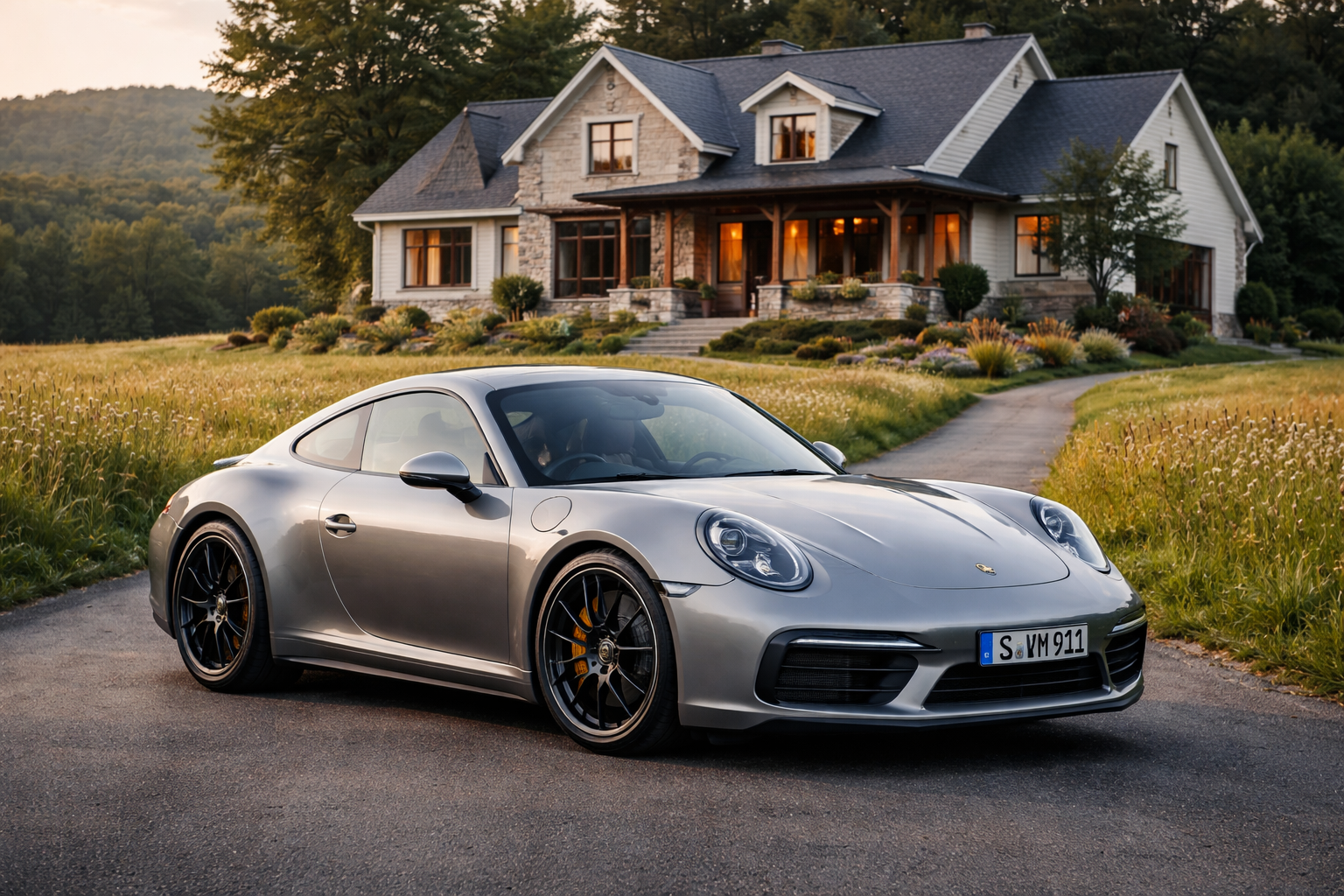

The Porsche 911 is one of those rare cars that seems to get everything right. Since 1963, it’s been the benchmark sports car—the one that combines everyday usability with genuine track capability. People trust the 911 because it’s earned that trust: decades of motorsport wins, strong resale values, and an engineering legacy most brands can only dream about.
But here’s the truth nobody puts on the brochure: not every 911 year is created equal. Some model years come with engine problems so catastrophic they can cost you $25,000 to fix. Others suffer from design flaws Porsche quietly corrected in later versions—after early buyers had already paid the price.
How we rated the best and worst Porsche 911 years
We didn’t just skim a few forum posts and call it research. Our team cross-referenced multiple data sources to find patterns that actually matter:
Official records: NHTSA complaint databases, Porsche technical service bulletins, and recall notices gave us hard numbers on failure rates and factory-acknowledged problems.
Independent testing: We reviewed reliability data from CarComplaints, RepairPal, and Consumer Reports to identify which years consistently show up in repair shops.
Real-world feedback: Thousands of posts on Rennlist, 6SpeedOnline, and Pelican Parts forums—plus interviews with Porsche specialist mechanics—revealed which problems actually strand owners versus which are just minor annoyances.
Cost analysis: We compared preventive fix costs (like an IMS bearing upgrade) against catastrophic failure costs (complete engine replacement) to understand true ownership risk.
What emerged is a clear picture: certain 911 generations—especially early water-cooled models—carry far higher risk than others. Let’s get into what breaks and why.
Most Common Porsche 911 Problems
1. The IMS Bearing Time Bomb (1999–2008)
If you’ve spent any time researching used 911s, you’ve heard about the Intermediate Shaft bearing. This tiny bearing supports the shaft that drives your engine’s camshafts. When it fails, timing is lost instantly, and internal engine parts collide at high speed.
The failure rate sits somewhere below 5%, but that’s cold comfort when the repair bill hits $20,000 or more for a full engine rebuild. Many owners spend about $2,000 proactively replacing the bearing with an upgraded unit—basically buying insurance against a much bigger disaster.
The IMS issue affects all water-cooled 911s from 1997 through most of 2008. Porsche finally eliminated the vulnerable bearing design entirely in the 2009 engine redesign.
2. Cylinder Bore Scoring (2006–2008 Carrera S)
Bore scoring turned out to be even more common than IMS failures in certain years. The 3.8L engines in 2006–2008 Carrera S models are particularly prone: worn piston rings and poor lubrication patterns scar the cylinder walls, leading to steadily increasing oil consumption.
Early warning signs include one exhaust pipe showing heavier soot deposits than the other, oil usage climbing above a quart per 1,000 miles, and eventually a distinct knocking sound as damage worsens. Once scoring runs deep, you’re looking at a complete engine rebuild—often $25,000 to $30,000.
This problem affected so many cars that Porsche specialist shops consider it the single most expensive gotcha of the 997.1 generation. The issue was finally solved in 2009 when Porsche switched to Alusil cylinder coating.
3. Head Stud Failures (1975–1983)
Older air-cooled 911s faced their own nightmares. The 1975–1977 models equipped with 2.7L engines and thermal reactors (primitive emissions equipment) ran so hot that head studs would stretch, pull out of the crankcase, or simply snap. When that happens, head gaskets blow and you’re facing an engine-out repair that can easily exceed $5,000.
Even the later 1983 911 SC had documented cases of broken head studs around 30,000 miles. Porsche improved the stud material and design by 1984, but if you’re shopping classic 911s, these years carry real risk unless previous owners have already upgraded the hardware.
4. Cooling System Weak Points (All Water-Cooled Models)
Once Porsche added radiators and coolant to the 911 in 1999, a whole new category of failures appeared. Plastic coolant expansion tanks crack, brittle crossover pipes split, and hose fittings leak—especially on 996 and 997 models as they age.
Individually, these repairs aren’t catastrophic (usually a few hundred to $1,000), but if you ignore a slow leak, the engine overheats and suddenly you’re in serious trouble. Regular inspection and proactive replacement of aging plastic parts makes a huge difference here.
5. Oil Leaks (Everywhere)
The rear main seal on early 996 engines was notorious for seeping oil. It’s not usually dangerous by itself, but it can be an early indicator that the IMS bearing is starting to wear. Porsche updated the seal design, and many cars have had it replaced during clutch service.
Older air-cooled 911s leak oil almost as a matter of course—valve covers, oil return tubes, and various gaskets all weep over time. Enthusiasts joke that if your air-cooled 911 isn’t marking its territory, it’s probably out of oil. These leaks are expected maintenance rather than catastrophic failures.
6. Transmission Issues (Selective by Era)
Gearbox failures aren’t common in 911s, but each generation has quirks. The 915 manual (1970s through 1986) wears synchros over time, making 1st-to-2nd shifts notchy and eventually requiring a rebuild. The G50 manual that replaced it in 1987 is far more durable.
The PDK dual-clutch transmission introduced in 2009 has proven extremely reliable—failure rates under 100,000 miles are well below 1%. Early cars had occasional sensor glitches, but most were fixed with software updates. The catch is that if a PDK does fail outside warranty, replacement can cost over $10,000.
7. Electrical Gremlins (Minor but Annoying)
As 911s gained more technology, small electrical problems cropped up. Ignition switch modules fail on 996s, causing weird symptoms like windows that won’t index properly or accessories that won’t power up. Climate control screens lose pixels. Seat switches act up.
Newer 991 and 992 models have complex electronics that occasionally throw software errors—one 2020 owner had their brand-new 911 refuse to start due to a computer fault that required a dealer reflash. These issues are frustrating but rarely debilitating, and most are covered under warranty when new.
The Worst Porsche 911 Years (Stay Away)
1975–1977: The Thermal Reactor Disaster
These mid-’70s 911s with 2.7L engines and thermal reactors are among the least reliable ever built. Excessive heat from the emissions equipment routinely caused pulled head studs and warped crankcases. Engine rebuilds before 50,000 miles were common.
Unless a previous owner has already upgraded the studs and removed the thermal reactors, these years are best avoided entirely.
1983: The SC’s One Bad Year
The 911 SC is generally a solid car, but the 1983 model year stands out for head stud breakage. Documented cases show studs breaking around 30,000 miles, requiring expensive engine-out repairs.
Porsche fixed this by 1984 when the 3.2 Carrera debuted with improved studs and updated chain tensioners. If you’re shopping late air-cooled 911s, skip ’83 and go for ’84 or later.
1989–1991: 964’s Rough Start
The 964 generation arrived with significant changes—and significant problems. Dual-mass flywheels rattled at idle and sometimes came apart, especially on the all-wheel-drive Carrera 4. The 1990 models initially lacked head gaskets between cylinders and heads, causing oil leaks that required retrofit updates.
By 1992, most issues were sorted, but these first few years of the 964 earned a reputation for teething troubles.
1999–2001: Water-Cooled Growing Pains
Early 996 Carreras introduced water cooling along with a host of problems. The 1999 models especially suffered from porous engine blocks and slipped cylinder liners that caused internal coolant leaks—often resulting in warranty engine replacements.
All 1999–2004 996s carry IMS bearing risk, and early cars also had rear main seal leaks plus fragile ignition switches. The 996 offers bargain 911 performance today, but you’re buying into known risk areas.
2006–2008: Bore Scoring Central
The 997.1 Carrera S with the 3.8L engine is ground zero for cylinder bore scoring. Short trips, poor warm-up habits, and insufficient lubrication all contributed to widespread scoring issues that eventually require complete engine rebuilds.
The base 3.6L Carrera was less affected, and Porsche finally solved the problem with the 2009 engine redesign. If you’re shopping 997s, these S-model years are high risk unless the seller can prove the engine has already been rebuilt or shows zero signs of scoring.
2009: First-Year DFI Troubles
Porsche’s 2009 Carrera brought a brand-new direct-injected engine and the first PDK transmission—along with the highest complaint rate of any modern 911 year. Early owners reported engine stalling, excessive oil consumption (some cars burned a quart every 700 miles), and leaking coolant or oil hoses.
Most issues were addressed by software updates or under warranty, and by 2010 the 997.2 became rock-solid. But the 2009 launch year is one to avoid if you want to skip first-year gremlins.
2014 GT3: The Fire Risk
For regular 991 Carreras, there were no major issues—but the high-performance GT3 variant had a serious problem. Loose connecting rod bolts caused two engine fires, prompting Porsche to recall all 785 units and replace every engine with an improved unit.
If you’re considering a 2014 GT3, verify it received the post-recall engine replacement. Without that documentation, walk away.
2020: 992’s Shaky Debut
The newest 911 generation had multiple recalls in its first year: improperly torqued suspension bolts, differential bolt issues, hazard light software errors, and even windshield bonding problems affecting airbag support.
One NHTSA complaint described a 2020 911 that wouldn’t start due to an ignition computer error just two days after purchase. By 2021, nearly all these bugs were resolved, making later 992s a much safer choice.
The Best 911 Years to Buy (Proven Reliability)
1984–1989: The Carrera 3.2
Many consider this the peak of classic 911 engineering. The 3.2L air-cooled engine is incredibly durable—cars routinely exceed 200,000 miles with proper care. Starting in 1987, you get the bulletproof G50 transmission, eliminating earlier gearbox headaches.
These late-’80s 911s have minimal electronics and a reputation for being exceptionally well-built. Aside from normal maintenance like timing chain tensioners and the occasional oil seep, they’re nearly trouble-free.
1995–1998: The 993 Swan Song
As the final air-cooled 911, the 993 benefited from three decades of refinement. The 3.6L engine fixed earlier oil leak issues and introduced a stronger bottom end. Engines routinely pass 100,000 miles before needing any major work.
Minor issues like clogged secondary air injection ports on 1996–98 OBDII models exist, but they’re well-documented and easily fixed. The 993’s combination of analog simplicity and modern materials makes it one of the most dependable used 911s you can buy.
2010–2011: The 997.2 Sweet Spot
After the 2009 first-year troubles, the 997.2 hit its stride. These years have no IMS bearing (the new engine eliminated it entirely), no bore scoring (solved by improved cylinder coating), and essentially zero common complaints according to owner data.
You get hydraulic steering and the mechanical feel of the 997 generation combined with a bulletproof engine. For modern 911s on a budget, 2010–2011 models are hard to beat.
2015–2016: Mature 991.1
By the later years of the 991.1 generation, Porsche had worked out all early production bugs. These years show minimal failures, robust drivetrains, and only minor recalls (fuel filler caps, airbag sensors—nothing affecting reliability).
The 3.8L engines in Carrera S and GTS models proved durable, and both the seven-speed manual and PDK transmissions are rock-solid. A well-maintained 991.1 from these years offers modern performance with exceptional dependability.
2017–2019: Refined 991.2
The 991.2 introduced turbocharged Carrera engines, but after development was complete, these years show no significant flaws. By 2018 and 2019, owner forums report virtually no common issues—the platform was fully sorted.
Even the GT3 and GT3 RS models with their 4.0L engines have proven remarkably durable under track use. Any 991.2 from these years is a safe buy for reliability-focused shoppers.
If You’re Skipping Problematic 911s, Consider These Instead
Porsche Cayman (2009–2012 or 2014–2016)
The mid-engine Cayman offers near-911 performance with better handling balance (some say the Cayman’s weight distribution makes it the superior driver’s car). The 2009–2012 generation eliminated the IMS bearing entirely, and the 2014–2016 models introduced a new flat-six that’s proven exceptionally reliable.
Caymans cost less to buy than equivalent 911s and less to maintain thanks to reduced weight and stress on consumables. If you’re considering an early water-cooled 911 but worry about engine failures, a similar-budget Cayman S is mechanically safer while still thrilling to drive.
Audi R8 (2009–2012 or 2017+)
The first-gen R8 with either the 4.2L V8 or 5.2L V10 has no major reliability red flags and is known as one of the more dependable supercars. The engines share proven components with Audi’s S4 and the Lamborghini Huracán’s V10—both durable with proper care.
Maintenance costs run higher than a 911’s, but the R8 turns heads while being less likely to drain your wallet than other exotics. Audi’s widespread dealer network and parts sharing help keep long-term ownership reasonable.
BMW M2 (2018–2021)
The M2 delivers lively performance in a simpler, front-engine package that many owners daily-drive with minimal issues. By 2018, early quirks were sorted, and the M2 Competition (2019–2021) with the S55 engine proves reliable aside from typical BMW maintenance items like occasional valve cover gasket seeps.
For someone worried about a 996 or 997’s engine risks, a 2019 M2 Competition offers similar acceleration, a robust twin-turbo six-cylinder, and far more predictable ownership costs.
Chevrolet Corvette C7 (2017–2019)
By the final years of the seventh-generation Corvette, GM had ironed out the early bugs. The 2017–2019 models avoided the wheel-cracking and bearing issues that affected some 2015–16 cars.
The naturally-aspirated 6.2L V8 is legendarily reliable (it’s a refined pushrod design with decades of development). Maintenance and parts are far cheaper than Porsche’s, and any Chevrolet dealer can service it. A 2017 Grand Sport delivers 911 Carrera S performance with likely fewer long-term concerns.
Lexus LC 500 (2018+)
For a more grand-touring approach, the LC500 combines performance with Lexus’s trademark bulletproof reliability. The 5.0L naturally-aspirated V8 is proven across Lexus’s lineup with essentially zero issues.
Owners commonly report no problems beyond routine service—oil changes and gas. If you’re considering a 911 but lean more toward comfort and worry-free ownership, the LC500 delivers stunning looks, a plush interior, and that sonorous V8 with the peace of mind that comes with the Lexus badge.
What This All Means for You
Here’s the bottom line: one engine failure on a bad Porsche 911 year can cost more than buying a better model outright. Choosing the right year matters more than choosing the right color.
Avoid: Early water-cooled cars (1999–2005) unless major fixes are documented, 2006–2008 Carrera S models due to bore scoring, and first-year redesigns across all generations.
Buy with confidence: 1984–1989 Carrera 3.2, 1995–1998 993, 2010–2011 997.2, 2015–2016 991.1, and 2017–2019 991.2 models all offer proven reliability.
Alternatives worth considering: The Cayman eliminates many 911 risks while preserving Porsche DNA. The R8, M2, C7 Corvette, and LC500 each offer compelling performance with potentially greater peace of mind.
The 911 remains one of the greatest sports cars ever built—you just need to pick the right year. Do your homework, verify service records, and don’t let a bargain price on a problematic year tempt you into a financial disaster. The right 911 will reward you for decades. The wrong one will haunt your bank account long after the initial thrill fades.

